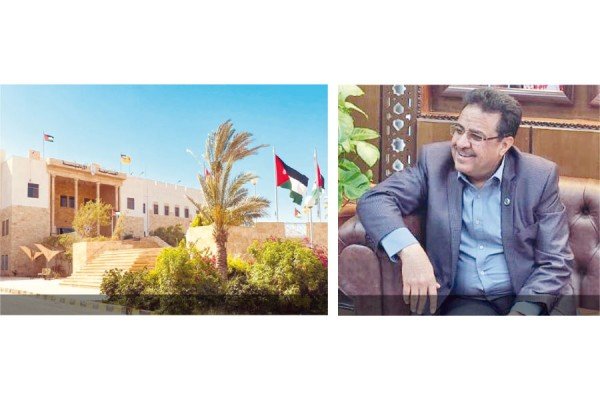
7 colleges, 16 majors, and 3,544 students in the Aqaba branch
Promoting the concept of educational tourism to attract students from different governorates
Future plans to develop new programs and enhance the competitiveness of graduates
Partnerships with the public and private sectors to develop infrastructure
In a city that is steadily advancing on the map of investment and tourism, higher education stands out as one of the most important pillars of development transformation, and the University of Jordan – Aqaba branch comes as a national project that goes beyond the idea of a “university branch” to a deeper role in shaping the future, as the presence of this edifice is not measured only by the number of halls, but rather by its ability to transform the royal vision into a productive educational reality that touches the needs of the market.
In this context, the Vice President of the University of Jordan and Head of the Aqaba Branch, Professor Dr. Saleh Al-Rawadiyah, confirmed during an interview with Al-Rai that what the branch is witnessing today is a direct translation of the royal vision that puts people at the heart of the development process, stressing that the university’s presence in Aqaba came to be a knowledge lever parallel to the economic mobility witnessed by the city.
He added that the University of Jordan in Aqaba is an extension of the mother university in Amman, but at the same time it plays a different, pivotal role due to the specificity of its location in the city of Aqaba, which gives it a greater ability to interact directly with the requirements of the economic, tourism and investment environment, and direct its programs towards the most needy sectors in the labor market.
He explained that the branch currently includes 7 colleges offering 16 majors, and accommodates about 3,544 male and female students, stressing that this expansion reflects increasing confidence in the university, but at the same time it imposes operational challenges that require a flexible and rapid response.
In a realistic reading of the educational process scene, Al-Rawadiya stated that the number of students at the university is currently stable due to it reaching its maximum capacity, which reflects the size of the demand on the one hand, and confirms the need for thoughtful future expansion plans on the other hand.
He also explained that the number of courses offered in the first semester reached about 330 courses, of which approximately 30% are taught remotely, while approximately 300 courses need halls and laboratories on campus, which puts clear pressure on the infrastructure, especially in light of the availability of only 24 teaching halls with varying capacities.
He added that the university is dealing with this challenge through flexible management of the academic schedule, expansion of blended education patterns, in addition to continuous work on developing educational facilities, noting that the branch includes a group of specialized laboratories that include computer, physics, chemistry, biology, and linguistics laboratories, while emphasizing that modernizing and expanding them constitutes a priority in the next stage.
Regarding academic programs, Al-Rawadiya stressed that the colleges in the Aqaba branch were designed to be linked to the nature of the city and its development needs. The College of Tourism and Hospitality contributes to supporting the tourism sector, the College of Information Systems and Technology keeps pace with digital transformation, while the College of Business works to prepare leadership cadres in the economic field.
He added that the College of Basic and Marine Sciences plays an important role in supporting the trend towards the blue economy, while the College of Nursing provides the health sector with qualified competencies, and the College of Law works to prepare legal cadres capable of keeping pace with legislative developments.
In the context of strengthening its academic and development position, Al Rawdiyah indicated that the university is working to activate the concept of educational tourism by attracting students from various governorates of the Kingdom, in a way that enhances academic diversity within the university campus, and makes the Aqaba branch an attractive educational destination linked to the tourist and economic nature of the city.
He also stated that the geographical location of the university in Aqaba and the quality specializations it provides related to vital sectors constitute an additional advantage that is supposed to enhance its position as an attractive destination for students from various governorates of the Kingdom. However, at the same time, it represents a new challenge for the university to transform this advantage into an actual, applicable force, by developing its programs and enhancing its academic environment and infrastructure to keep pace with the needs of students and the labor market, and making it an educational model capable of competing and attracting students at the national level.
Al-Rawadhiyya pointed out that some specializations are still in the process of completion, such as cybersecurity and smart networks, explaining that not offering advanced-year courses in it comes as part of a deliberate phased plan, in addition to a temporary halt in admission to the nursing specialization during previous periods as a result of limited absorptive capacity, and the specialization will be available to students at the beginning of the new academic year 2026-2027.
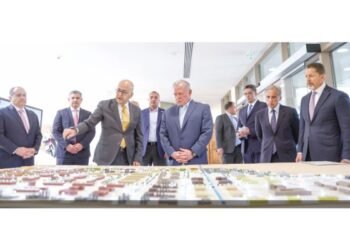
Regarding future partnerships, he revealed the existence of a cooperation project between the public and private sectors that aims to support the university, enhance its capabilities, and expand its infrastructure, to ensure the sustainability of academic and service development.
He also stressed that investing in the quality of faculty members represents a fundamental pillar in raising the quality of education and achieving distinguished outcomes, which are reflected in the preparation of students capable of competing in the labor market, stressing that faculty members are the basis for building the university’s academic identity.
He stressed that the University of Jordan in Aqaba is moving steadily towards consolidating its position as a leading academic institution that contributes to serving the local community and promoting development in the south, stressing that investment in education is the most important investment in the future of Aqaba, and that the next stage will witness further expansion of programs and infrastructure, in line with the royal vision that places education at the heart of the development process, gives young people real opportunities to create their future from within their governorates, and enhances Aqaba’s position as an integrated center that combines education, investment and tourism in a balanced development model. And sustainable.