The bilateral relationship between Romania and the United States is a pillar of Bucharest’s foreign policy, but the evaluation of the strategic partnership requires an objective report on Washington’s global priorities. A statement made last week by the presidential advisor for national security, Marius Lazurca, raised the issue of Romania’s real relevance on the map of American interests. In the context in which the USA is redefining its security objectives, the experts’ analysis clearly shows the limits and the exact position of the Romanian state in this power equation.
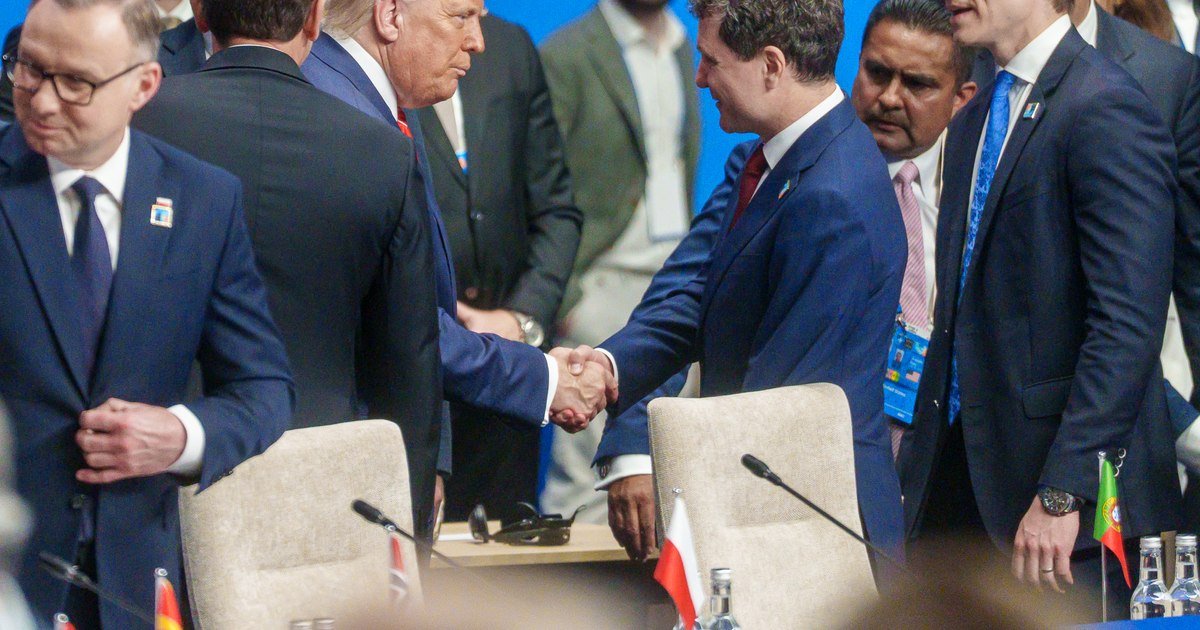
Donald Trump and Nicușor Dan
The public debate on this topic started from the statements of the presidential advisor for National Security and Foreign Policy, Marius Lazurca. Appearing on a television show, the official stated that Romania is important from a strategic point of view for the USA, but it does not have a vital character. The official brought as an argument the global geopolitical evolution, determined by economic, demographic and military indicators. Thus, since the term of President Obama, Washington has focused its attention and resources on the Indo-Pacific area.
“Global geopolitical realities are evolving, they depend on some objective elements – in which regions of the globe are producing faster GDP, which areas are arming themselves more convincingly, which are growing demographically, which are the areas where industries are advancing more dynamically, and it is therefore not accidental or discretionary that starting even with President Obama, the US has declared its interest in focusing its security policies on the Indo-Pacific area. So, no. I’m afraid that Romania is not vital for the USA”, stated the presidential adviser at TVR International.
At the same time, Marius Lazurca highlighted Romania’s contributions, by hosting the Deveselu anti-missile shield, the presence of American troops and participation in international military operations.
“The demonstration is easy to make – Romania and no one else hosts the anti-missile shield at Deveselu, Romania and no one else hosts a significant contingent of American troops, Romania and no one else was asked to contribute – and we did – to the US war effort against Iran. The examples are numerous and everyone knows them”. pointed out the presidential advisor for National Security and Foreign Policy.
The US looks to the Indo-Pacific
In a statement for “Adevărul”, political scientist Radu Carp explained that the statement of the official from Cotroceni is correct and reflects reality. Romania has limited importance in relation to other states in the focus of the US’s attention, such as Israel, Cuba, Venezuela or Iran.
“Mr. Lazurca’s statement is very correct. Yes, Romania is not really irrelevant, but it is also not very relevant for the United States. At the moment, other states are relevant: Israel, Cuba, Venezuela, Iran – these are the central points of American relations today. Romania is part of the European Union, it has a security umbrella. It is important because, as Mr. Lazurca said, it occupies this geographical position and, based on this position and its own merits, it is part of NATO, it’s based on Mihail Kogălniceanu, but that’s about it. We’re not in the top five essential countries for the United States,” explained Radu Carp.
The political scientist details the geographical and diplomatic limits of the Romanian state. Despite the status of a riparian state on the Black Sea, Romania does not control major strategic points, such as the straits, and has a reduced capacity to decisively influence the resolution of conflicts in the region. Available diplomatic and logistical tools, exemplified by the Grain Transit Corridor, have limited impact.
“I would have been even more blunt: yes, Romania is important, that is why it is a member of NATO. But we are not the nodal point, we have no straits. We are a country bordering the Black Sea, a sea affected by conflicts in which we do not have a say. We cannot significantly contribute to defuse them. We had a modest instrument, the grain corridor, we still have it, but it is becoming less and less important. And this is what Marius Lazurca wanted to say. There is no political party or political figure that has an open door in Washington on behalf of Romania, at any time and in any situation. Which is perfectly true.” explained Radu Carp.
“Germany is completely different. We cannot compare”
Regarding a possible reduction of the American military presence in Europe amid the reorientation towards Asia, Professor Carp explains that a decrease in troops already took place last year.
“This risk doesn’t really exist, because it has already happened. Compared to the contingents in Germany and those in Romania, the difference is 1 to 20. What happened in Germany is regrettable. It is a bad decision by the American administration. Even in the Republican Party this has been emphasized. Probably in the next administration these things will be corrected, because America wants to be a global power, and that is not possible without a global perspective, which Europe offers in the first place”, the political scientist emphasized.
The expert makes a clear distinction between Romania’s situation and Germany’s historical role in the post-war security architecture. The security arrangement established after World War II required a massive military force on German soil to deter an aggression by the Warsaw Pact and to balance the military forces in the area.
“Germany is completely different. We cannot compare ourselves in terms of the conditions offered to the American troops, the strategic importance forged during the Cold War. Germany is different, it is a German-American dispute in which we are third parties. We have no say one way or the other.” pointed out Radu Carp.
Also, the presence of allied troops had the role of supervising post-war Germany, a state subject to strict military restrictions.
“Germany had military restrictions and these had to be compensated for somehow. Allied troops—Soviet, American, French, and British—remained on German soil for quite a while. It wasn’t just an American presence. Much diminished compared to the 1950s, but Berlin, for example, had military administration divided between the four powers.”concluded Radu Carp.