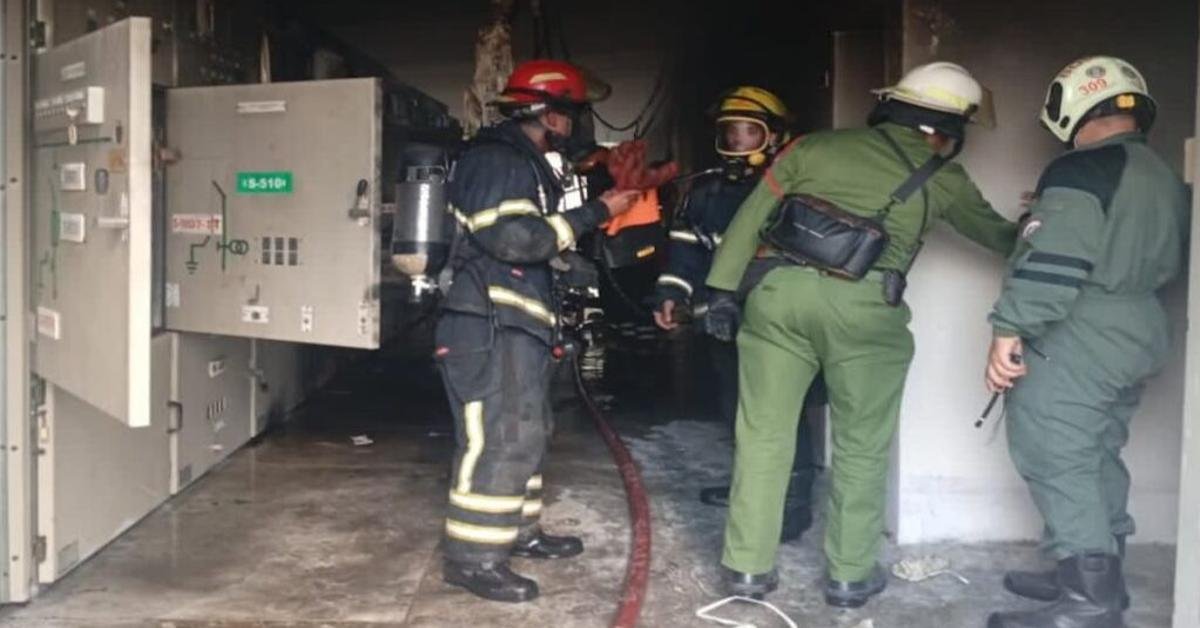
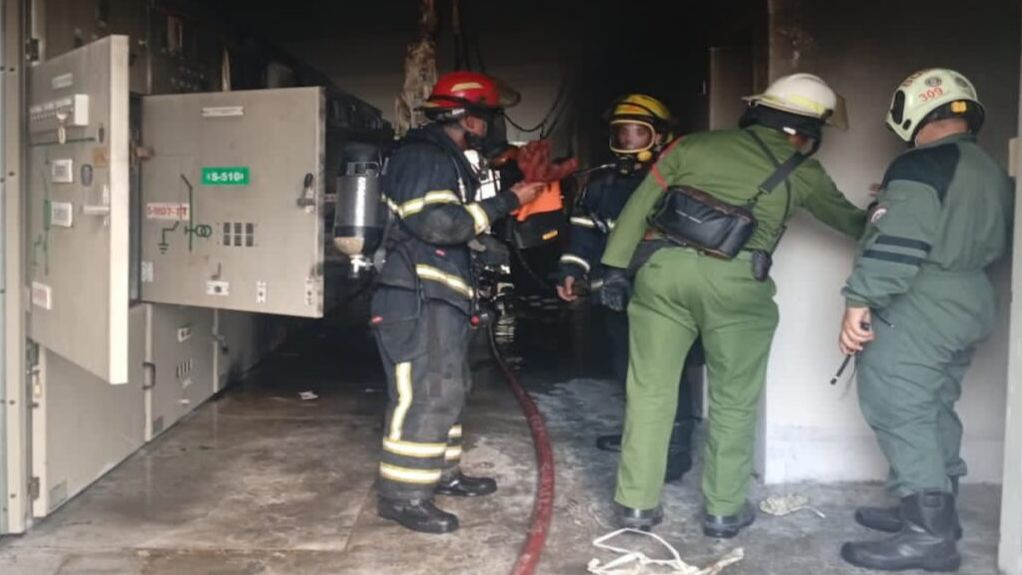
Havana/This Thursday, Havana added another episode to the long chain of breakdowns that keep the Cuban electrical system in suspense. A fire at the Diezmero substation, in the municipality of San Miguel del Padrón, left nearly 20,000 customers without service and once again put a facility that had already shown signs of fragility in the recent past under the spotlight.
The Facebook page from the ruling Canal Habana confirmed that the fire in the substation was caused by a short circuit and that, in addition, “the protections did not respond,” as explained by the director of the underground networks unit of the Havana Electric Company. He also reported that some 130 workers from the Electrical Union were mobilized to restore service and that “liaison alternatives” would be sought to alleviate the impact in the area.
It is not the first time that the Diezmero sets off the alarms either.
The consequences of the incident have a wide territorial scope. The Havana Electric Company reported on its Telegram channel that, “due to a fire in the substation”, distributions such as Las Piedras, Bella Vista, Altura de San Francisco, Emilio Mola, Merceditas, San Francisco de Paula, San Matías, Veracruz, María Luisa, Lajas, Alturas del Mirador, Residencial San Miguel, San Juan de los Pinos, Mirta, Las Granjas, La Rosita, La Cumbre, were compromised. Diezmero, Dolores, Tejas, Florida, Caridad and Núñez, among other neighborhoods in the municipality.
It is not the first time that the Diezmero sets off the alarms either. On March 14, 2025, another breakdown in that facility was indicated by the Ministry of Energy and Mines as a trigger for the collapse of the national electrical system. The official media then reproduced that a failure there caused a significant loss of generation in the west of the country and dragged the entire system to collapse. It is not, therefore, an infrastructure with a simple history of incidents, but rather a node already linked to events of national scope.
What happened highlights the deterioration of the network, the obsolescence of the substations and the absence of effective maintenance
The immediate consequence of this Thursday’s incident once again fell on the population. Behind the figure of 20,000 affected customers are thousands of households forced to reorganize their routine based on another unscheduled power interruption. The official language speaks of “link alternatives” and “reestablishment,” but the daily experience of Cubans translates these formulas into prolonged blackouts, uncertainty and wear and tear.
The Diezmero fire also dismantles one of the arguments most repeated by the authorities: that the Cuban energy problem is limited to generation and the lack of fuel. What happened highlights the deterioration of the network, the obsolescence of substations and the absence of effective maintenance on equipment that should operate with much higher safety margins. After the March 2025 ruling, even a sector executive publicly acknowledged the aging of the components of that facility.
The incident, furthermore, did not occur on a stable network, but in the middle of a capital already subjected to prolonged outages. This same Friday, the Havana Electric Company recognized effects on emergency circuits due to the low availability of generation, with interruptions of up to 15 hours.