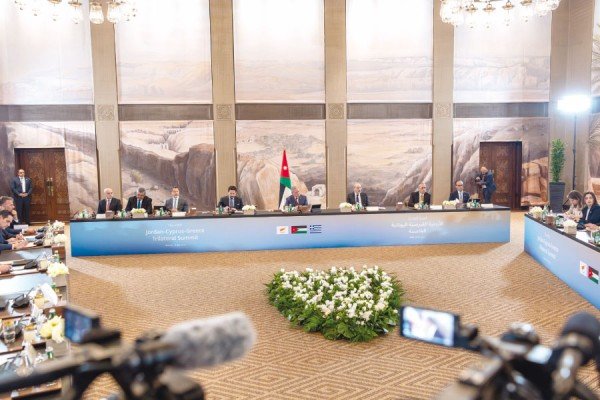
The Amman Summit opens new horizons for trade and investment between Jordan and Europe
Economic experts confirmed that the holding of the fifth Jordanian-Cypriot-Greek tripartite summit reflects an important shift in the nature of regional partnerships, as the geo-economic dimension has become a major axis in international relations, especially in light of the rapid changes witnessed in global trade, supply chains and energy.
In interviews with Al-Rai, experts pointed out that this summit comes in exceptional circumstances, major geopolitical fluctuations, and an unprecedented escalation in the region, which has had a negative impact on most countries of the world as a result of the rise in energy prices, the closure of straits, and the impact of supply chains, which requires concerted efforts and increased cooperation and coordination between the three countries: Jordan, Cyprus, and Greece.
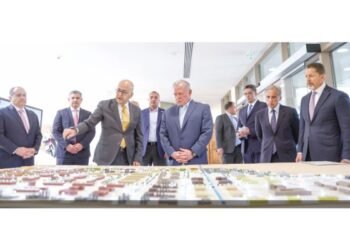
Yesterday, Wednesday, His Majesty King Abdullah II, Cypriot President Nikos Christodoulides, and Greek Prime Minister Kyriakos Mitsotakis held a tripartite summit at Al-Husseiniya Palace, attended by His Highness Prince Hussein bin Abdullah II, the Crown Prince.
The fifth Jordanian-Cypriot-Greek tripartite summit discussed ways to improve tripartite cooperation in various fields, and the partnership between Jordan and the European Union, and also discussed the most prominent developments in the region.
His Majesty the King stressed that this summit provides an important platform for consultation, coordination, expanding cooperation in many key sectors, and deepening economic ties by increasing the volume of trade and investment.
His Majesty expressed Jordan’s keenness to build on the cooperation agreements signed during the previous tripartite summits, especially those related to the water, energy, education and tourism sectors, noting the importance of benefiting from the strategic locations of the three countries, which constitute important bridges between several regions.
His Majesty the King stated that coordination between Jordan, Cyprus and Greece at the tripartite level and within the partnership with the European Union contributes positively to working towards achieving stability and prosperity regionally and globally.
Speaking about regional developments, His Majesty stressed that the ongoing conflicts and their economic repercussions require continued coordination and commitment to achieving stability and peace, pointing out that cooperation between Jordan, Cyprus and Greece constitutes an important mechanism for dialogue and joint action, based on respect for international law and preserving the sovereignty of states.
His Majesty the King reaffirmed the need to intensify efforts to consolidate the ceasefire agreement, pointing out that any agreement to end the war must ensure an end to the attacks and preserve the security of the countries of the region.
Economic expert Hossam Ayesh said that the fifth tripartite summit between Jordan, Greece and Cyprus comes in the context of Jordanian cooperation with these European countries within a larger framework, which is the European Union, and thus it consolidates this Jordanian-European rapprochement, and in particular the Jordanian role with the countries of the Eastern Mediterranean, which means greater economic relations and investment and tourism relations.
Ayesh pointed out that it is a form of constructive cooperation in order to serve stability in the region, which was noted in the statements issued by the various summits of this group. This summit also brings Jordan closer to the European Union countries, develops trade relations between Jordan and these countries, and opens an important economic and investment window for Jordan through Greece and Cyprus. It is also an impetus for more joint cooperation in establishing projects related to energy, tourism, water, or human relations.
Ayesh pointed out that Greece and Cyprus are the closest to Jordan and the most capable of understanding its needs and also conveying them to the various institutions in the European Union, and that Jordan and Greece have commonalities, including the size of the debt and how Greece was able to turn it into a success story, and how Jordan is working to transform its debt into a kind of sustainability, in addition to Cyprus, which has a high gross domestic product.
Financial and economic expert Dr. Muhammad Al-Hadab confirmed that the holding of the fifth Jordanian-Cypriot-Greek tripartite summit reflects an important shift in the nature of regional partnerships, as the geo-economic dimension has become a major axis in international relations, especially in light of the rapid changes witnessed in global trade, supply chains and energy.
Al-Haddab explained that the importance of the summit doubles at a time when the region is witnessing a redrawing of global trade lanes after the disturbances in the Red Sea, regional tensions, and the high costs of shipping and insurance, which has prompted many global economies to search for more stable and efficient paths to connect Europe with the Arab region and Asia.
He pointed out that the summit’s focus on the sectors of transportation, energy, investment, and supply chains reflects a growing awareness of the importance of the Eastern Mediterranean as a global economic center, especially since approximately 20% of international maritime trade passes through the Mediterranean, which has become a major hub for the movement of global energy and trade.
Al-Haddab stated that Jordan has a strategic opportunity to benefit from these transformations, especially with the major projects that the Kingdom is working to implement in the fields of railways, energy and logistics services, which are integrated with regional and international trends to create economic corridors linking the Arabian Gulf to Europe via Jordan and the Eastern Mediterranean.
He explained that the port of Aqaba represents one of the most important Jordanian economic assets at this stage, as the ports of Aqaba have a handling capacity exceeding 36 million tons annually, while the handling and re-export movement recorded remarkable growth during the past two years, driven by the recovery of regional trade and the increasing importance of safe and stable ports in the region.
Al-Haddab pointed out that the economic relations between Jordan and Greece and Cyprus have witnessed clear development in recent years, as the volume of trade exchange and cooperation in the fields of maritime transport, energy, tourism and commercial services has doubled, driven by the rise in trade in fertilizers, chemical products and logistical services.
He added that economic cooperation with Cyprus and Greece is not only linked to the volume of direct trade, but also to the fact that the two countries represent Jordan’s strategic gateways to European markets and global supply chains, especially with the growing European interest in diversifying trade and energy paths during the current stage.
He pointed out that the volume of trade between Arab countries and the European Union is estimated at more than 400 billion euros annually, which reflects the growing importance of the Mediterranean region as a global economic center, especially with the growing international need for stable and safe trade corridors linking Europe to the Middle East and the Arabian Gulf.
Al-Haddab stated that Jordan has a geographical location that qualifies it to benefit from this transformation, especially with its connection to the markets of the Gulf, Iraq and Syria, in addition to having an infrastructure under development in the fields of transport, energy and ports, which enhances the chances of it becoming a regional center for logistics services and cross-border trade.
He stressed that the Kingdom’s success in strengthening its role within the regional trade corridors will be directly reflected in increased investments and trade flows and raising national exports, which will support economic growth rates and create thousands of new job opportunities, especially in the sectors of transport, services, industry, energy and support services.
Al-Haddab explained that the sectors related to logistics services, transportation, warehousing, and export manufacturing are among the sectors most capable of generating job opportunities, which means that Jordan’s expansion in this field will gradually contribute to reducing unemployment rates and improving income levels, especially in the governorates associated with new development projects.
He pointed out that Jordanian industrial exports recorded a growth of more than 10% during the year 2025, with a clear improvement in exports to European markets, driven by an increase in exports of fertilisers, medicines, chemical and food industries, which reflects a gradual improvement in the ability of Jordanian products to penetrate foreign markets.
Al-Haddab added that merchandise and service exports constitute approximately 40% of the gross domestic product, which means that any improvement in the efficiency of trade corridors and logistical connectivity will be directly reflected in growth, employment and investment rates, and will enhance the competitiveness of the national economy during the next stage.
He stressed that the summit also carries important economic messages for investors and partners in the Arabian Gulf, stating that Jordan is seriously moving forward in developing infrastructure compatible with new regional connectivity projects, especially in the fields of railway transport, energy, logistics services and cross-border commercial corridors.
Al-Haddab explained that this trend complements the government’s recent announcement of injecting investments and projects exceeding 9 billion dinars during the next phase, which reflects the existence of an integrated economic vision aimed at raising the efficiency of infrastructure, stimulating economic growth, and creating job opportunities in various governorates and productive sectors.
He added that these moves are directly consistent with the economic vision led by King Abdullah II within the framework of the economic modernization vision, which aims to raise economic growth rates, increase investments, and transform Jordan into a regional center for trade, energy, and logistics services in the coming years.
Dr. Al-Haddab concluded by stressing that the next stage requires translating the summit’s outcomes into actual economic projects, and accelerating the implementation of connectivity, transportation, and energy projects, in a way that contributes to creating new job opportunities, increasing investment flows, and enhancing the ability of the Jordanian economy to achieve sustainable growth based on productivity and regional integration.
Economist Mounir Dayyeh said that the Jordanian-Cypriot-Greek summit is being held in Amman to emphasize Jordan’s pivotal role in establishing peace and stability in the region, its close relationship with the countries of the Eastern Mediterranean, and its strategic partnership with the European Union in various political, economic and military fields.
He added that this summit comes in exceptional circumstances, major geopolitical fluctuations, and an unprecedented escalation taking place in the region, which has had a negative impact on most countries of the world as a result of the rise in energy prices, the closure of the straits, and the impact of supply chains, which requires concerted efforts and increased cooperation and coordination between the three countries: Jordan, Cyprus, and Greece, to reduce the escalation and reach a comprehensive agreement that ends the state of ongoing conflict and ensures peace, stability, development, and prosperity for the peoples of the region and the region.
He pointed out that Jordan has worked to strengthen its relations with the Eastern Mediterranean countries by increasing joint cooperation, consolidating economic integration, raising the level of political and economic relations, and coordinating efforts to increase the volume of trade and investment exchange, especially in vital sectors such as the energy, transportation, and water sectors, and working to take advantage of the available investment opportunities, especially with Jordan announcing the implementation of the largest package of investment projects in key sectors whose total value exceeded about ten billion dollars, which provides real opportunities for investment and partnership in a way that serves the interests of the three countries.
Dayyeh pointed out that Jordan’s geographically distinct location, which connects East and West, its proximity to important waterways in the region, its common borders with the Gulf states, and its endeavor to connect the Red Sea to the Mediterranean Sea with a railway network and logistical corridors, requires European countries to invest more in the transport sectors in Jordan to secure supply chains through safe corridors to ensure the continued flow of goods and products between the countries of the region and the world.
He stressed that the close relations between Jordan and the European Union countries require more cooperation, investing in opportunities, and increasing the volume of trade exchange, with a focus on various areas of cooperation. Jordan has an attractive investment environment, a strategic location, and promising opportunities in various sectors, including mining, manufacturing industries, and vital raw materials such as phosphate and potash, and the pharmaceutical, fertilizer, petrochemical, and clothing industries, which raised the volume of national exports to European Union countries to record levels last year and increased by more than 70% during the first quarter of this year compared to The same period last year.
He stated that Jordan was able, through the efforts made by His Majesty King Abdullah II to strengthen its relations with various countries of the world, to prove that it is an oasis of security and stability in a turbulent environment, and that it worked to build strategic partnerships based on common interests, economic integration and real cooperation in various fields, which enabled it to play a pivotal role in establishing the foundations of regional peace and stability.