by Ivan Cairo
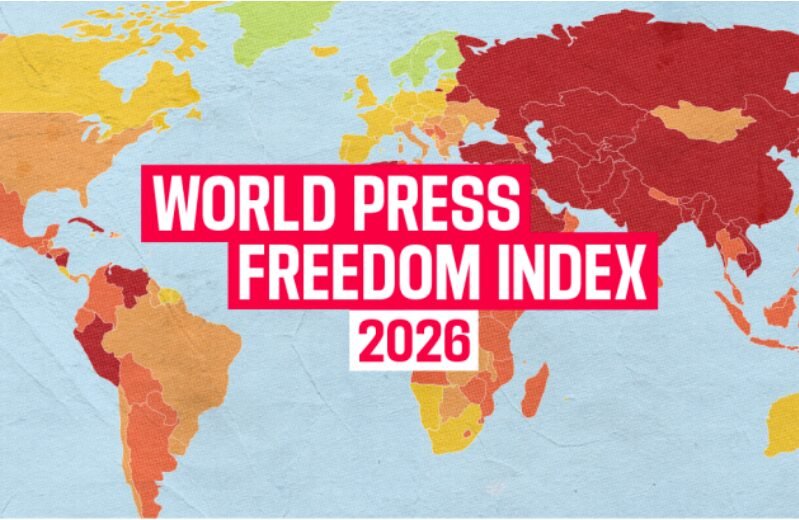
PARAMARIBO — While global press freedom will have fallen to the lowest level in a quarter of a century in 2026, Suriname remains relatively stable, despite a slight decline. On the recently published World Press Freedom Index of Reporters Without Borders (RSF), Suriname has fallen two steps: from 32e to the 34e place. In the previous report, Suriname scored 74.49 and now it is 73.20.
Although Suriname loses some places on the list of 180 countries and territories, the country maintains a strong position compared to many regional neighbors. The decline takes place against the backdrop of a global ‘free fall’ of press freedom. For the first time in the index’s 25-year history, more than half of all countries now fall into the ‘difficult’ or ‘very serious’ categories.
“Direct physical attacks on journalists are rare and the country has a pluralistic media landscape with several private media outlets“
Freedom with a shadow edge
Suriname is still praised by RSF for its respect for freedom of information. Direct physical attacks on journalists are rare and the country has a pluralistic media landscape with various private media, including leading newspapers such as The True Time and The West.
Yet there are structural challenges that stand in the way of a higher ranking. Although the Constitution guarantees freedom of the press, a draconian defamation law hangs over the sector like a sword of Damocles. This law provides for prison sentences of up to seven years for ‘public expression of hatred’ against the government.
In addition, there is considerable economic pressure. In an economy that relies heavily on mining, which accounts for a third of the Gross Domestic Product, journalism suffers from a chronic lack of resources and professional training. This vulnerability is reinforced by a climate in which critical reports occasionally provoke pressure from official quarters. According to observers, this regularly leads to self-censorship among media workers, which further limits effective freedom of information.
‘Journalism criminalized’
Suriname’s slight decline is in stark contrast to the dramatic deterioration elsewhere in the world. The average global score is lower than ever before. The legal indicator in particular has plummeted worldwide, which according to RSF is a clear sign that journalism is increasingly criminalized through national security laws and so-called SLAPP lawsuits, where the law is abused to silence critics.
While countries like Norway and the Netherlands top the list in first and second place respectively, we are seeing major shifts elsewhere. The United States has dropped to 64 under President Trumpe place and countries such as Ecuador and Peru have been devastated by organized crime violence. At the bottom of the list are unchanged China, North Korea and Eritrea at 180e place.
Isolation and democratic growth
Suriname’s position on the ladder is partly shaped by its unique history. After independence in 1975, the country was the only Dutch-speaking nation on the continent to remain isolated from regional politics for a long time, a situation that was reinforced by the civil war between 1986 and 1992. For several years now, according to RSF, the country has been trying to further strengthen its democratic institutions, although the balance between government authority and a critical press remains a delicate area of tension.
Finally, RSF emphasizes that Suriname is still among the better students in the class. Nevertheless, the organization warns that continued vigilance is required against the global trend of repressive legislation and political intimidation, which could also further erode Surinamese press freedom in the long term.