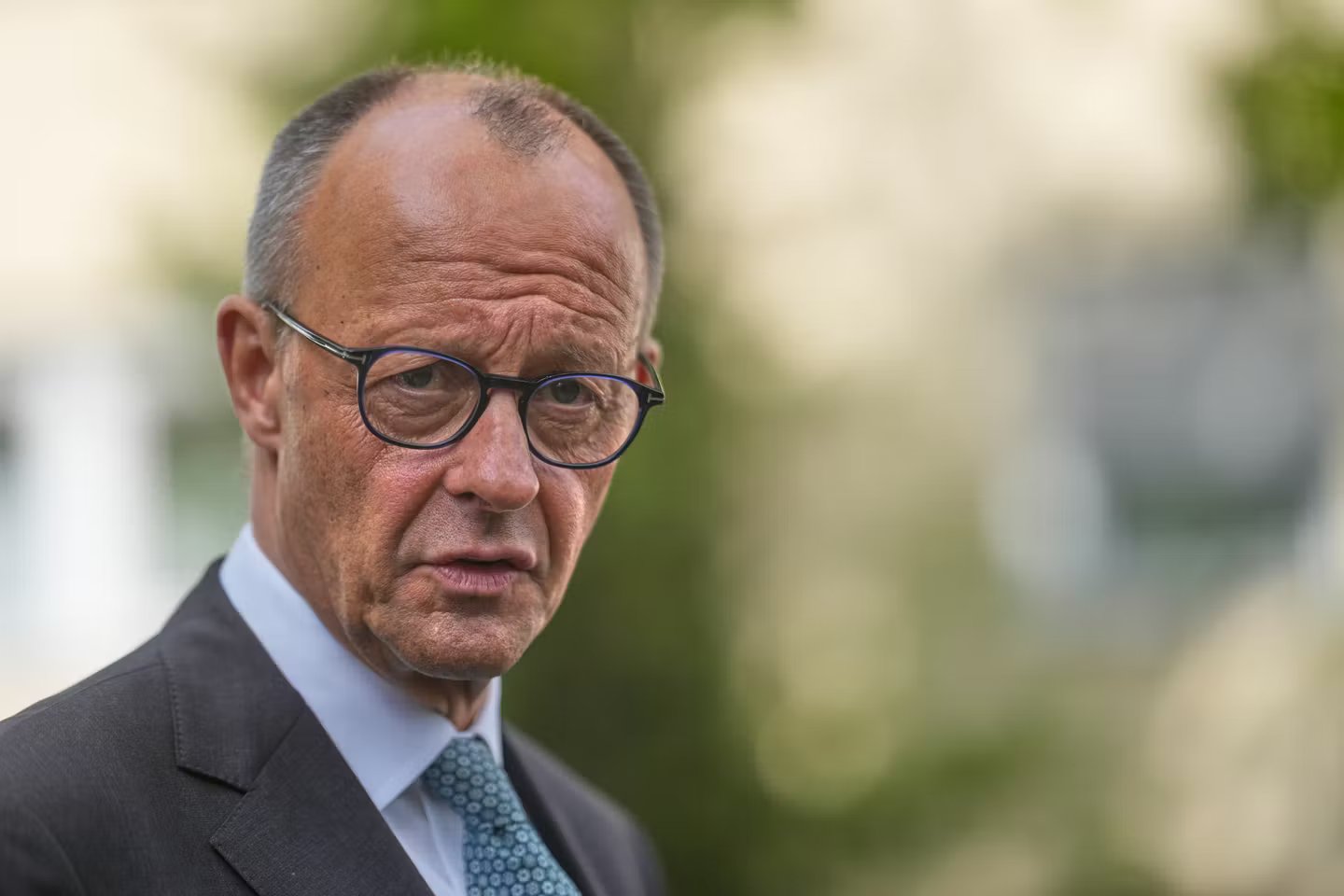
Friedrich Merz had dreamed all his life of becoming chancellor, but he likely never imagined that at the end of his first year in office, he would be the least popular leader Germany has had since the Federal Republic was founded in 1949. The conservative politician, whose difficult election to the chancellery on May 6, 2025, required two successive votes in the Bundestag for the first time in history, completed his first year in extremely challenging circumstances.
Elected on a promise to break with the era of repeated disputes in the three-party coalition under Social Democrat Olaf Scholz, Merz finds himself in a situation of near-identical tension. Comparisons with the previous government, whose repeated dysfunction led to early legislative elections in February 2025, have become a daily occurrence in political circles.
National polls have been unequivocal: Eighty-three percent of Germans are dissatisfied with the chancellor’s leadership, including within his own party, according to the Forsa Institute. At the federal level, the far-right Alternative for Germany party (AfD) now leads the Christian Democratic Union (CDU) by five points, the institute also found. “There is great disappointment among the public,” said pollster Manfred Güllner of the Forsa Institute. “This coalition, made up of the Christian Democrats of the CDU, their Bavarian sister party the CSU [Christian Social Union in Bavaria] and the Social Democrats of the SPD [Social Democratic Party], was seen as the ideal alliance to put an end to quarrels and develop joint initiatives. But the exact opposite has happened. And in one year, this government has become even more unpopular than Olaf Scholz’s was after three years.”
You have 75.12% of this article left to read. The rest is for subscribers only.