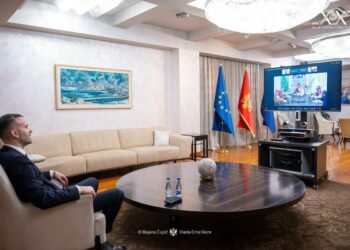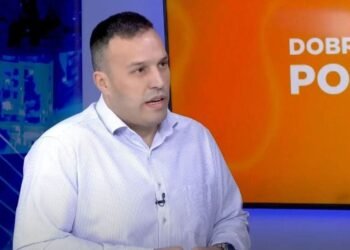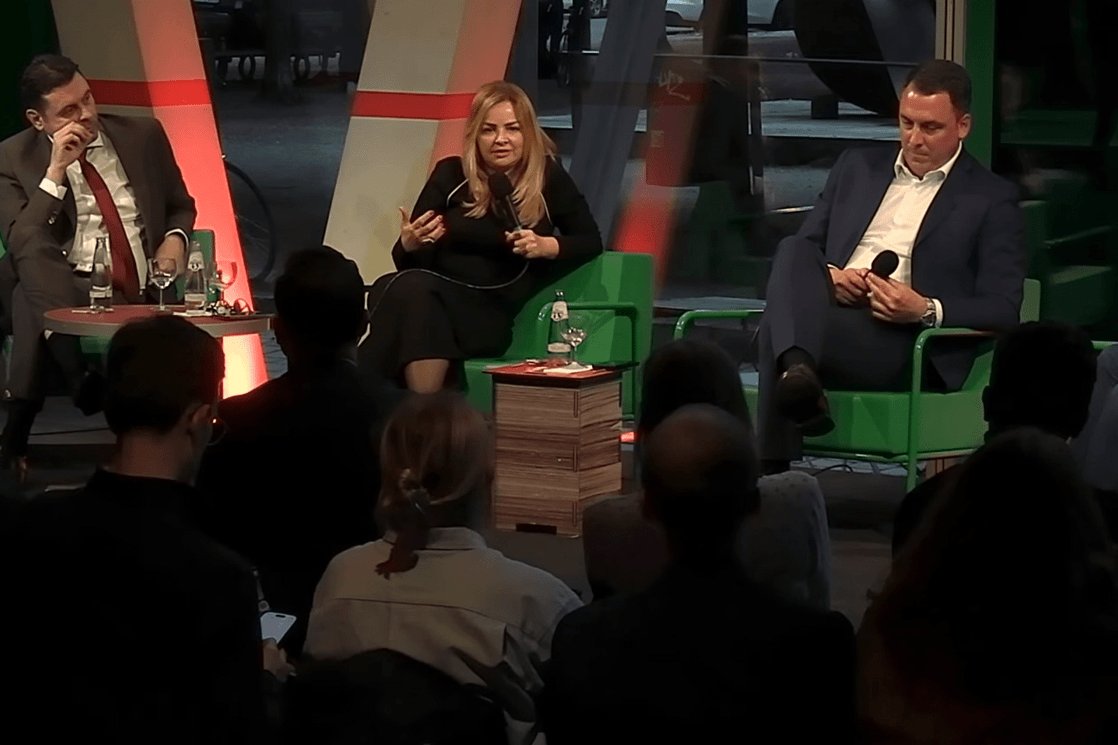
“We are aware that Montenegro is exposed to different political influences that do not necessarily share the view of how society should be organized. There are many people in the region, and unfortunately some are in the Government of Montenegro, who think that Montenegro should be reorganized on national and ethnic principles, something like what we have today in Bosnia and Herzegovina – that people live separately from each other and that there is some level of cooperation at the elite level. This is their vision, but we do not want to live in such a country, but to preserve the situation as it is. The only way to avoid such a scenario is to become part of the EU,” said Vuković.
Vuković pointed out that different nations in Montenegro live together and have been doing so for generations.
“People are not interested in whether you are Orthodox, Catholic, Muslim, Serbian or Montenegrin. However, it is not easy to preserve this concept, considering the region we live in,” Vukvoić pointed out.
Answering the question whether EU membership is possible by 2028, he says that it would be great, but also that he would be satisfied with EU membership until the end of the decade.
Uljarević: I think that 2028 is not a realistic goal
Daliborka Uljarević said on the panel that Montenegro is a small country with beautiful potential, but burdened by chronic political dysfunctionality.
He believes that it is not realistic for Montenegro to become a new member of the EU by 2028.
“I don’t think that date is realistic. The government is committed to slogans and PR, and that’s easy. It’s much more difficult to be committed to fulfilling obligations on a daily basis. Here we are in the middle of 2026 with 19 chapters that we should close by the end of the year. I don’t think that’s possible by the end of the year, which doesn’t mean that Montenegro won’t be the next member of the EU, even if that deadline is extended,” she pointed out.
She also stated that Montenegro is under pressure from various influences, and particularly emphasized the influence of the Serbian Orthodox Church (SPC).
“We had some influences through work in the field of the Serbian Orthodox Church, which is part of the concept of the “Serbian World”. It is not only a religious but also a political organization. This led to the polarization of society. We are a civil society on paper, but unfortunately we have some municipalities in Montenegro that behave like a state within a state. We have such a municipality – Pljevlja, where the president of the municipality does not celebrate the Independence Day of Montenegro, but of Serbia. Some people in the Government do not perceive Montenegro as their country. We have people in the highest positions who look towards Serbia or BiH, which they perceive as their home countries. The situation in Montenegro is very complicated,” she said.
Vujović: The concept of demolishing civil society is in effect
Ivan Vujović from the European Union says that membership in the EU is the main goal.
“There are many foreign influences and I’m afraid that the slogan “28 by 28″ is more propaganda than concrete reform. I think we have to show our best, including the opposition, even though we have been doing it so far. We behave politically responsibly, while the government and the ruling majority try to discredit the opposition when it criticizes bad ideas or political moves. We must remember that closing the chapter is only the first part of the process, followed by the ratification process. There is a lot of work ahead of us. Much depends on our government, which shows signs of wanting to exclude the opposition from the whole process. This is not a good approach, the integration process must be inclusive, and excluding the opposition and the civil sector is unacceptable,” Vujović pointed out.
He says that political changes took place on the concept of demolishing civil society.
“Either we will be a civil society, or we will be an ethnic society, as advocated by some political actors of the government during their entire career and political creation. They want to create a country of nations, or a country of one nation. Instead of having this situation as it is now, we have the imposition of a model like that in Bosnia and Herzegovina,” Vujović pointed out.