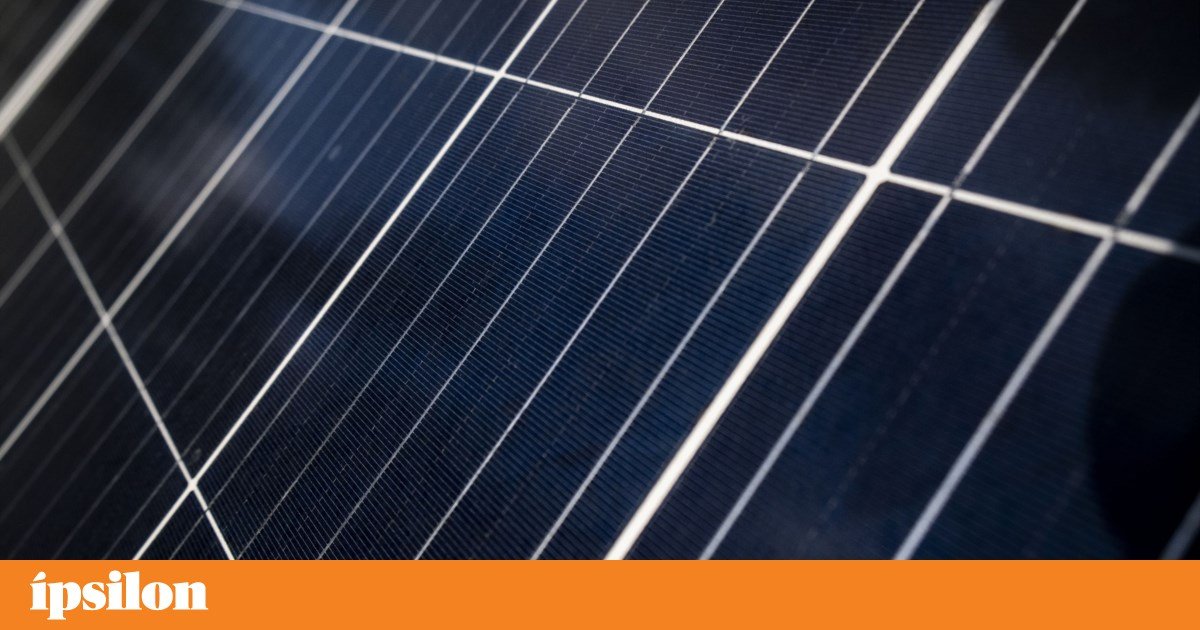
Solar panels are replacing diesel generators on some of South Africa’s major film sets, as oil giants streaming are increasingly under pressure to clean up one of the film industry’s dirtiest habits – its reliance on diesel generators.
Netflix filmed the second season of the hit series One Piece in Cape Town, its largest production in Africa to date. It was also the first to be filmed using a solar-powered base camp, so electricity during filming would come from off the grid.
“What we’ve demonstrated here is that productions don’t have to rely on diesel for reliability at scale. There are cleaner, quieter solutions that integrate seamlessly into the way film productions already work,” said Abe Cambridge, co-founder of Cinergy Mobile Power, the South African company that provided the green power for set of filming.
His company used clean mobile energy systems at all production sites, including a 400 kilowatt-hour battery system paired with 150 kilowatts of solar energy – enough to power 40 average European homes – at the Cape Town Film Studios.
In total, according to Cinergy, this system saved the production of One Piece 93 tonnes of CO2 emissions, roughly the same as 30 return flights between London and Cape Town.
Diesel generators power filming
The film industry normally uses diesel-fired electrical generation to satisfy huge energy needs of each production, especially during filming.
The Rocky Mountain Institute (RMI), a US think tank focused on the energy transition, said diesel generators are responsible for around 15% of emissions from most film and television productions – around 700,000 tonnes of CO2 emissions per year.
But with the pressure placed on large companies to become more sustainable, and with the power of marketing resulting from this fact, Netflix and Disney are part of a growing number of film and television companies that have publicly committed to halving emissions by 2030.
Netflix’s latest environmental, social and governance (ESG) report revealed that the streaming service’s main source of emissions streamingaround 41% in 2024, comes from the production of films and series.
“Since 2023, all scripted productions we directly manage will incorporate some form of clean mobile energy,” Netflix said in a response to emailed questions.
“In places where clean technologies are not available everywhere, like in South Africa, we are managing to innovate in the sector. This is what happens in the case of One Piecewhere our investment in solar energy has led to innovations such as the creation of a solar-powered hybrid battery system, including solar panels and batteries to power the base camp,” the company said.
Rising oil prices help
Britain’s ITV has also worked in South Africa, with Cinergy supplying clean energy for the current I’m a Celebrity, Get Me Out of Herefilmed near the iconic Kruger National Park wildlife reserve.
“We were able to drastically reduce our fuel consumption with Cinergy’s solar and battery solutions. We used virtually no diesel,” said Phil Holdgate, director of sustainability of production at ITV studios.
Although the company can continue to hire backup generators, “our ambition is always to be fuel-free”, assured Holdgate. The sharp increase in oil prices as a result of the conflict in the Middle East provided an additional incentive.
“Producing our own energy from the sun also provides some protection against fuel market volatility, such as price shocks and availability issues,” Holdgate said.
Barriers to being green
Still, Cambridge acknowledged that there were logistical challenges when filming in more remote locations in Africa. For example, one type of battery weighs nine tons and must be transported by crane. But once at base camp, it can be used for at least a month.
Cambridge said that when the global film industry presents statistics on how it has incorporated clean energy into sets, it often means connecting a diesel generator to a battery.
This can be efficient: reducing the use of dirty fuel and it is something that your company also sometimes does. However, “what we also do is integrate solar energy into the energy mix, which reduces or completely eliminates the need for a diesel generator to charge the battery”, he highlighted.
Large-scale international productions can afford clean technology, but costs are a barrier for smaller-budget films, said Marisa Sonemann-Turner, director of operations at Film Afrika, the local production company that worked with Netflix on One Piece.
Transport continues to be a major obstacle as there is a “limited supply of clean mobile energy solutions and low-energy vehicles carbon“, he stated.
Airplane travel is also unavoidable in international productions, although large companies often compensate for it with carbon credits.
Furthermore, the technology used in sets of footage is mostly imported. Solar panels are purchased in China. Still, the South African film industry contributes between R3,500 million (€180 million) and R$5,400 million (€276 million) to the economy and supports up to 12,000 jobs, according to statistics provided by Film Afrika.
Using clean energy to power the film industry can help South Africa remain a competitive production location. Zizipho Zikhali, director of operations at GreenSet, which is part of the South African Film Academy, said this is all quite new for the country’s film sector.
“As recently as 2023, if a production had asked whether diesel generators could be replaced with large-scale clean mobile power, the answer would have been no,” Zikhali said.