STICKY WINNER:
The marmalade made from a Taiwan-endemic citrus plant took home an armful of medals from the international festival
-
By Esme Yeh
/ Staff reporter
Marmalade made of Citrus taiwanica, a critically endangered citrus species endemic to Taiwan, has won five gold and eight silver medals from the World’s Original Marmalade Awards and Festival.
According to the Hsinchu branch of the Forestry and Nature Conservation Agency (FNCA), Citrus taiwanica, also known as Nansho Daidai sour orange, is a Taiwanese citrus species listed as critically endangered by the International Union for Conservation of Nature.
The plant almost went extinct in the wild, their habitats damaged by land development, with only seed trees preserved, it said.
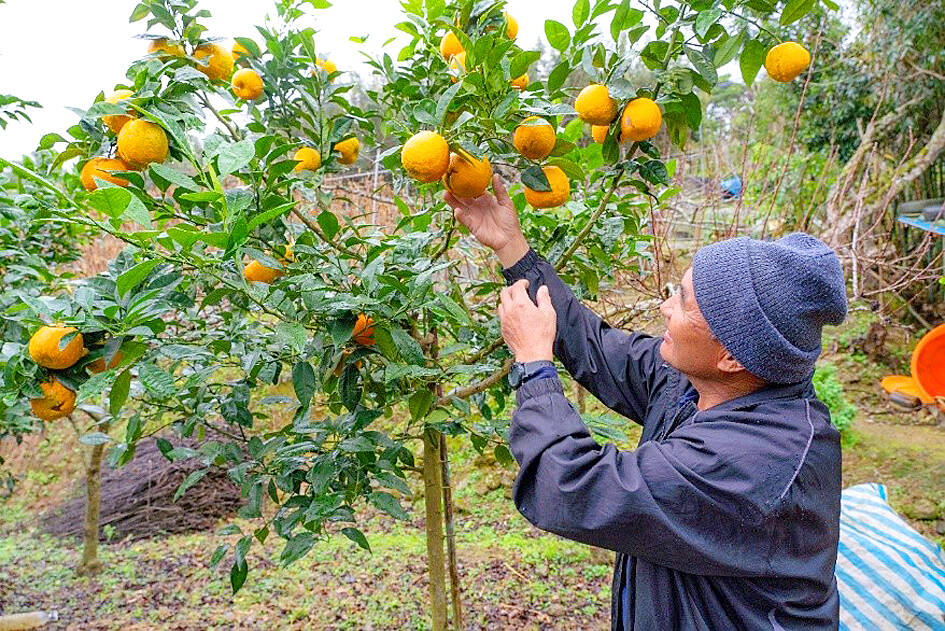
Photo courtesy of the Forestry and Nature Conservation Agency
The branch has been working to restore the native Citrus taiwanica while exploring new applications for the fruit.
It worked with Keya Jam (柯亞果醬) and the Miaoli County Indigenous Saisiyat People’s Forestry and Labor Cooperative on developing Citrus taiwanica-based products.
They entered in the World’s Original Marmalade Awards and Festival held in the UK under the name of “FNCA x Keya Jam x Saisiyat” this year, earning five gold and eight silver awards in the artisan marmalade category.
Keya Jam founder Ke Ya (柯亞) yesterday said the awards won this year were for six different Citrus taiwanica-based jams that were created in the collaboration.
The jam flavored with Litsea cubeba — commonly known as mountain pepper — is the most distinctive of the jams, she added.
Mountain pepper is an indigenous plant of Taiwan and is not grown in Europe, making it a local flavor representative of Taiwan and tasty to Westerners, she said.
The Citrus taiwanica trees in the Saisiyat Cooperative’s orchard produced a steady yield this year, she said, adding that the fruit’s pectin content and thick rind make it ideal for jam-making and for pairing with a variety of flavors.
Saisiyat village elder Ken Chih-you (根誌優) said Citrus taiwanica, known as “Kata’iyok” in the Saisiyat language, is a flavor that has long been part of the village’s history.
“Seeing the Citrus taiwanica trees grow, bear fruits and shine on the global stage this year means more to us than just winning the awards,” he said.
The branch in 2021 launched the “Citrus Taiwanica Go Home” initiative and continued to overcome challenges such as pests, diseases and slow growth with improved techniques, it said.
It collaborated with the Saisiyat Cooperative on restoring and replanting Citrus taiwanica in their native habitats, the branch said, adding they have planted about 3,000 Citrus taiwanica plants.
Citrus taiwanica fruits used for jams for international competitions used to be sourced from the seed trees, which have limited production, it said.
The Saisiyat Cooperative’s stable fruit production this year showed that Citrus taiwanica has the potential for industrial applications as its cultivation management has improved, it said.
Saying Citrus taiwanica represents an achievement in Taiwan’s efforts to restore native plants. The branch said it would continue to develop sustainable cultivation practices and a safe application evaluation mechanism for Citrus taiwanica jointly with National Taiwan University horticulture associate professor Lin Shu-yen (林書妍).