The opening of the review of the Treaty on the Non-Proliferation of Nuclear Weapons witnessed an exchange of accusations between officials from the United States and Iran, in light of escalating tensions over the Iranian nuclear program and Tehran’s nuclear ambitions, according to press reports.
The developments revolve around the election of Iran as one of the vice-presidents of the conference, among a list of 34 deputies, as its nominations came through the Non-Aligned Movement, which includes 121 countries, most of which are developing countries.
The move was supported by the United States, Australia, and the United Arab Emirates, while the United Kingdom, France, and Germany expressed “concern” about the decision, while Russia objected to what it considered a special targeting of Iran.
The US representative at the conference, whose name was not revealed, said that the administration of US President Donald Trump is “deeply shocked” by a country that has “shown contempt for the treaty” assuming the position of vice-president of the conference.
On the other hand, Reza Najafi, Iran’s ambassador to the United Nations in Vienna, rejected these accusations, describing them as “unfounded and politically motivated,” stressing that his country’s position is in line with its international obligations.
Regarding the war and its developments, the Russian TASS agency reported that Iranian Foreign Minister Abbas Araghchi announced that the United States had submitted a proposal to hold talks with Iran, pointing out that Tehran is currently studying this offer.
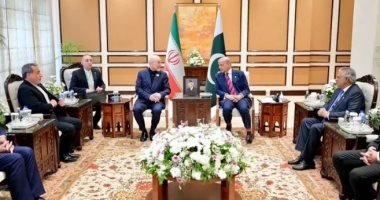
Iranian sources told Reuters on Monday that the proposal presented by Iranian Foreign Minister Abbas Araghchi to Islamabad includes holding talks with the United States in stages.
The White House had received a new Iranian proposal to reopen the Strait of Hormuz and stop the war, while postponing the nuclear negotiations file to a later stage, in an attempt to break the diplomatic impasse that worsened after the faltering mediation led by Pakistan, the continued American pressure on Iranian ports, and Washington’s adherence to its conditions related to the nuclear program.
Iranian sources revealed that the new proposal focuses on ending military operations and opening the vital shipping lane, with the nuclear file being discussed in a separate stage. However, indications are that this proposal may not be accepted by US President Donald Trump, who is seeking a comprehensive agreement that includes ending the Iranian nuclear program and ensuring a permanent ceasefire, in addition to addressing the navigation file in the Strait of Hormuz.