Donald Trump has paused the US operation to guide ships through the Strait of Hormuz, saying talks with Iran have made progress towards a deal to end the war.
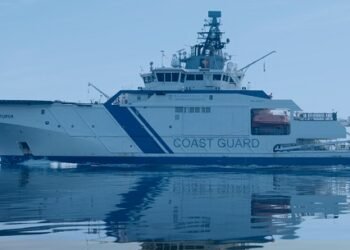
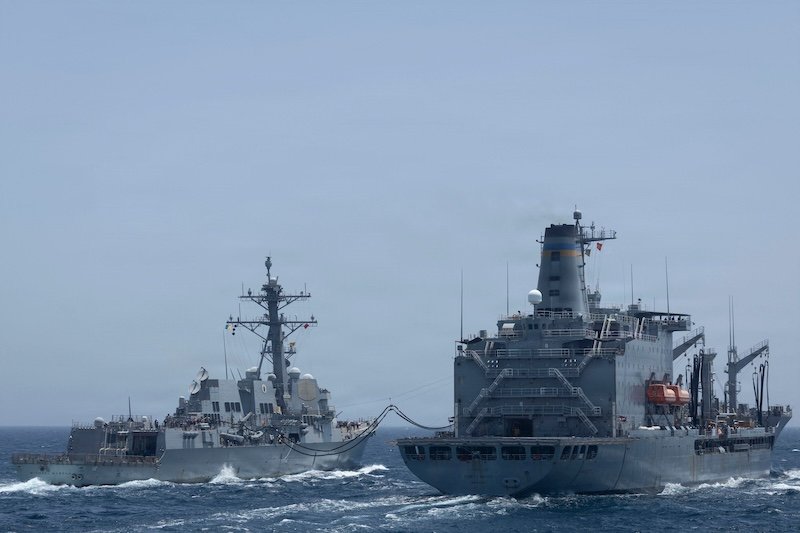
The US president said Project Freedom would stop for “a short period” after a request from Pakistan and other countries. He said the naval blockade of Iranian ports would remain in force.
The move came one day after Washington launched the operation to move stranded commercial vessels through the waterway.
Trump said on social media that “great progress” had been made towards a “Complete and Final Agreement with Representatives of Iran”. Tehran has not confirmed any deal.
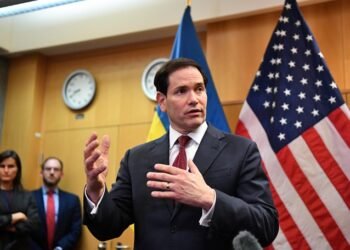
US secretary of state Marco Rubio said the main US-Israeli offensive against Iran, named Operation Epic Fury, had ended after meeting its objectives.
“The operation is over. Epic Fury – as the president notified Congress – we’re done with that stage of it,” Rubio said at the White House.
Rubio said US activity in the Strait of Hormuz remained separate from the offensive and described it as defensive. “There’s no shooting unless we’re shot at first,” he said.
The change in policy followed public statements from Rubio, defence secretary Pete Hegseth, and chairman of the Joint Chiefs of Staff Gen Dan Caine, who had said the US would keep the route open for shipping.
Hegseth said the ceasefire with Iran had not collapsed. “Right now the ceasefire certainly holds, but we’re going to be watching very closely,” he said.
The Strait of Hormuz carries about a fifth of global oil and gas shipments. The war and near-closure of the route have pushed fuel prices higher and placed pressure on governments, shipping firms, and airlines.
Oil prices eased in Asian trading after Trump announced the pause. The BBC reported that Brent crude fell 1.7 per cent to $108 a barrel, while US-traded oil dropped 1.6 per cent to $100.60.
Project Freedom had aimed to escort ships through the strait after hundreds of vessels were held up in the Persian Gulf. The Guardian reported that only two merchant ships were known to have passed through the US-guarded route before Trump paused the operation.
Iranian state media said the pause was a US retreat. Iran’s parliamentary speaker Mohammad Bagher Qalibaf said the current situation remained harder for Washington than Tehran.
“We know full well that the continuation of the status quo is intolerable for America; while we have not even begun yet,” he said in a post on X, cited by the Guardian.
Iranian President Masoud Pezeshkian said the US was pursuing “a policy of maximum pressure” and expected Iran to accept unilateral demands. He said this was “impossible” for Tehran.
China moved into the diplomatic centre of the crisis as Iranian foreign minister Abbas Araghchi met Wang Yi in Beijing. It was Araghchi’s first visit to China since the war began.
Wang described military actions by the United States and Israel against Iran as “illegitimate”, according to Tasmin News Agency, and said China wanted a full ceasefire and safe passage through the strait. Beijing also described itself as a reliable strategic partner of Tehran.
Araghchi said Iran would protect its interests in talks. “We only accept a fair and comprehensive agreement,” he said in a statement to Iran’s Isna news agency.
Washington has also turned to the UN. Rubio said the US and Gulf states had drafted a Security Council resolution calling on Iran to stop attacks on ships, halt mine-laying, and secure passage through the waterway.
The United Arab Emirates said its air defences intercepted Iranian missiles and drones for a second day. Iran denied attacking the UAE and said it would have announced any such action.
The UK Maritime Trade Operations agency reported that a cargo vessel had been struck by an unknown projectile in the Strait of Hormuz. French shipping group CMA CGM also said one of its vessels, the San Antonio, had been targeted while transiting the route, according to Al Jazeera.
The war has also continued across the region. Israel ordered residents of 12 towns and villages in southern Lebanon to leave their homes, claiming it was acting against Hezbollah ceasefire violations. Hezbollah said it had targeted Israeli soldiers in southern Lebanon with a drone.
Israel has illegally invaded and attacked southern Lebanon since early March, destroying towns and villages and killing almost 2,700 people, including medical workers and journalists.
Earlier strikes also hit Beirut, killing hundreds. More than 1.2 million people have been displaced.
Trump announced a ceasefire on 16 April, but fighting between Israel and Hezbollah has continued, mainly in Lebanese areas held by Israeli forces.
In the US, the administration faces pressure over its claim that hostilities with Iran have ended. The war powers deadline passed last week, and critics say the blockade and clashes in the strait show the conflict has not ended.
Democratic congressman Raja Krishnamoorthi accused Trump of “falsely” telling Congress the war was over while US forces continued to exchange fire with Iranian forces, in a letter to Director of National Intelligence Tulsi Gabbard.
Trump has not set out what would count as a breach of the ceasefire. Asked by reporters, he said: “You’ll find out because I’ll let you know.”
The pause leaves shipping firms and insurers waiting for proof that the strait has reopened. One of the world’s largest container shipping companies, Hapag-Lloyd, said its risk assessment had not changed and that its ships were not transiting the strait for now.
HT