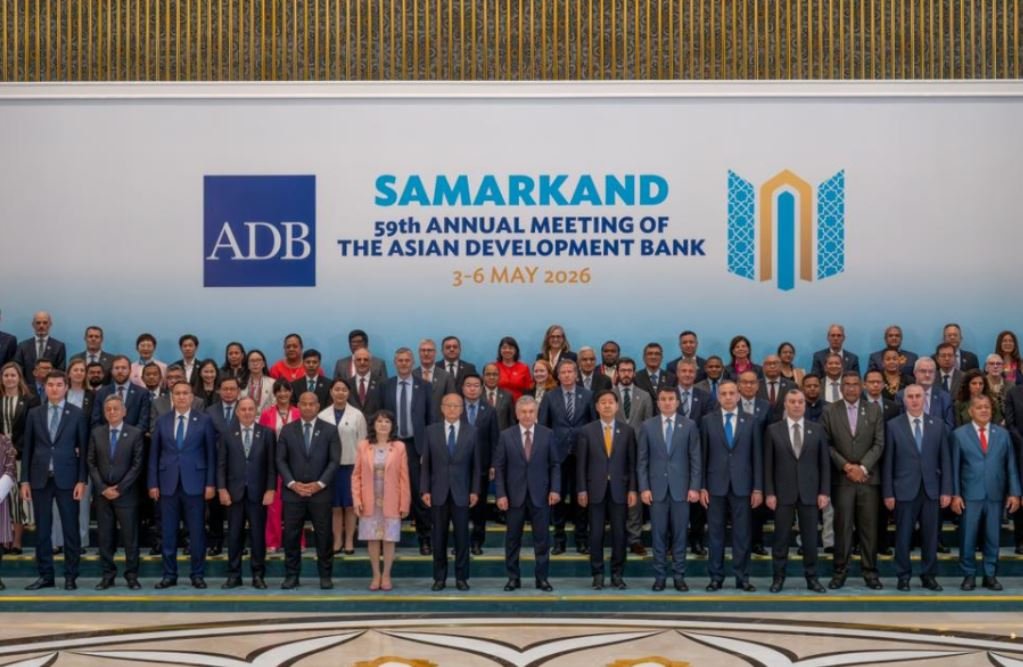
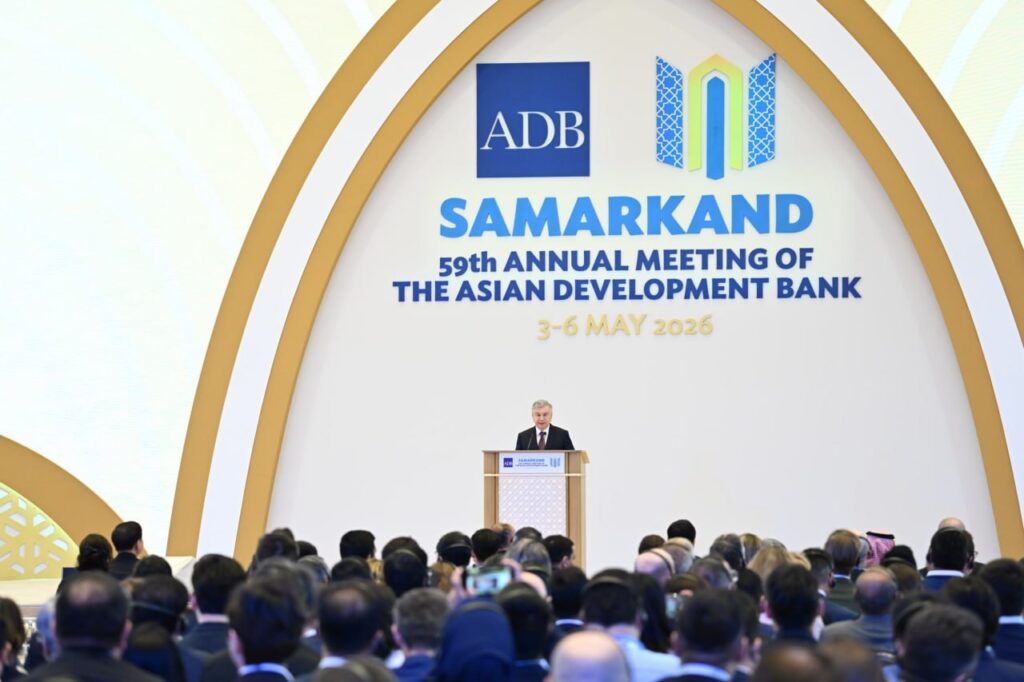
The annual meeting of the Board of Governors of the Asian Development Bank is taking place in Samarkand, which this year brought together thousands of participants – representatives of governments, international financial institutions, the private sector and the expert community.
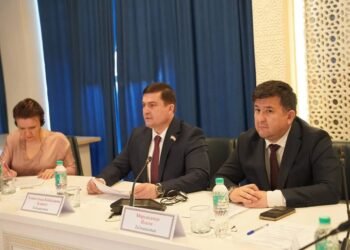
The Tajik delegation at the forum is headed by the country’s First Deputy Prime Minister Khokim Kholikzoda, the republic’s manager at the ADB. The delegation also included Sulton Rahimzoda, Chairman of the State Committee for Investments and State Property Management – alternative manager at ADB.
The events take place from May 3 to 6 at the Silk Road Samarkand International Center and include plenary sessions, thematic panels, business forums and bilateral meetings.
Signals from ADB: focus on sustainable growth and regional connectivity
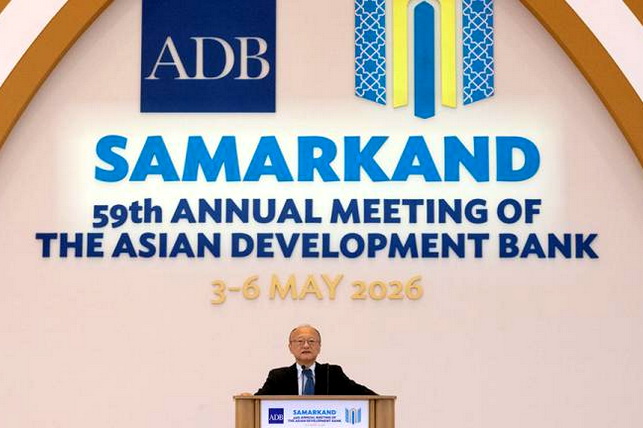
Speaking at the opening ceremony on May 4, Asian Development Bank President Masato Kanda noted that the region faces growing economic and climate challenges that require coordinated solutions.
“Today’s challenges require greater collaboration and coordination to ensure sustainable and inclusive growth,” he stressed.
The head of the bank also announced his readiness to expand support to the countries of Central Asia, including financing infrastructure projects, developing a green economy and digitalization.
“We see significant potential in Central Asia and are ready to increase investments aimed at long-term sustainability and improving the quality of life,” Kanda said.
Mirziyoyev focuses on regional integration and investment
The President of Uzbekistan Shavkat Mirziyoyev also spoke at the opening of the annual meeting, who emphasized the importance of the forum for the entire Central Asian region.
He stated that Uzbekistan views cooperation with the ADB as one of the key factors in accelerating economic reforms and modernizing the country’s infrastructure.
The head of Uzbekistan noted the importance of further expanding investments in transport, energy and industry, and also emphasized the need to strengthen regional connectivity and cooperation between the countries of Central Asia.
Particular attention, he said, should be paid to joint projects aimed at developing “green” energy and increasing the resilience of the region’s economies to external challenges.
Tajikistan: bet on energy and infrastructure
For Tajikistan, participation in the ADB annual meeting is an opportunity to promote priority areas of economic policy and attract additional financing.
The main areas of interaction include:
development of hydropower and modernization of energy infrastructure;
construction and reconstruction of transport corridors;
projects in the field of water supply and irrigation;
support for social infrastructure and sustainable development.
Special attention is paid to the climate agenda – Tajikistan, which has significant hydropower potential, is considered one of ADB’s key partners in promoting green energy in the region.
As macroeconomic indicators improve and debt sustainability policies are reviewed, the possibility of changing the financing structure is being discussed.
It is expected that from 2027 the republic will again be able to gain access to ADB lending instruments along with grant financing.
This will represent an important shift in the collaboration model, which in recent years has been limited to exclusively grant support.
New strategy and expectations from the forum
Participation in the Samarkand forum takes place against the backdrop of the preparation of a new partnership strategy between Tajikistan and the ADB for 2026–2030. The recently adopted document envisages expanding investment and deepening cooperation in priority areas.
It is expected that during the annual meeting, the Tajik delegation will hold a number of negotiations with the bank’s management and international partners on the launch of new projects, including in energy and transport.
Central Asia in focus
The theme of this meeting reflects the growing role of Central Asia as a region of strategic importance. Discussions will focus on the development of transport connectivity, energy transition, food security and digital transformation.
The holding of the forum in Samarkand highlights the growing interest of international investors in the region and opens up additional opportunities for Central Asian countries, including Tajikistan, to attract resources and expand economic cooperation.
Why is this important
The Samarkand meeting actually determines the contours of Tajikistan’s future financial cooperation with the ADB.
The transition from an exclusively grant model to a mixed one (grants + loans) may be one of the key changes in the country’s investment policy.
Amid growing competition for international financing, Tajikistan is seeking to secure its status as one of the priority recipients of ADB resources in Central Asia.