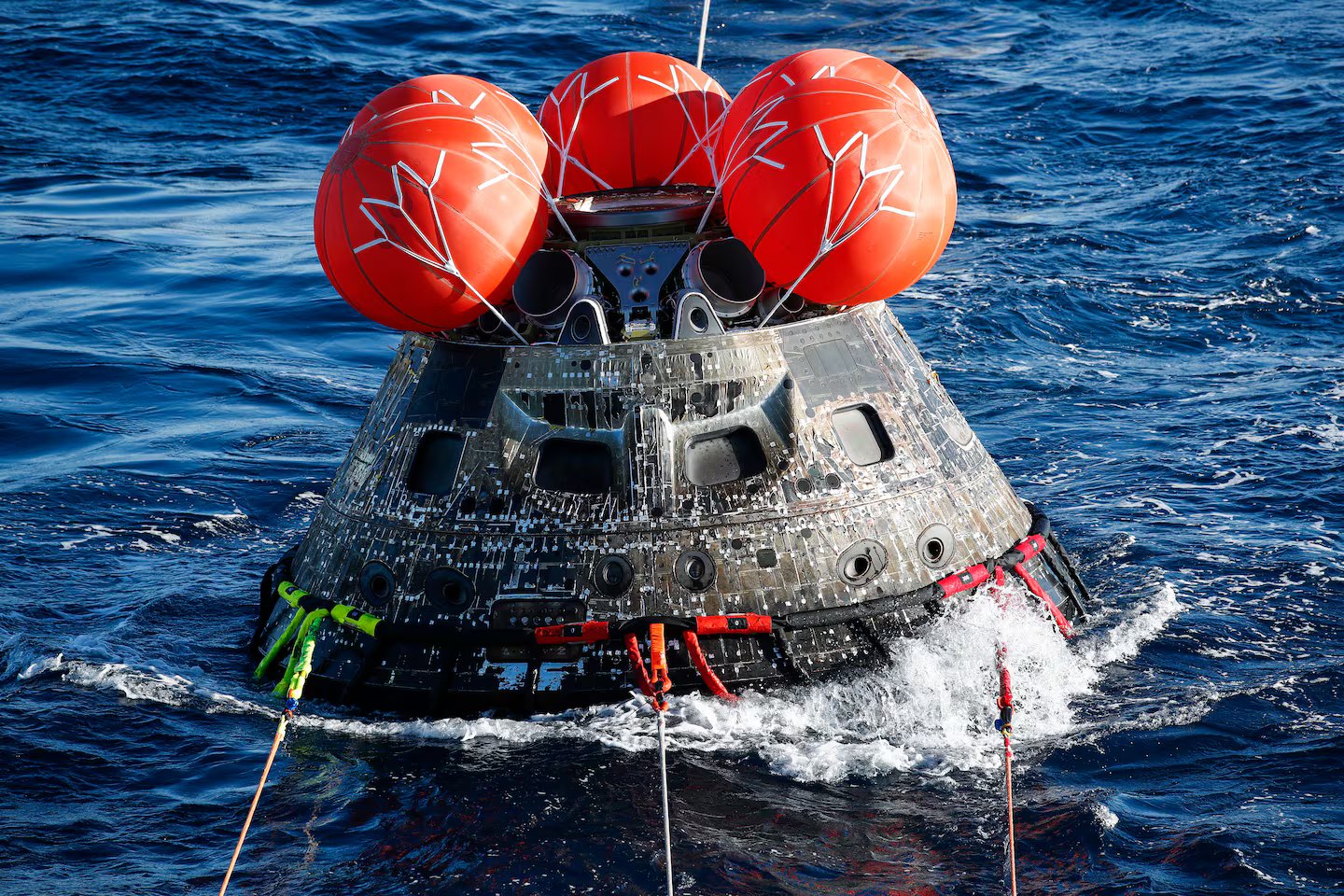
The Orion spacecraft, from the mission Artemis IIwill splash down this Friday, April 10 at 8:07 pm EDT (6:07 pm CR time), after re-entering the atmosphere at about 11 kilometers per second.
The descent will follow an automated parachute sequence and rely on a “free return” trajectory that does not require firing engines to return to Earth. That design, developed by NASA since the 1960s, allows the Moon’s gravity to redirect the ship back. The infinity-like path ensures that Orion completes the journey even in the face of propulsion failures.
What will re-entry and relegation be like?
The process begins about 20 minutes before contact with the atmosphere, when the service module separates southeast of Hawaii.
Before entering, Orion reaches its maximum speed: 23,864 miles per hour (about 10.7 km/s).
From there, the most demanding phase occurs:
- At about 400,000 feet high, the capsule enters the atmosphere
- Air ionizes and forms plasma
- A communications blackout occurs for about six minutes
To reduce the thermal and physical impact, Orion executes a “skip” reentry maneuver. It does not fall in a straight line: it partially bounces into the atmosphere and distributes heat, which exceeds 3,000 °C.
After exiting the blackout, the final phase of descent begins:
- Front cover comes off
- Drag parachutes deploy at about 22,000 feet
- Three main parachutes open at about 6,000 feet
Within a few minutes, the capsule reduces its speed to a safe level for impact.
Where will it land?
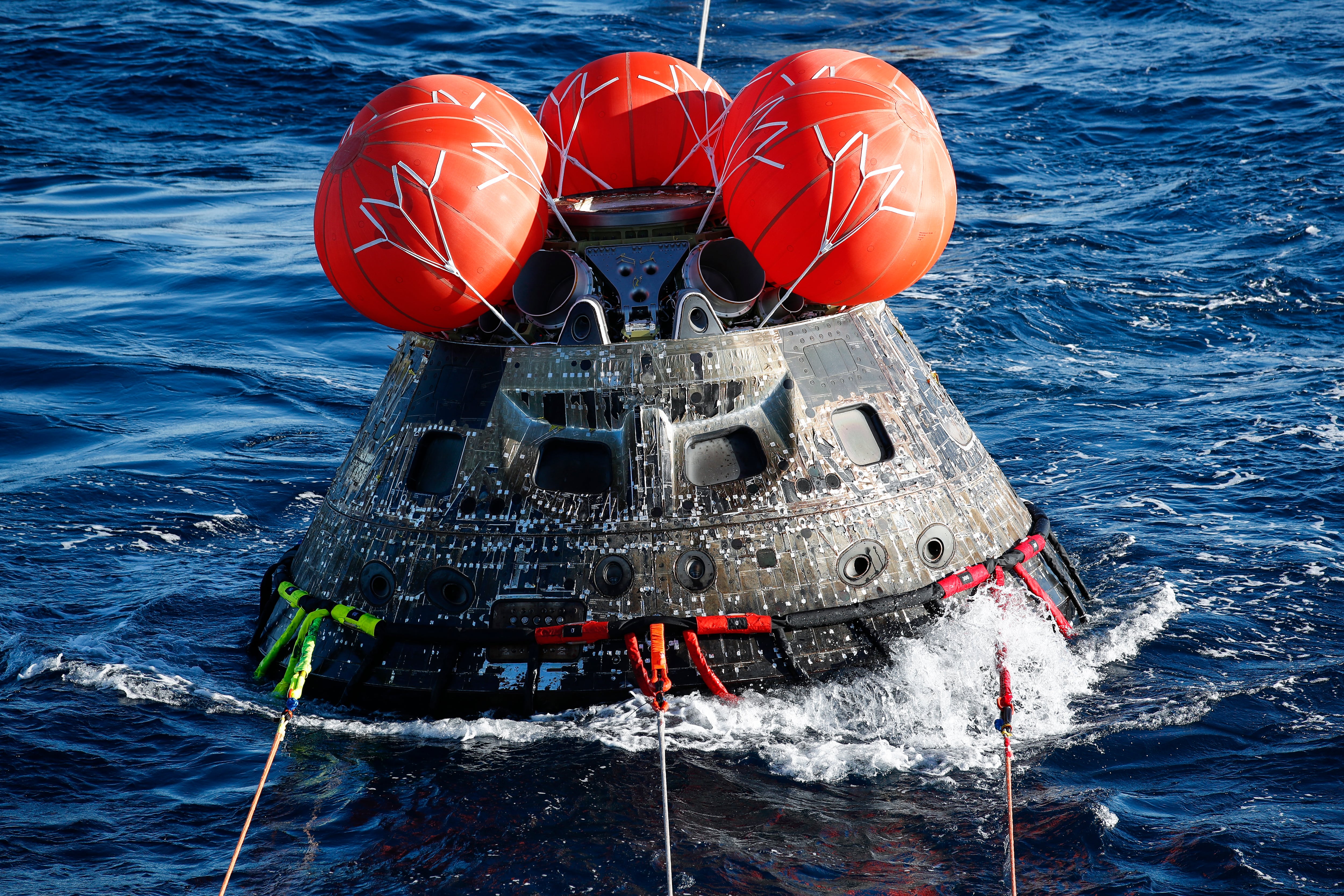
Ditching will occur at Pacific Ocean, off the coast of San Diego, California.
Recovery teams will be deployed in the area. Helicopters will extract the crew and transfer them to the ship USS John P. Murthawhere medical evaluations will begin.
The capsule will later be recovered for technical analysis.
Where to see the return live?
Return coverage will begin at 6:30 pm EDT (4:30 pm Costa Rica time) and will extend until after the crew is rescued.
You can follow at:
- NASA+ (official platform)
- NASA YouTube
- Streaming services such as Amazon Prime, Apple TV, Netflix, HBO Max, Discovery+, Peacock and Roku
The transmission includes re-entry, parachute deployment, splashdown and rescue operations.