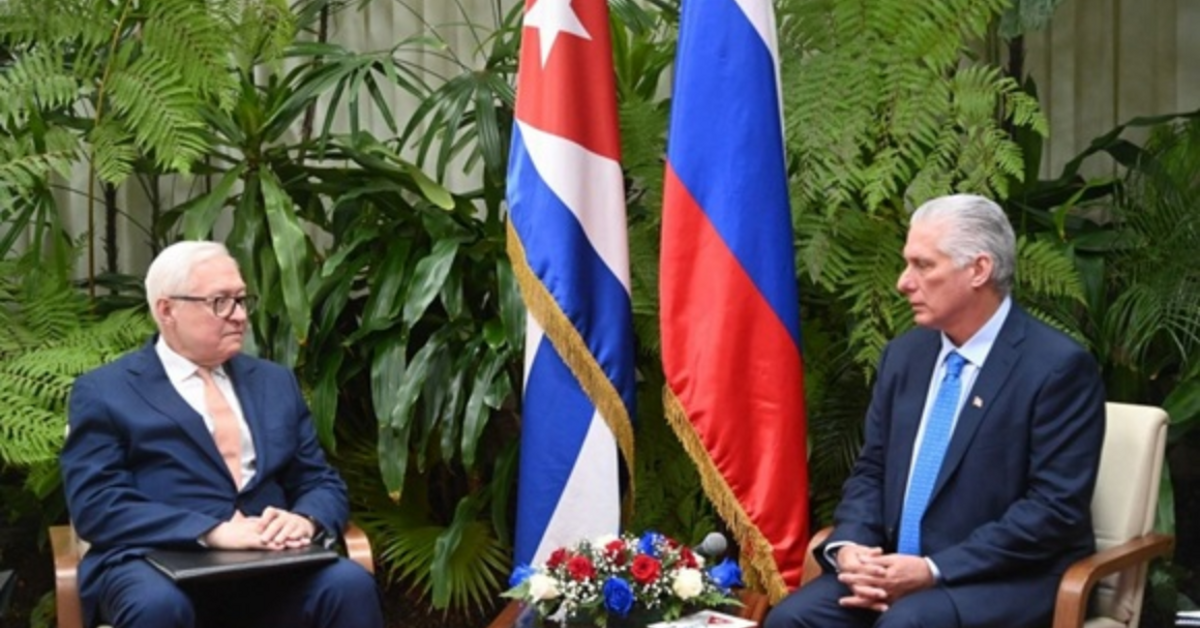
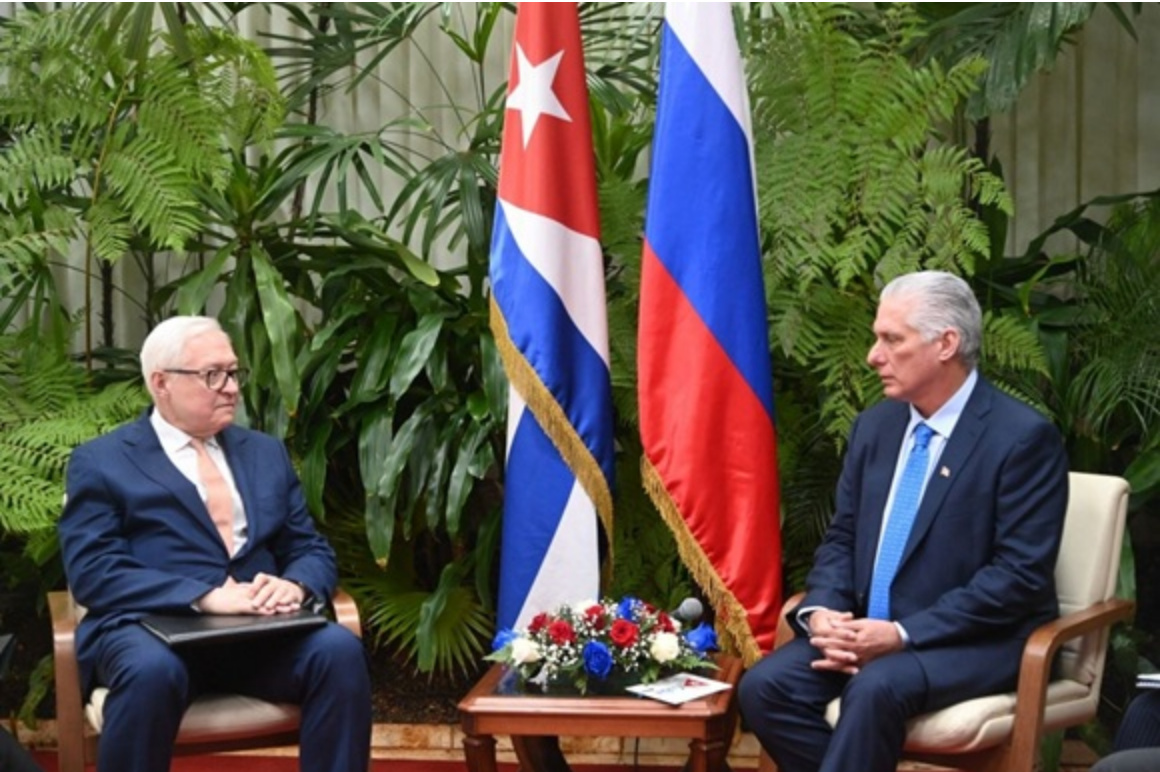
Madrid/Nine days after the Anatoly Kolodkin docked at the port of Matanzas with 730,000 barrels of crude oil, the vice chancellor of Russia, Sergei Ryabkov, entered the Palace of the Revolution willing to receive the praise of Miguel Díaz-Canel. “There is courage in countries like the Russian Federation to not allow themselves to be subjugated by imperial policies,” said the Cuban president.
The appointment also comes after Moscow has announced the sending of a second tanker to the Island, although it has not offered details in this regard. “Russia is not going to abandon the Western Hemisphere, no matter what they say in Washington, which is obsessed with the idea of expelling Russia, as well as China, from this region,” he said.
“At the current moment, Russia is one hundred percent in solidarity with Cuba, despite the complexity that the country is going through, we are at your side,” Riabkov told the Cuban president.
Díaz-Canel thanked the vice chancellor for his support and stated that “it is a sign that Cuba is not alone.” According to the Cuban president, the shipment of crude oil to the island “supports a concept that we are defending, which is that we have every right to receive oil and that there is every right for other countries to export oil to Cuba.”
“It supports a concept that we are defending, which is that we have every right to receive oil and that there is every right for other countries to export oil to Cuba.”
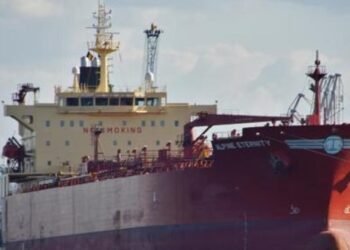
The decision to send the Anatoly Kolodkin to the island It seemed like an impossible mission at the time it was met. After the order signed by Donald Trump at the end of January by which tariffs would be imposed on countries that sent oil to the Island, none of them risked doing so, despite the fact that both Russia and Mexico stated several times that they were looking for solutions. The Supreme Court’s decision, which declared illegal the formulas by which Washington intended to apply these rates, seemed to open a loophole, but no one jumped in when they knew that there were other punishment options.
Another possibility opened with the US announcement to suspend sanctions on Russian crude oil for a month to alleviate energy problems derived from the closure of the Strait of Hormuz. He seahorsewith the flag of Hong Kong (China) but loaded with Russian oil, began to discreetly head towards the Island, but changed course almost at the same time that the White House added an amendment stating that Iran, North Korea and Cuba were exempt from that relief.
However, the Anatoly Kolodkin He continued the route without opposition from the United States. “They have to survive! (…) I don’t have any problem,” said the man himself. Trump when asked about that ship. “I told them, if a country wants to send oil to Cuba right now, I have no problem with it. Whether it’s Russia or not,” he added. Later, the White House clarified that it was a humanitarian decision and that it would be seen on a case-by-case basis, which makes the future of that s unpredictable.second shipment announced on April 1 by the Russian Energy Minister, Sergei Tsiviliev.
Riabkov spoke yesterday of the “special character” of relations between Havana and Moscow, and described as “very useful” the meeting of political consultations between the foreign ministries of both nations held today, which he considered “very useful in evaluating different issues in detail.”