Tegucigalpa, Honduras
A strong institutional shakeup was carried out discreetly in two sensitive structures of the State: the Intervening Commission of the National Penitentiary System (Sipena) and the Honduran Naval Force.
The decisions emanated directly from the Executive Branch and the high command of the Armed Forces (FF AA).
Sources of this rotary reported on meetings held in recent days between military leaders and senior officials, with the aim of defining the future of the administration and operation of the National Penitentiary Institute (INP)as well as the intervention commission that directs it and the changes to be carried out in the Navy.
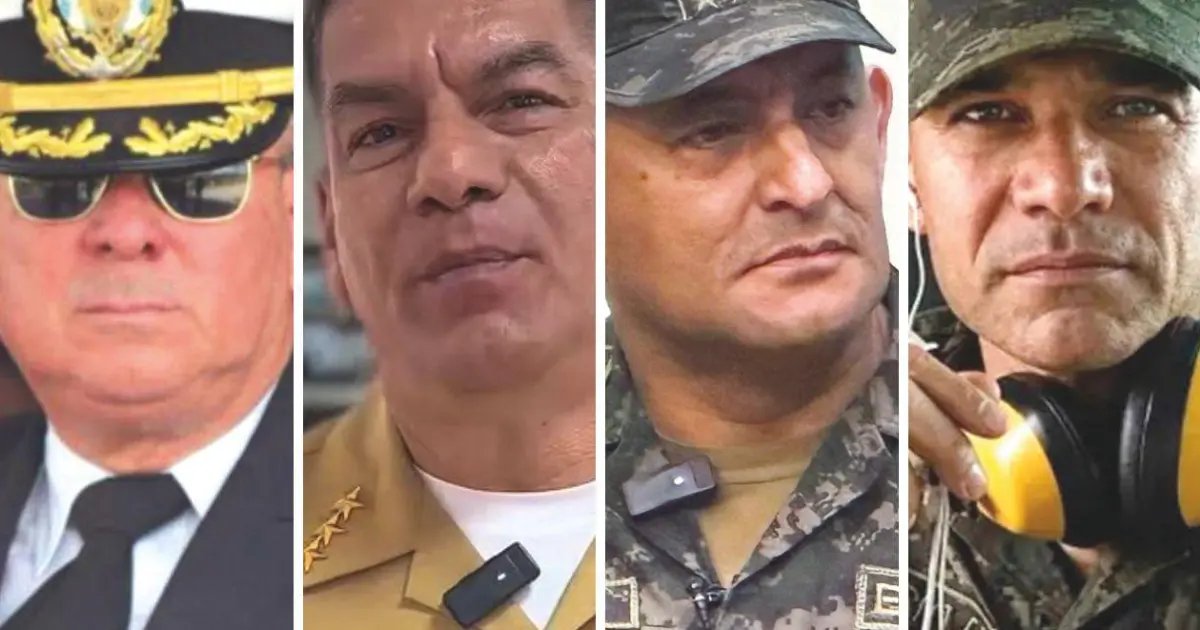
The most immediate actions were taken in the Naval Force, where Captain Ricardo de Jesús Dubón Cabrera was removed as commander, who would have been separated from the institution due to differences with heads of units within the military establishment.
According to the sources consulted by this newspaper, Dubón Cabrera did not have the full support of the military leadership and, in addition, he was on the radar of United States authorities for alleged irregularities committed in previous positions.
According to sources, the change of command would have taken place around 6:00 in the afternoon on May 1, at the facilities of the General Command of the Naval Forcein Comayagüela.
Captain Juan Antonio de Jesús Rivera took over as the new commander of the Navy, who served as inspector of the institution between 2021 and 2022.
Rivera is part of the 29th class of officers, currently in command roles within the institution.
Among officials of the institution, the question arises as to why a change of this magnitude was made on a holiday, Labor Day, through a discreet ceremony.
Prisons
In the prison system, the Intervening Commission and the general was appointed in retirement condition Walter Iran Amador Lacayo at the head of the National Penitentiary Institute.
The colonels who have administered the prisons since January 2026 will be made available, due to complaints against them and their participation in conflicts during the last electoral process.
According to sources consulted, these officers do not enjoy the confidence of the current military authorities or the government, since they followed orders from the former head of the Joint Chiefs of Staff, Roosevelt Hernández.
The president of the INP Intervention Commission is Cavalry Colonel Othoniel Gross Castillo, against whom there is a formal complaint filed in January 2026 before the Public Ministry (MP) by reservist associations, including the one linked to Hernández.
A source also stated that there is no satisfaction from the Executive with the management of Gross Castillo or the other two colonels who make up the auditor, due to the lack of control of crime from the penitentiary centers.
The other intervener is Infantry Colonel Erwin Roberto Lara Franco, who during the administration of Roosevelt Hernández was director of Public Relations of the Armed Forces and was in charge of the editorial policy of the institutional media.
There are complaints against Lara Franco from the College of Journalists of Honduras (CPH) and the Inter-American Press Association (IAPA), after she identified journalists as “information hitmen,” which was considered an act of intimidation.
The third member of the Intervening Commission is Artillery Colonel Raúl Alexis Fuentes Borjas, who — according to sources — would have requested a copy of the minutes of the November 2025 electoral process from the National Electoral Council (CNE), in a context of tension.
Fuentes Borjas served as a liaison officer of the Armed Forces before the CNE and followed Hernández’s guidelines, within the framework of the electoral process.
According to a source, former president Xiomara Castro swore in the Intervention Commission on January 5, 2026, days before handing over power to the current president, Nasry Asfura.
Within the armed institution, some sectors consider that the appointment of Gross CastleLara Franco and Fuentes Borjas responded to a strategy to protect them after their participation in questioned actions during the 2025 elections.
Prior to the elections, the possibility of Roosevelt Hernández taking over as Minister of Defense if the Libertad y Refoundación (Libre) party continued in power was also discussed, while other close officials would occupy positions within the government structure.