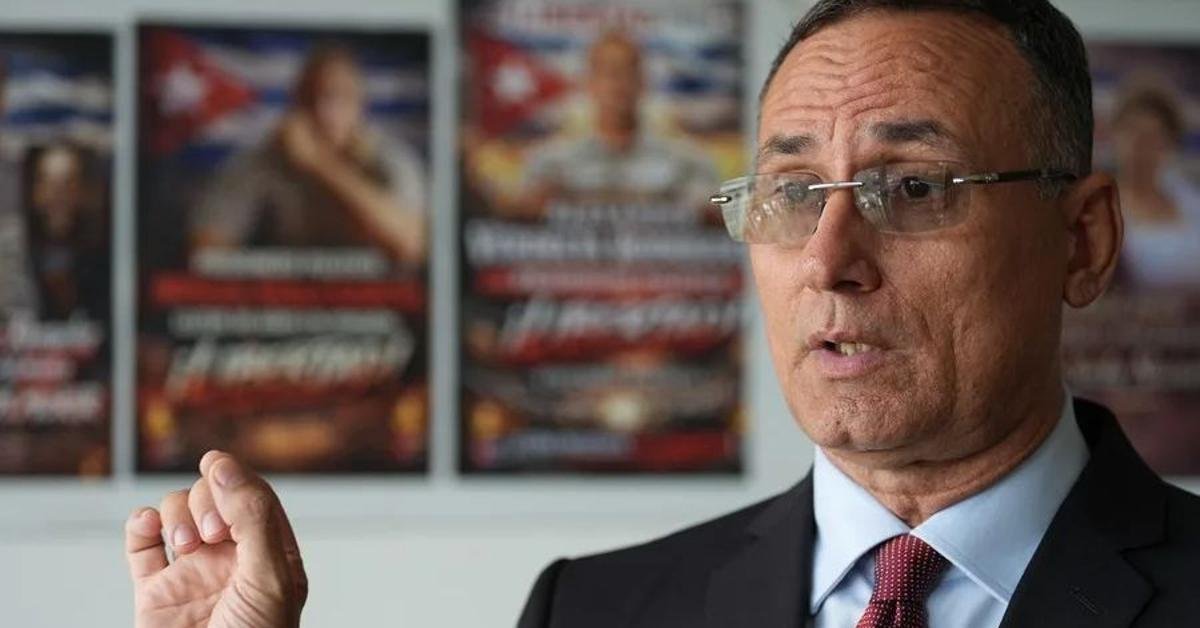
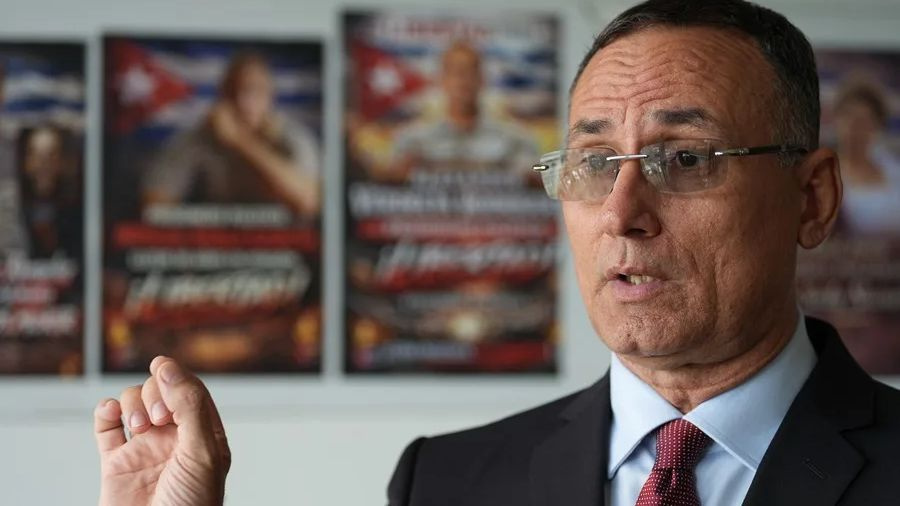
Brussels/The former Cuban political prisoner José Daniel Ferrer denounced this Tuesday at the headquarters of the European Parliament that Cuba “is experiencing the worst crisis in its modern history” and asked the United States to do “something like what happened in Venezuela on January 3” on the island as soon as possible, in reference to the capture of its president, Nicolás Maduro.
Ferrer, invited today to a joint hearing of the Foreign Affairs Committee and the Human Rights Subcommittee of the European Parliament, stated that he hopes for the US intervention in Cuba “as soon as possible” and “without turning around, without hypocrisy, without diplomacy, without ambiguities”, given the serious and terrible situation that the Island is experiencing.
“We are supporters of respect for international law, but when we have to choose between respect for international law and the life of our people, we choose the life of our people,” he emphasized.
The opponent referred to the fact that they have “friends here in the European Parliament who claim to defend human rights in Cuba” but who “position themselves in a very complicit manner with the Castro-communist tyranny.”
It is obvious that a more drastic remedy must be resorted to when the cancer is so aggressive. Cancer cannot be cured with aspirin
“It is obvious that we must resort to a more drastic remedy when the cancer is so aggressive. Chemotherapy and radiotherapy are mandatory. Cancer cannot be cured with aspirin,” he continued, and referred to the fact that the political dialogue and cooperation agreement that the European Union maintains with Havana is “aspirin for a terrible cancer.”
He urged the European Union to end this agreement, which is the framework that governs its relations with the Island, and to condemn and sanction the Cuban regime “in the same way” as has been done recently with those of Venezuela and Nicaragua.
“Cuba is experiencing the worst crisis in its modern history. Not only do we continue under an iron dictatorship that prohibits Cubans from enjoying universally recognized rights: the right to freedom of expression, press, association, peaceful assembly and demonstration,” Ferrer explained.
He added that, in addition, “the single-party regime brutally represses and imprisons in hellish prisons those who demonstrate against oppression, extreme misery, the energy, food, health, transportation, housing and other serious problems that affect the majority of Cubans daily.”
The single-party regime brutally represses and imprisons those who demonstrate against oppression in hellish prisons.
According to him, these circumstances are “the responsibility, above all, of that disgraceful tyranny.”
For his part, the president of the Inter-American Commission on Human Rights (IACHR), Edgar Stuardo Ralón Orellana, who spoke electronically at the hearing, warned that the rights situation in Cuba “has a persistent and aggravated structural character; that is, the single-party model of the communist regime has failed and this has consequences for the violation of fundamental rights and the human dignity of people.”
Ralón Orellana asked himself, “in a forum as important as the European Parliament, how, within the framework of international law, a dictatorship can be helped to end: in what way, under what actions, under what instruments, what type of decisions”, within the framework of multilateral organizations, so “that there is a democratic transition where there is no democracy.”
In its annual report for 2025 published in April, the IACHR maintains Venezuela, Cuba and Nicaragua in the chapter of nations on which it places “a special focus” due to what it identifies as severe human rights violations and an environment of repression.