CREATIVE MEASURES:
Using this method, Taiwan could tackle CCP infiltration and disinformation without sacrificing freedom of speech, an expert said
-
By Fang Wei-li and Jake Chung / Staff reporter, with staff writer
Taiwan could register people who distribute false information as “foreign government agents,” which could discredit their information and make disinformation campaigns more costly, former US Indo-Pacific Command director of intelligence and retired rear admiral Michael Studeman said.
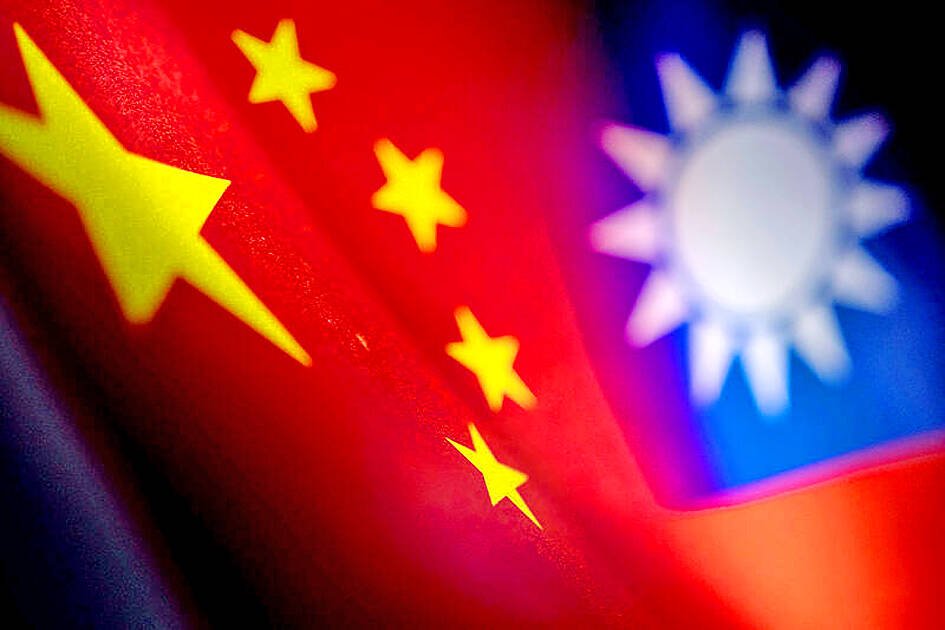
Studeman made the remarks on Friday in an interview with the Liberty Times, (sister paper of the Taipei Times), noting that the Chinese Communist Party (CCP) is attempting to infiltrate Taiwan from all possible angles, such as inviting Taiwanese students to visit China to learn about Chinese history, offering incentives for Taiwanese corporations to invest in China, attempting to sway the criminal underbelly of Taiwan to engage in potential sabotage, as well as influencing religious groups through donations.
The pervasiveness of Chinese infiltration efforts should be met with regulatory measures that clearly define what activities would be criminal, he said.
Photo: Reuters
Citing academia as an example, Studeman said the CCP is known to have “monitors” within the Chinese overseas student body, and US state governments have attempted to enact legislation that would criminalize acts of threatening, harassing or following Chinese or other students.
Such legislation would pressure united front department officials and Chinese consulate staff who have inserted themselves into Chinese student associations and are instructing students to monitor and harass others, he said.
Without criminalizing such acts, university teachers or state officials can only look on or issue warnings, he said.
One way to address this would be to label known disseminators of false information as agents of foreign governments, allowing them to continue exercising free speech while enabling the public to recognize that their commentary might be unreliable, he said.
As long as such issues are tackled creatively but firmly, democratic openness and civil liberties need not suffer, he said.
Studeman said he understands that the Ministry of Digital Affairs’ National Institute of Cyber Security is building teams to defend critical infrastructure, with plans to expand into additional sectors.
While Taiwan’s military networks are relatively well protected, its energy, water, transportation, financial services, food and medical sectors lack comparable defenses, he said.
The line between military and civilian assets is increasingly blurred, requiring measures to maximize the effectiveness of limited networks, he said.
Studeman added that his comments addressed only remote cyberattacks and that Taiwan should also bolster counterintelligence efforts against individuals recruited by the CCP.
Taiwan might lack sufficient capabilities in this regard, he said, adding that even the US faces similar challenges.
To build a resilient society, Taiwan must ensure it has adequate personnel, equipment, system capacity and efficient procedures to support these efforts, he said.