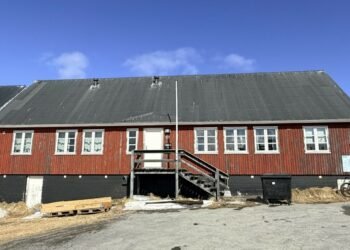
It is early morningand in Sisorarfiit’s café it is quiet – but only on the surface.
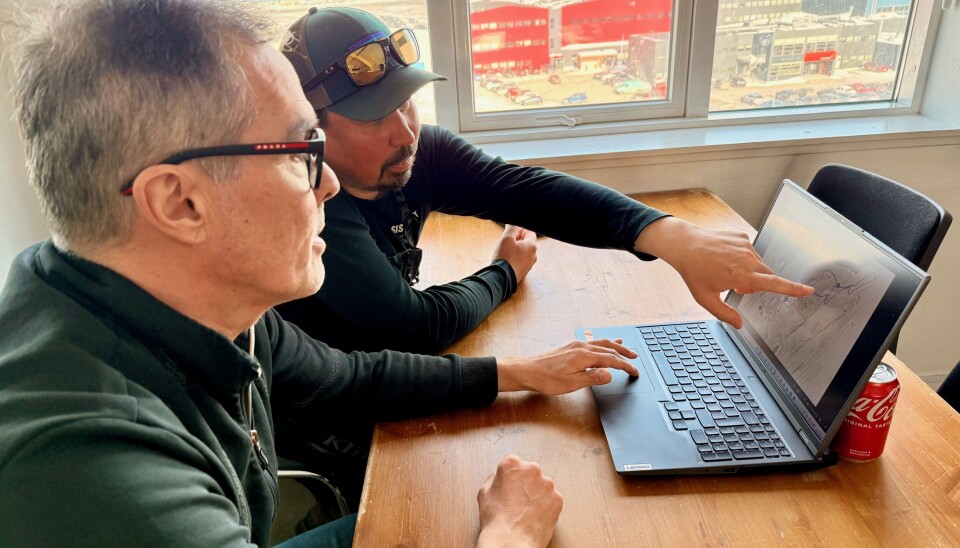
Behind the computer screen, ideas are buzzing. Digital trail maps fill the screen, while glances are exchanged, fingers are pointed and the conversation revolves around the possibilities in the terrain.
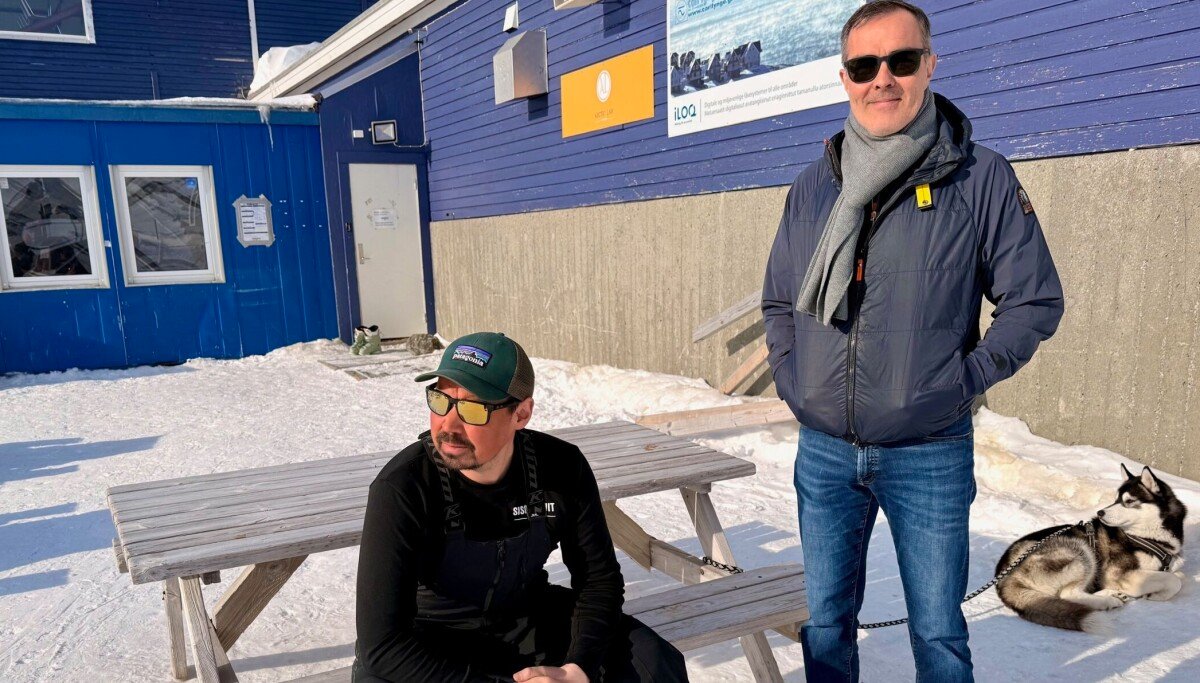
Here sit chairman of the board Peter Oluf Meyer and operations manager Qulu Heilmann and turn every hill, every valley, every opportunity. They don’t just plan for a season. They plan a future.
For them, the message is clear: if skiing in Nuuk – and in Greenland – is to survive and develop, it requires long-term action. Not small adjustments, but investments and visions that can lift both the alpine hill and the cross-country trails into a new era.
A facility with potential
Sisorarfiit’s operating area includes both the alpine hill and the cross-country trails that wind through Nuuk. In winter, the area gathers families, exercisers and ambitious skiers – a fixed point in the city’s winter life.
The Sisorarfiit Foundation has roots dating back to the 1970s, and in 1979 the first lift was built with municipal funding. Since then, both slopes and lifts have been added. But even the so-called new lift, the top lift, today has a quarter of a century behind it.
The development has been significant: from one snowmobile with a track calf to a machine park with no less than four large piste machines.
Still, it’s not enough. Because while the capacity has grown, time has not stood still. Shorter winters and more unstable snow conditions place new demands on operations.
– The gravel paths that were built at Nuussuup Manngua – or Ravnebakken, as most people call the area – hold great potential, says board chairman Peter Oluf Meyer.
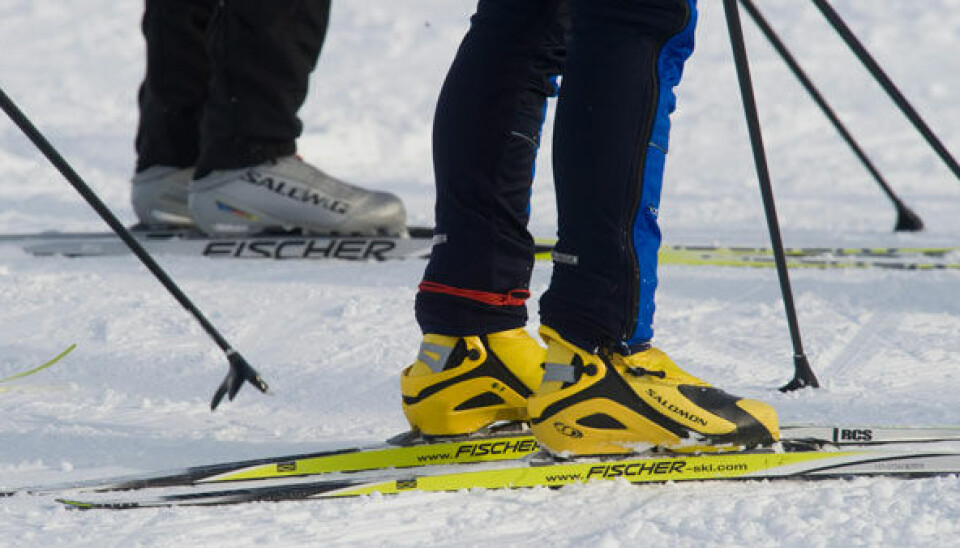
He points out that precisely the surface makes a decisive difference.
– Because the paths are level, we can start preparing with snowmobiles and subsequent piste machines already with just 20 centimeters of snow. This means that we can open the cross-country skiing season earlier – also in winters with limited snowfall. These are the types of solutions we would like to build on, he says with a smile.
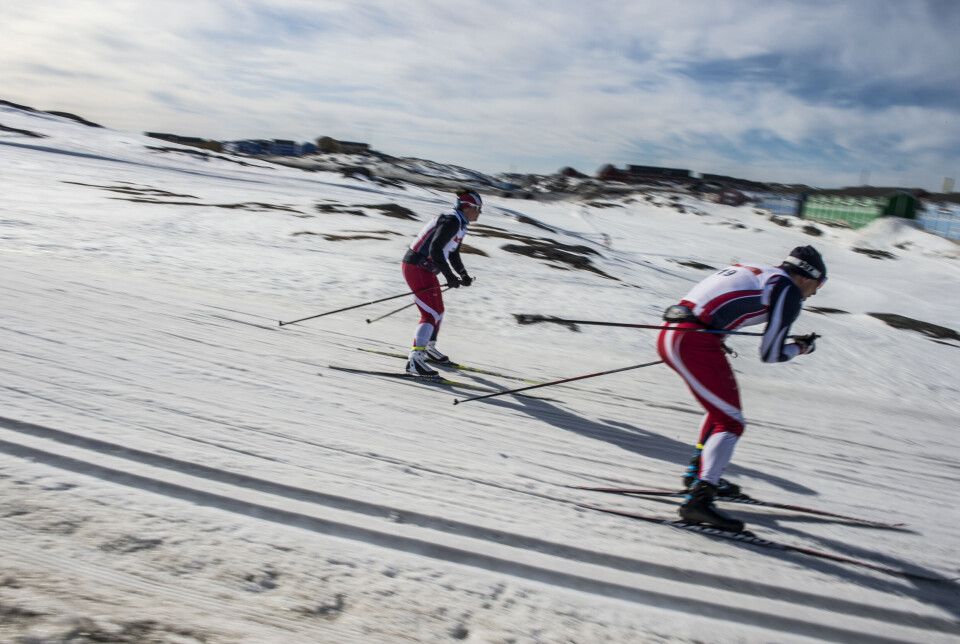
Today, approximately two kilometers of gravel paths have been laid in the area. But the ambitions go further: the goal is to expand the network so that a five-kilometre circular trail can be established around the cemetery as well as a 7.5-kilometre route that extends past Aanaas Hytte.
New grip in winter
On the alpine side, parts of the infrastructure lag behind today’s needs – both for local users and the guests you want to attract. Here is the message from operations manager Qulu Heilmann clear and without hesitation:
– Snow cannons. We must have snow cannons, he says.
The foundation has previously invested in two snow cannons, which, however, are no longer in active operation. The experiences from the first trials have therefore also set the direction for further work, where the focus is now on finding more efficient and up-to-date solutions. The board has therefore set up a working group with a focus on that particular area. Because according to Qulu Heilmann, it is far from a simple investment.
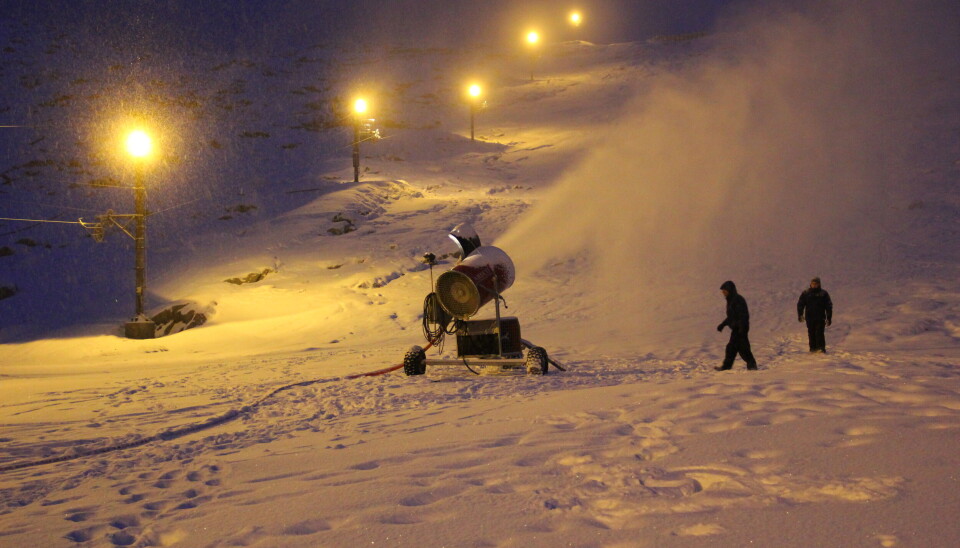
– Snow cannons are almost a science in themselves. It is about capacity, water supply, electricity consumption and location. There are many conditions that we have to manage. The next step is to get a Norwegian adviser over so that we can prepare a project proposal, make the right decisions and seek support, explains Qulu Heilmann.
Next to him, Peter Oluf Meyer nods. For him, there is no doubt about the direction.
– The new snow cannons are coming. It’s not a question of if, but when. And I think they can have an effect that extends far beyond Nuuk, he says and draws a parallel to another development in Greenland.
– Think about the artificial grass pitches. They were talked about for decades before the first one came. But when the first one was there, they spread to the whole country. I imagine the same can happen with the snow cannons. Not only here in Nuuk, but in the rest of Greenland. They can help ensure stable seasons and ultimately strengthen the skiing culture which was once our national sport, says Peter Oluf Meyer.
Overall, the plans point towards a more stable and future-proof skiing in Nuuk. Gravel paths can extend the season, snow cannons can ensure it – also when the winter becomes more unstable.
Visions of year-round experiences
It is clear that the two men have their eyes on the bigger picture. Nothing stands alone – everything must be connected.
The trail systems, which will form the basis of the longer cross-country trails, are thought of as recreational areas that can strengthen the city’s outdoor life all year round. Also the dream of a cabin lift to the top of Quassussuaq, better known as Lille Malene, which can be in operation both summer and winter, forms a central part of the vision.
– It must make sense throughout the year. In the winter for skiing and in the summer for hiking, says Peter Oluf Meyer with a calm conviction that emphasizes that the ambitions are anything but airy.
He lets his gaze drift out of the window and out into the terrain.
– And then we mustn’t forget the café at the top, he adds enthusiastically.
Here, the vision is a café at the top of Lille Malene, where both citizens, tourists, skiers and hikers can gather around the view over Nuuk.
It may sound big – and it is. But according to Peter Oluf Meyer, there is already interest in thinking the project into a wider development of the area.
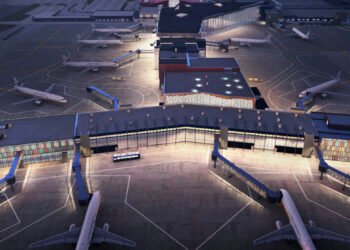
– Our future neighbors count no less than four future hotels, including hotel Aurora and the design studio PILU. It’s not just airport hotels, but also outdoor-oriented hotels, he says.
The collaboration already extends beyond the idea stage.
– The possibility of synergy between the airport, the hotels and Sisorarfiit is great. And that the design studio PILU has already contributed with visualisations, says something about the support surrounding the project, says the chairman.
Together, the plans point towards an area in motion – all year round.
The fight for the future
However, the road from vision to reality is far from without obstacles. Funding, priorities and cooperation with both authorities and the business world will be crucial pieces that must fall into place before the plans can be implemented. But in Sisorarfiit’s café, it’s not doubt that counts the most – it’s will.
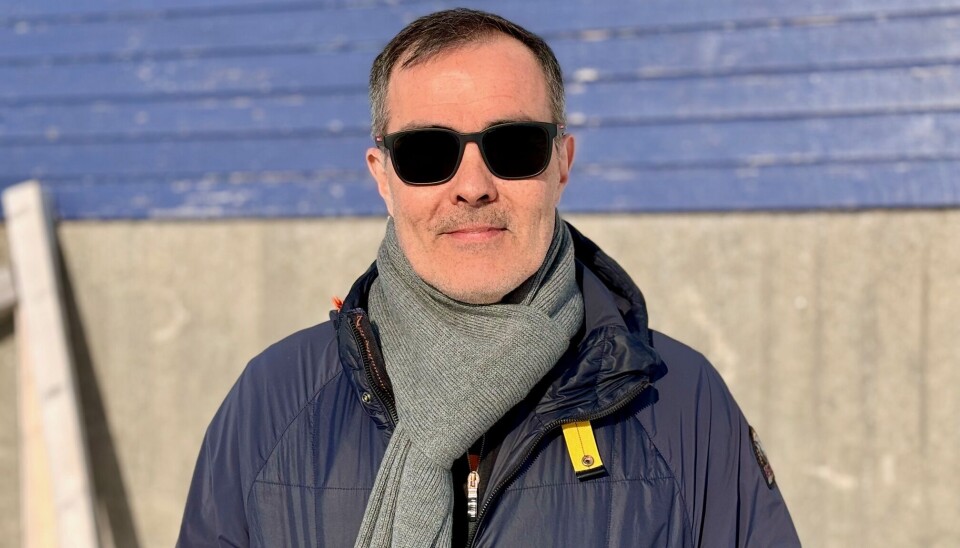
– We know it is ambitious. But the alternative is not acceptable. If we want skiing in Nuuk in 10 or 20 years, now is the time to act, says Peter Oluf Meyer and lets his gaze fall back on the trail map on the screen.
The plans are taking shape and are nearing the point where they will be lifted out of Sisorarfiit’s cafe and into the public. And there are many indications that they will not just be a presentation for debate, but the start of a new direction for skiing in Nuuk – and perhaps far beyond the city’s borders.