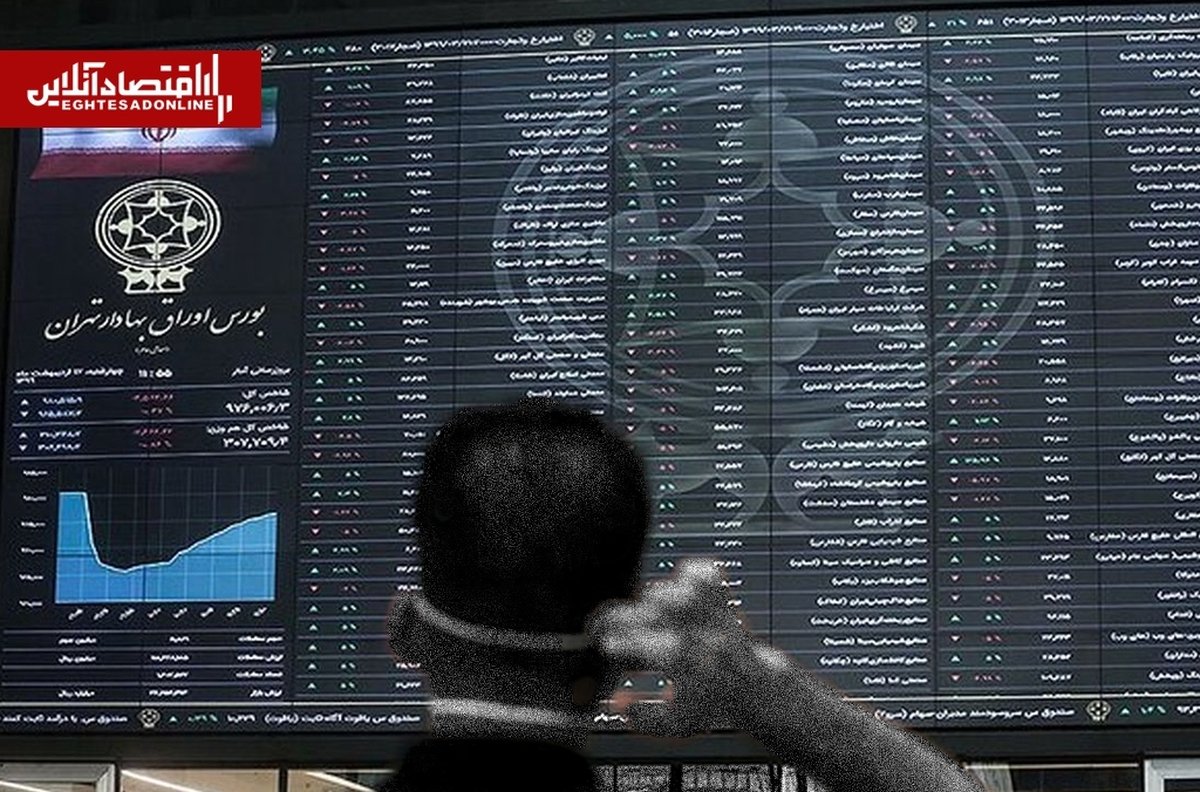
Economy Online, Arman Hanarkar; Stock market trading is still suspended after about 40 working days. A subject that has opponents and supporters. Some speculations indicate the possibility of reopening next Saturday.
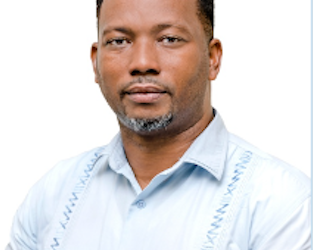
Mohsen Khodabakhsh, the former vice-chairman of the Board of Directors of the Stock Exchange Organization, presented a much more complicated picture of the behind-the-scenes of this delay in the special program “Rasd” of Ekhtaz Online, which will be published soon, and explained why the reopening of the stock market in the current situation is not like “pressing a simple button”.
The market is not normal
Khodabakhsh emphasized: “The current conditions of the market are by no means normal, and the decision to reopen cannot be reviewed with the criteria of normal periods.” He explained that in addition to the market itself, financial institutions, large companies, real and legal investors are also involved in the consequences of this situation; Consequences that have been exacerbated by the long-term closure of the market. Khodabakhsh said: “The resilience of financial institutions is one of the most important pillars of the market, and this prolonged shutdown will directly put pressure on this resilience.” He added: “If the market is to play a role again after the crisis, we must be careful that financial institutions do not suffer serious damage from this erosion period.”
liquidity and transparency; Two principles that have been damaged
Khodabakhsh said: “For years, we have been relying on liquidity as a pillar of the capital market.” He added: “A market that is closed loses its liquidity, and this contradicts the market’s philosophy.” He also said about transparency: “Transparency and equal access to information have always been our fundamental principles, but now that the market is closed, this information balance is naturally disturbed.”
Khodabakhsh explained: “There are different spectrums among investors. Some need immediate liquidity and want to reopen the market quickly. Others prefer the market to remain closed in the uncertain atmosphere.” He clarified: “We have passed the risk and entered the atmosphere of uncertainty; And uncertainty is not something that can be controlled by conventional risk management techniques.”
The need to create a balance between stakeholders
Khodabakhsh emphasized: “Now the most important task of the policy maker is to create a balance between the stakeholders who have accompanied the capital market for years.” He explained: “It is not possible to make only the demand of a group as a criterion, the decision must be made based on the total interests of the market.” Khodabakhsh reminded: “If the necessary measures had been designed in the days after the ceasefire, maybe there would have been a good opportunity to reopen.” He added: “When measures are not provided, opening the market is not necessarily a solution, and it can even cause more consequences.”
The problem with instructions written for quiet days
“Many of the instructions are written for normal times, not for days when the market is closed for weeks,” said Khodabakhsh. He gave an example: “At the time the derivatives directive was written, the range of volatility was five percent; Now it is three percent. “Also, the criteria for the reopening price is the last day of trading, which is currently unanswerable.” He added: “It is not practical to say that we will act according to the same instructions as before. “Today’s conditions do not match any of the scenarios that the regulations were designed for.” Khodabakhsh clarified: “The principle should be to open the market, but the new regulations should be designed around this principle so that the opening causes the least damage.”
Priority to low-risk industries; All icons should not be opened at the same time
“Opening all symbols at the same time may shock the market,” Khodabakhsh explained. He continued: “Companies that have suffered direct or indirect damage or have a negative outlook should not open next to low-risk industries.” “Basic assets should be prioritized,” he said. “Industries that were not damaged or even had a positive sales report for the last month can be among the first group to reopen.” Khodabakhsh warned: “If without a plan, heavy symbols such as Mobarake steel are opened at the same time as other symbols, the market may experience unpredictable turbulence.”
Reopening is not possible without revising the disclosure
Khodabakhsh emphasized: “In the current situation, it is not possible to have maximum disclosure as in normal times.” He added: “Today’s investor needs to know more than anything what is the financial effect of recent events. Perhaps it is necessary to limit the disclosure to effective cases. “The stock exchange still has the necessary monitoring tools and can later determine whether the disclosures were correct,” he explained. But at this point, we should refrain from publishing details that only cause inflammation.”
the complexity of today’s market; From derivatives to leveraged funds
Khodabakhsh said: “Today’s market is much more complicated than in the past. “The existence of leveraged funds, derivative instruments and various financial products has made the management of reopening more difficult.” He added: “Until the market is opened, supply and demand will not be formed and it is not possible to regulate the market. The real price is always at the meeting point of supply and demand. Khodabakhsh clarified: “There is a space for the opinions of market analysts and consultants, and this capacity should be used.” There are experts who have worked in this market for years and their opinions can be vital in this period.
Should the market have opened earlier?
In response to the final question of the program, Khodabakhsh said: “If the necessary measures had been prepared in the days after the ceasefire, yes, there would have been an opportunity to reopen earlier.” He added: “But when these measures are not formulated, early reopening is useless and can even make the problem bigger.” Khodabakhsh clarified: “Now the principle is to open the market, but with a detailed, step-by-step planning and with technical considerations.”