King Charles III visited Washington and left, contrary to what some expected, the image of a skilled monarch with talent and tact to intervene in the midst of a relationship in crisis and give some lessons to his powerful host, Donald Trump, determined to be the one who dictates to the world the course to follow.
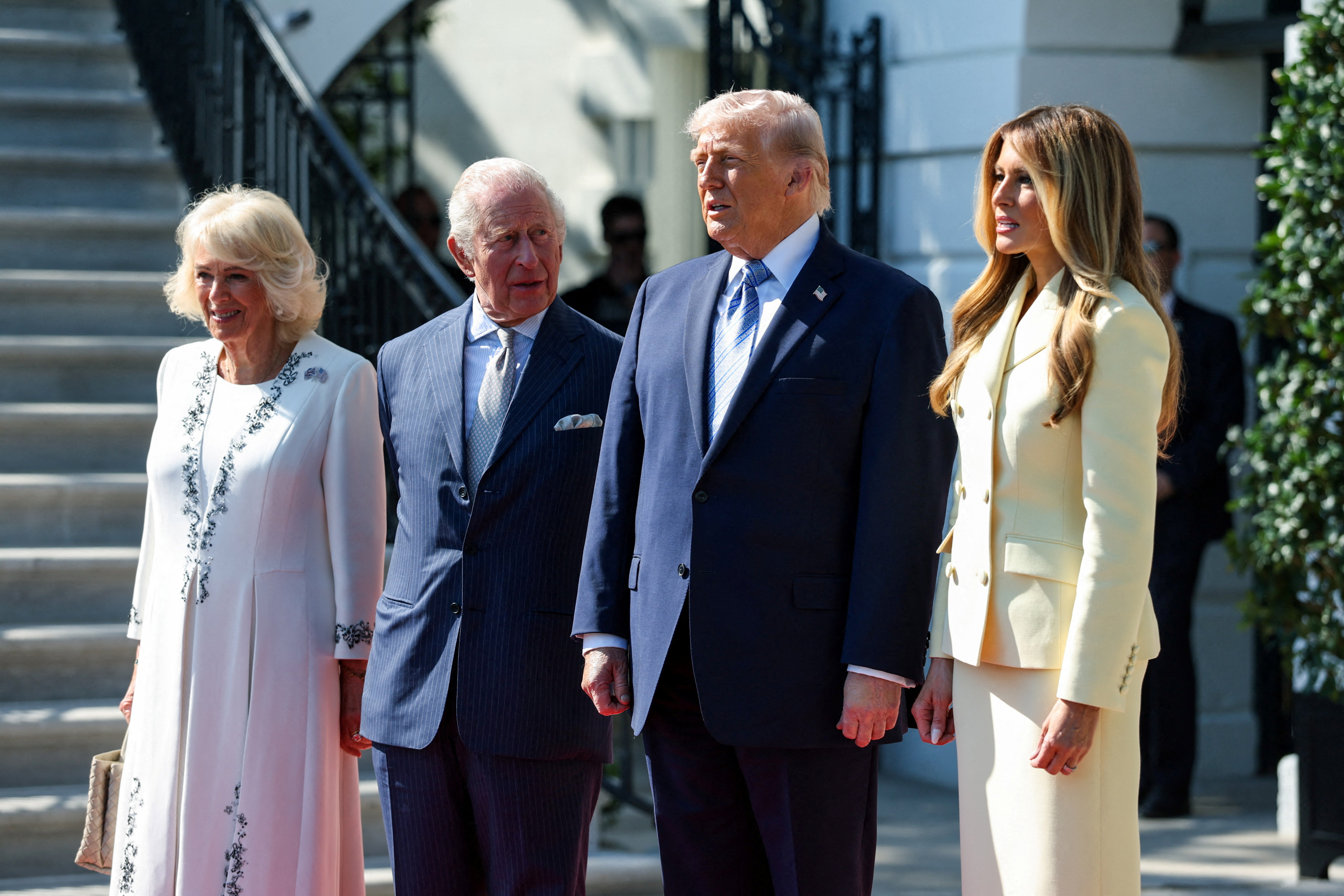
The President of the United States, Donald Trump, and his wife, Melania Trump, received the Kings of England, King Charles III and Queen Camilla, at the White House.
I must admit that the king Charles III is not a character of the story that has impressed me and its role in the british monarchy It always seemed rather opaque to me. As such, he had no expectations about his recent visit to Washington, although he knew he would have to be careful not to worsen the already deteriorating relations between his country and the president. donald trump.
At the end of the brief visit, I must admit that it is fair to “take my hat off” to the monarch, because in his different interventions he knew how to send clear messages, always with “white gloves”, to leave stinging criticism in the air, but without it being taken as provocation or lack of respect. All in a higher tone than traditional diplomacy.
The tariffs and then the war with Iran and the closure of the Strait of Hormuz have caused verbal and social media confrontations between Trump and British Prime Minister Keir Starmer, whom the US president describes as “weak” for not intervening in the Middle East conflict and not accepting his strategy for international control of Hormuz. The British, for his part, and in an effort not to provoke a greater verbal escalation, considers the criticisms as “small and petty insults.”
Historically, the United States and the United Kingdom have maintained close relations, to the point of being considered, without a doubt, the most important ally for the leading global power, especially during World War II, the so-called “Cold War” and even before Trump’s arrival at the White House in January 2024.
It is within this framework of tension and cooling of bilateral relations that the visit of King Charles III takes place, by the way, the third British monarch to be received in what many call “the most important center of power in the world.”
For this reason, when he spoke in front of Congress – Senate and House of Representatives together – the expectation was enormous, since he was obliged to be diplomatic, but also say the things that the British people expected from their monarch.
Charles III used history to make his messages clear: On the constitutional issue, he recalled that the British government is based on the Magna Carta of 1215 and that it served as the basis for the US Constitution. In this historical reference came a dart that deeply penetrated the audience: “Our traditions share a common DNA: the understanding that power, to be just, must be limited. The true strength of a Republic, like that of a Constitutional Monarchy, does not reside in the will of a single man, but in the sacred independence of its laws and separation from its institutions.”
This was said no less than at the time when it is being discussed whether Trump has the authority to continue the war against Iran after the 60 days that the law allows him to do so without the permission of Congress.
The applause from the audience was evident. So much so that even the president later congratulated the king, saying at the dinner in his honor: “The king is a phenomenal guy. He has incredible style. He made even the Democrats, who normally don’t applaud anything that makes sense, stand up. It was a great show.” An unusual way for Trump to return a “white glove” blow.
In his own way, without mentioning any names, the king criticized the authoritarian attitudes of his host.
There was another point with a critical undertone. Carlos III, a renowned environmentalist for decades, made a special mention of an issue on which Trump totally disagrees. The king said: “We do not inherit the land from our ancestors, we borrow it from our children. Protecting our common home is neither a partisan luxury nor a political option, it is the most urgent moral imperative of our time, one that requires the unity of all allies.”
In an elegant way it was a censure of American policy, which does not now recognize the global responsibility to protect the environment. Proof of this is Washington’s departure from the Paris Agreement. A king crying out to protect the planet, a president stating that its resources must be exploited.
What’s next in relations between Trump and his “European allies”? The king made it clear that the alliance between the United Kingdom and the United States is vital for the defense of democracy, but he believes – and said so – that “the strength of free nations does not reside in the magnitude of their walls, but in the solidity of their bridges. Whoever believes that they can walk alone in a burning world ends up consumed by their own loneliness.”
The king demonstrated, with the history and metaphors used, that in the modern world the true sovereign is the one who knows how to take care of his alliances and his friends, not the one who constantly threatens to leave them unprotected, as Trump is doing right now with Germany, Spain and Italy.
Lessons on the proper use of the “white glove”.