Colombia faces one of the greater fiscal pressures of the last decades and needs to take urgent decisions to prevent the deterioration of public accounts derives into a crisis difficult to reverse. That was the main conclusion of the ANIF Seminar and EL TIEMPO Economic Perspectives 2026 with responses to the tax challengewhere economists, union leaders, congressmen and representatives of presidential campaigns discussed the measures that the next government should adopt.
READ ALSO

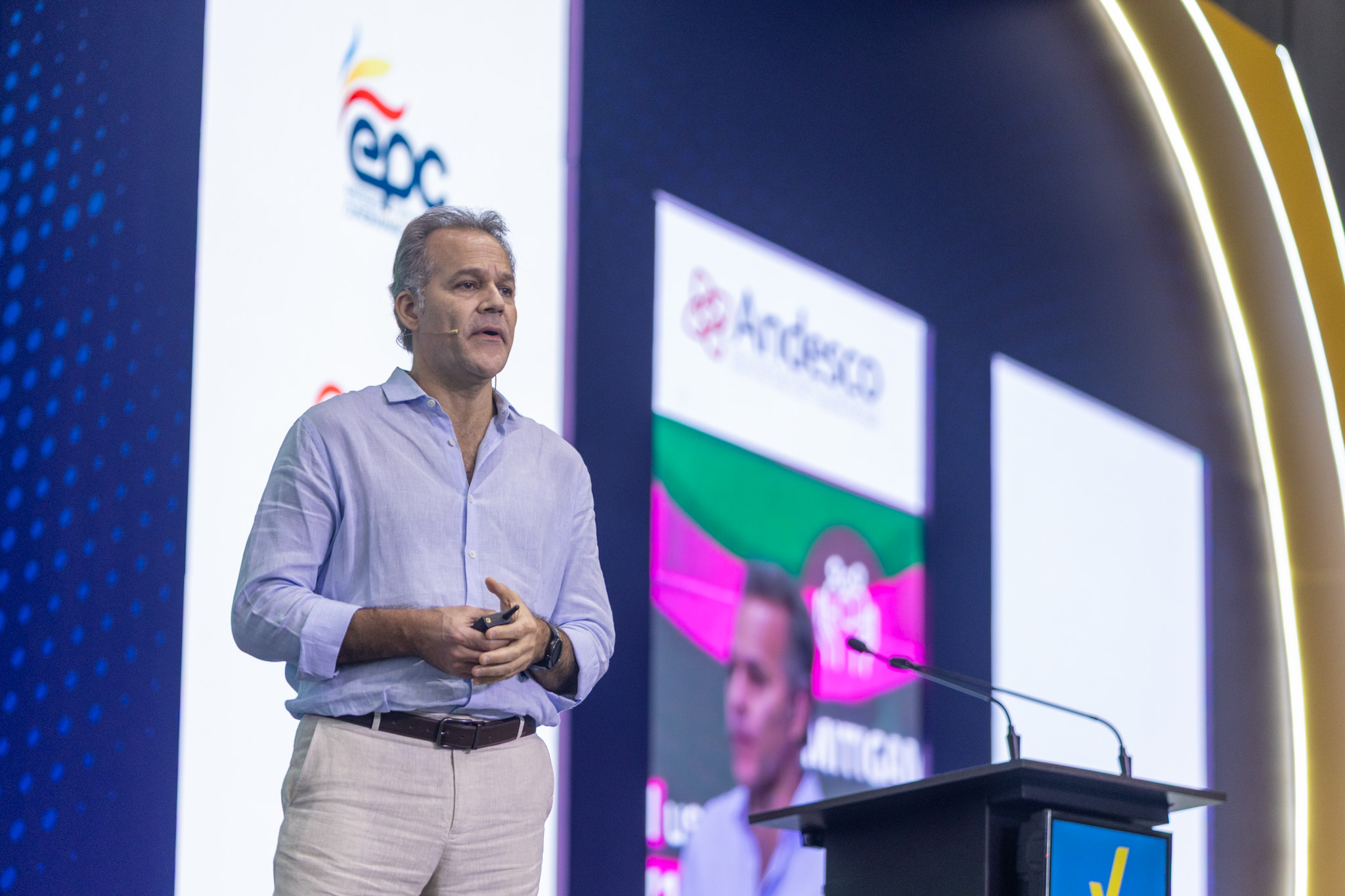
José Ignacio López, president of ANIF, assured that the country requires a adjustment close to three points of the Gross Domestic Product (GDP) for stabilize debt, regain credibility and guarantee financial sustainability. As he explained, the Government primary balance which refers to income versus expenses excluding interest, has remained in negative ground for much of the last 35 years and today presents levels comparable to episodes such as the 1999 crisis and the pandemic.
The message from the forum was that partial measures are not enough. The next government will have to combine spending cuta structural tax reform, fight against evasion, elimination of costly subsidies and one economic growth agenda that allows expanding income without stifling productive activity.
Cut spending and stop bureaucratic expansion
One of the main focuses of the debate was growth of the state apparatus. According to figures presented by ANIF, in the last seven years nearly 20,000 additional charges associated with the General Budget of the Nation, equivalent to eight new positions per day.
They were also exposed significant increases in some public entities. Between 2019 and 2026, the plant of the National Environmental License Authority (ANLA) would have grown 545 percent, the Superintendence of Public Services 217 percent and the Treasury sector 70 percent.
For ANIF, these figures reflect the need to review the quality of spending and not only its magnitude. That is why he proposed an adjustment supported by lower operating costs and one deep review of public investmentaccompanied by institutional reorganization, freezing of vacancies and stricter controls on the growth of the state payroll. He also insisted on reducing service provision contracts and reviewing entities with duplicate functions.
López maintained that the country cannot continue increasing spending without demanding measurable results in education, health, security, infrastructure or productivity.
Conversation on Economic Perspectives: Anif and EL TIEMPO Responses to the fiscal challenge Photo:Anif
Structural tax reform and fight against evasion
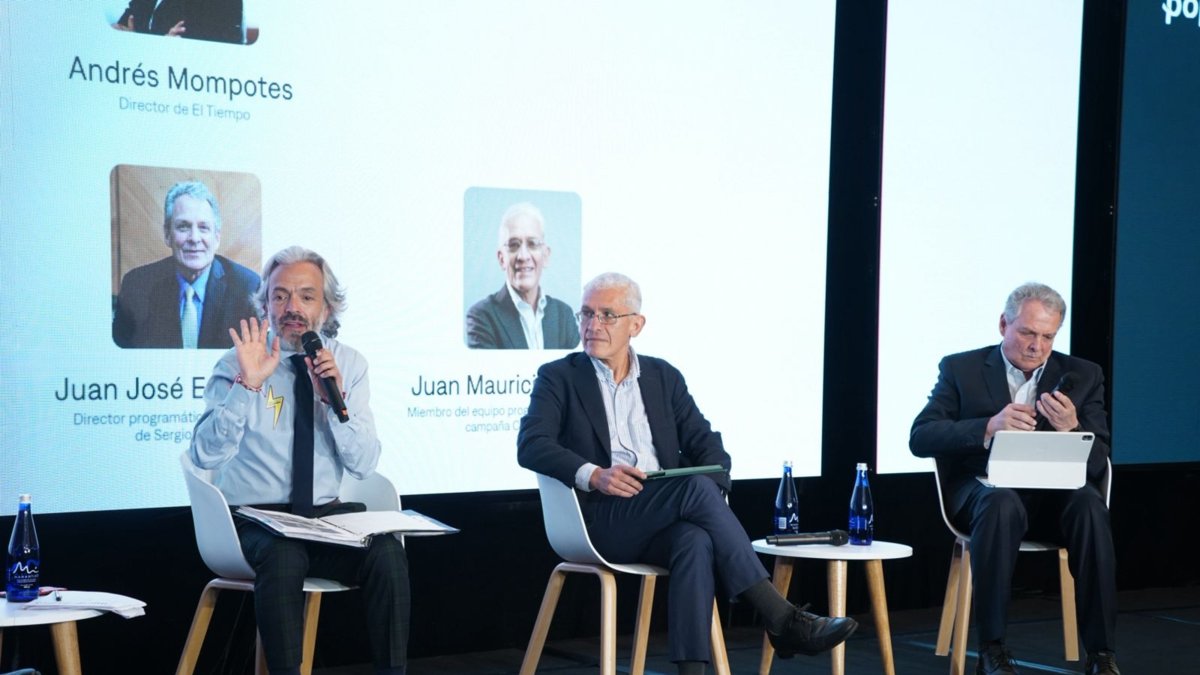
In the conversation moderated by Andrés Mompotes, director of EL TIEMPO, Juan Daniel Oviedo, vice presidential candidate of Paloma Valencia and Claudia Jiménez, economic coordinator of the campaign, Juan José Echavarría economic coordinator of Sergio Fajardo and Juan Mauricio Ramírez, member of Claudia López’s campaign, participated.
Another of the consensuses of the meeting was that Colombia needs a deeper and more stable tax reformfocused less on raising rates and more on expand effective collection.
Several panelists agreed that the current system combines a high load For those who do pay, multiple sectoral benefits and one persistent avoidance that limits fiscal capacity of the State.
Juan José Echavarría, economic coordinator of Sergio Fajardo, stated that one of the main problems is the tax non-compliance. “The calculations in Colombia, from Eduardo Lora, from Fedesarrollo, are that in Colombia half the taxes are evaded“, said.
Juan Mauricio Ramírez, programmatic director of Claudia López, pointed out that the evasion is equivalent to 8.6 percent of GDP and that a substantial part corresponds to the business income tax. From that diagnosis, he defended a profound reform to the DIAN, stable tax rules since the first year of government and a exemption review that today reduce income without clear economic results.
He also proposed gradually expand the VAT base, compensating vulnerable householdsand reduce corporate rate to the extent that the economy manages to grow above 4%, with the objective of stimulate investment and formal employment.
For several attendees, the The discussion is no longer whether there will be tax reformbut how soon it occurs and with what political capacity The next government will arrive.
Conversation on Economic Perspectives: Anif and EL TIEMPO Responses to the fiscal challenge Photo:Anif
Subsidies and rigid expenses
ANIF also insisted on reviewing regressive subsidies that today they put pressure on the national budget. One of the most mentioned was fuel, especially diesel.
According to estimates discussed in the forum, the cumulative cost of those supports could exceed 136 billion pesos.
Echavarría stated that “we must eliminate that subsidy“It is a highly regressive, very expensive subsidy,” noting that it benefits higher-income sectors to a greater extent and limits resources for social investment.
In addition to the issue of subsidies, several panelists warned about the increasing rigidity of public spending. Items such as debt, pensions, General Participation System and automatic transfers increasingly reduce the budget room for maneuver and make it difficult to respond to new fiscal needs.
Conversation on Economic Perspectives: Anif and EL TIEMPO Responses to the fiscal challenge Photo:Anif
Jiménez, from the Paloma Valencia campaign, raised a 25 percent reduction in operating expenses of the executive branch, the reestablishment of legal stability contracts and one tax reduction aimed at stimulating private investment.
Oviedo maintained that the adjustment should not fall on householdsbut on a Most efficient stateaccompanied by measures in security, infrastructure and productive reactivation.
Ramírez summarized the fiscal challenge on three fronts simultaneous: increase income, reduce expenses and accelerate growth. “If any of the three are missing, this is not going to work,” he said.
Conversation on Economic Perspectives: Anif and EL TIEMPO Responses to the fiscal challenge Photo:Anif
Congress, justice and fiscal control They also enter the debate
In the panel “The vision of the new Senate of the Republic”, moderated by Jaime Pumarejo, another key point was addressed: a good part of the future tax pressure comes not only from the current budget, but from Pending reforms in health, pensions and labor market.
Carolina Corcho, Andrés Forero and Norma Hurtado participated there. Topics such as labor informality, pension reform, health system financing and regional productivity.
Carolina Corcho stated that the country cannot ignore a informal economy which was between 60 and 65 percent of national activity. He pointed out that thousands of small businesses continue to depend on informal credit and proposed facilitate access to cheap financing to promote entrepreneurship and productivity. He also defended a reindustrialization policy based on agribusiness, science, medicines, tourism and gradual energy transition.
Senator Norma Hurtado maintained that the pension sustainability begins with formal employment and warned that Colombia maintains parameters designed for another demographic reality and that sooner or later it will have to discuss retirement age, quotes weeks, high pension subsidies and strengthening savings.
In turn, Andrés Forero focused his intervention on the health system crisis and assured that the financial tensions in the sector will end up being transferred to the national budget. He questioned recent funding decisions and warned that rebuilding the system will require increasing resources.
Conversation on Economic Perspectives: Anif and EL TIEMPO Responses to the fiscal challenge Photo:Anif
Another panel, moderated by Carolina Soto, former vice minister of Finance, included Alejandro Linares, former magistrate of the Constitutional Court, Jenny Elizabeth Lindo Díaz, delegate comptroller for Economy and Public Finance of the Comptroller General of the Republic and María Margarita Zuleta, lawyer and former vice minister of Justice to debate the institutional role in the face of fiscal deterioration.
Linares recalled that Colombia has built instruments such as the tax rulehe medium-term fiscal framework and legal controls for projects with budgetary impact, although he acknowledged that more effective compliance mechanisms are still lacking.
From the Comptroller’s Office, Lindo explained that the organization has intensified preventive functions and warned about risks associated with public debt and decisions with high financial impact. He noted that in the last four years more than $20 billion have been recovered through fiscal responsibility processes and that thousands of additional files remain open.
Zuleta focused his intervention on the low quality of spending. He questioned that the budget often reproduces historical allocations without evaluating results and proposed a technical review that prioritizes concrete goals, transparency and efficient resource reallocation.
The Comptroller’s Office reported that in the last four years they have recovered more than 20 billion pesos and that they exist more than 4,000 fiscal responsibility processes for an additional 23 billion pesos.
Jonathan Malagón, president of Asobancaria Photo:Anif
Jonathan Malagón, president of Asobancaria, winner of the ANIF Banco de la República survey, launched one of the most forceful interventions of the seminar when he warned that a good part of the recent economic decisions have generated what he called “cobra effects”: well-intentioned policies that end up producing the opposite result. As an example he cited the minimum wage increasewhich in his opinion put pressure on inflation and interest rates; the artificial reduction of the usury ratewhich would have removed thousands of people from formal credit; and the changes in Mi Casa Yawhich hit social housing. He also warned about the fiscal front and maintained that Colombia began to pay Financing rates typical of economies with higher riskwhich today makes public debt more expensive and limits growth.
Faced with this panorama, Malagón proposed that the solution does not involve more taxes or greater state intervention, but rather through regain confidence, investment and macroeconomic discipline. He defended the respect for the tax rulethe legal stability and the institutional strengthening of the Bank of the Republic and the courts as key counterweights.
He also asked reactivate employment-intensive sectors such as housing and infrastructure, unlock productive credit and create conditions for the country to grow again at close to 4 percent annually. According to him, only with an economy expanding above its potential will Colombia be able to increase revenue, reduce poverty and close the deficit without sacrificing competitiveness.
READ ALSO

READ ALSO