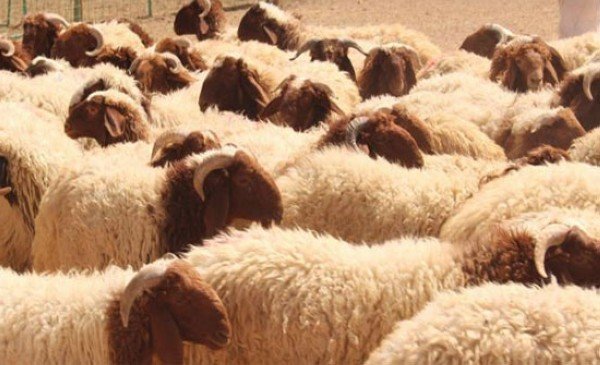
With the advent of spring and mild weather, livestock breeders in Mafraq Governorate begin the sheep shearing season, which is one of the inherited agricultural customs that people have maintained over generations, despite the development in modern tools and methods.
Farmers in Mafraq are keen to practice this profession using traditional tools, especially manual sheep shears, avoiding the use of electrical or automatic devices, in a scene that reflects their adherence to popular heritage and authentic rural identity.
This season is known locally as “shearing,” where farmers gather in a cooperative, friendly atmosphere to exchange experiences and help each other shear sheep, which strengthens social ties between members of the local community.
The importance of shearing wool is not limited to the traditional aspect only, but extends to include important health and productivity aspects for livestock, as this season comes with the start of rising temperatures, which makes removing wool necessary to protect sheep from heat stress.
Livestock breeders confirm that shearing wool at this time gives sheep a better opportunity to regain their activity and vitality, and helps them move easily, which reflects positively on increasing their weight and improving their productivity, especially with the availability of pastures in the spring.
Shearing wool also contributes to protecting sheep from the effects of the scorching sun during the summer, and reduces the accumulation of dirt and parasites in the dense wool, which enhances the general health of the flock and reduces the possibility of disease.
Muhammad Al-Arqan, a livestock breeder, confirmed that using manual shears gives them greater precision in their work and maintains the safety of the sheep, in addition to being part of an indispensable social memory, pointing out that this tradition represents an important aspect of the agricultural heritage in Mafraq.
The wool shearing season also represents an economic opportunity, as wool is used in traditional handicrafts, or sold as an additional source of income for farmers, which enhances the sustainability of this popular heritage in Mafraq Governorate.
For her part, the Director of Agriculture in the Northwest Badia, Engineer Aisha Khaza’la, explained that the dates for shearing sheep’s wool are no longer fixed as they were in the past, as a result of the effects of climate change on the nature of the weather.
She explained that breeders normally began the mowing process after the tenth of May, but this pattern has changed over the past five years, as livestock breeders have begun to delay the mowing date depending on the prevailing weather conditions.
She added that the continuation of cold weather in some seasons may prompt breeders to postpone shearing until after the middle of May, in order to preserve the health of the sheep and avoid exposing them to the cold, stressing that climate change has eliminated the existence of a fixed, reliable date annually, and the decision has become linked to estimating the weather condition in each season.