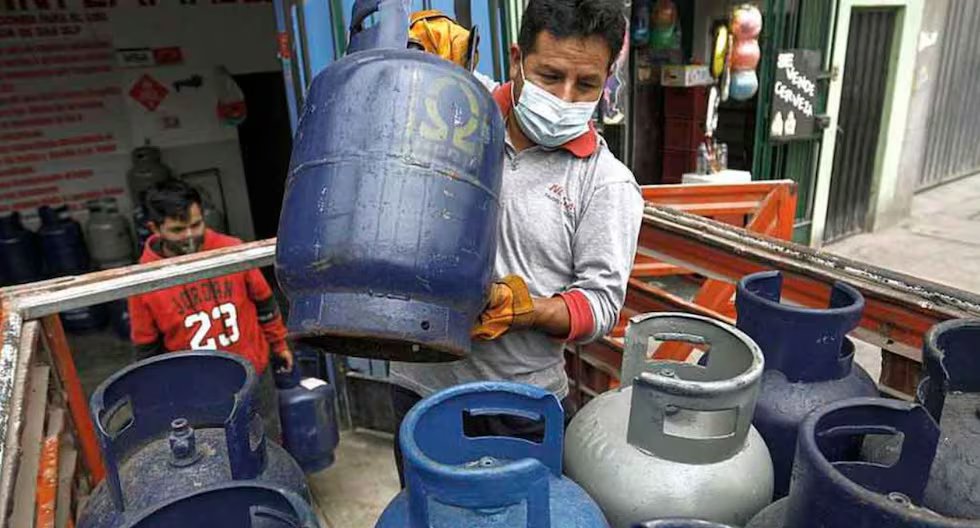

The March contingency has highlighted the importance of natural gas for Peru and opens an opportunity to strengthen the national energy system. Its role in electricity generation, industry, transportation and domestic consumption confirms that it is a key resource for the country’s competitiveness and development.
After the last energy emergency, understanding specific responsibilities is necessary, but insufficient if we intend to address a more structural question: why has Peru not built a solid energy security strategy?
When a contingency manages to strain the supply of a resource that contributes to generating 40% of the electricity consumed by the country, impacts prices (also influenced by international factors) and generates uncertainty in the economy, what becomes evident is not only an operational problem, but a systemic vulnerability.
Energy security does not depend on a single link, but on the articulated functioning of the chain: exploration, production, transportation, storage, distribution, support mechanisms and a State that encourages the development of the sector.
The need for redundant infrastructure, such as an additional pipeline, has recently been raised. However, a technical review shows that the standard is not to duplicate the infrastructure, but rather to design systems with backup capacity, operational redundancy and maintenance that ensure high levels of availability.
Today, that comprehensive view is absent. The main weakness is the limited dynamism in exploration and the incorporation of new reserves. Without a broader resource base, any efforts to strengthen infrastructure will be incomplete. In practice, this translates into the absence of true diversification of gas supply sources.
International experience shows that the most robust systems combine stable infrastructure, resources and rules. Without such a framework, energy security is exposed to uncertainty and key decisions are postponed.
The challenge is to build a more resilient system, with greater diversification of gas sources and better prepared for contingencies. It is not about copying external models or betting on unviable schemes. Energy security requires technically sound decisions, but also efficient ones in terms of cost-benefit.
Peru has made progress in massifying natural gas, but has not developed a comprehensive strategy to ensure its sustainability. That is the gap that is exposed today and that the country cannot continue postponing.