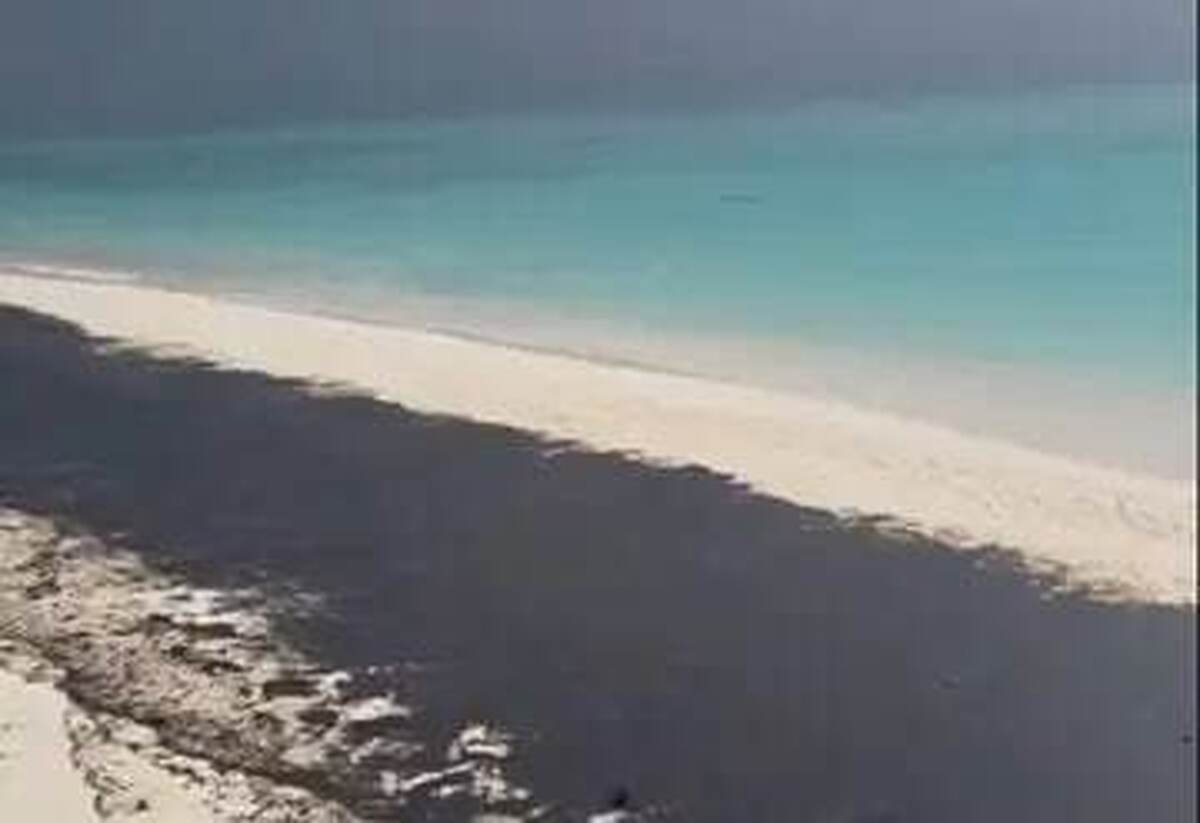
According to the online economy report, quoted by Hamshahri, pictures of the beaches of Lawan and Maru islands have been popular in the virtual space; The images that show the amount of oil pollution caused by the enemy’s attacks in the third imposed war on the southern coast of Iran in this island.
It is known as the Maldives of Iran; An island in the heart of the Persian Gulf. With an area of about 81 square kilometers, after Qeshm and Kish, Lavan Island is the third largest island of Iran in the southern waters of the country, and in addition to its tourist attractions and environmental importance, it is also one of the country’s most important oil hubs.
One of the most important attractions of Lawan is its pristine and untouched beaches, with white and soft sand, clear and transparent waters, and coral reefs, which present a heavenly picture of the nature of the Persian Gulf.
The glass beach is one of the most beautiful beaches of this island, which is also famous in Iran’s Maldives due to its unique water clarity. In this beach, the sea bed and colorful fish are clearly visible.
At a distance of 1.5 km from Lawan Island, there is also a small and pristine island of Shidor or Maru; An uninhabited island that is one of the most beautiful sights around Lawan and is under the protection of the Environmental Organization due to its biodiversity and unique plant and animal species.
Shidor Island has beautiful rocky and sandy beaches, a sea cave and a historic lighthouse that remains from the past. This island is the route of migratory birds and the habitat of sea turtles that come to its shores from mid-March to early August to lay eggs.
The beautiful beaches of these 2 islands, however, during the third imposed war, as a result of the explosion of the oil warehouse after the last attack of the American-Zionist enemy, after the announcement of the ceasefire, have been severely polluted; Crude oil has covered the entire surface of the coasts of Maru and Lawan islands in the Persian Gulf, right in the nesting and laying season of sea turtles.
Despite this, the Director General of Environmental Protection of Hormozgan Province informs that until today no deaths of sea turtles have been reported on these beaches.
Habib Mashihi Taziani says: The brutal attack of the Zionist-American regime on the coast of Iran caused damage to the refinery facilities in the south of Iran, and these damages brought the pollution caused by the storage of petroleum materials to the shores of the Persian Gulf.
Stating that until now, a large part of the oil pollution has been collected on the sandy beaches with the help of the refinery facilities, he adds: it was more difficult to collect the pollution on the rocky beaches due to the hard surface, but some of the pollution has been collected on these beaches as well.
The Director General of Environmental Protection of Hormozgan Province, referring to the daily monitoring of the beaches to check the damage, states: Fortunately, we have not had any turtle casualties in this area, but in any case, this oil pollution will not be removed from the ecosystem quickly and will have lasting consequences on the rocky coast and corals.
Mashi Taziani emphasizes that all the pollution and damages caused by the third imposed war have been documented and submitted to the Environmental Protection Organization.