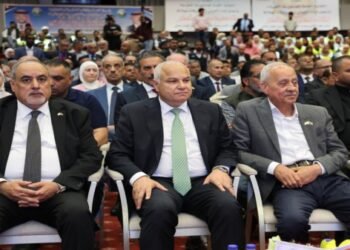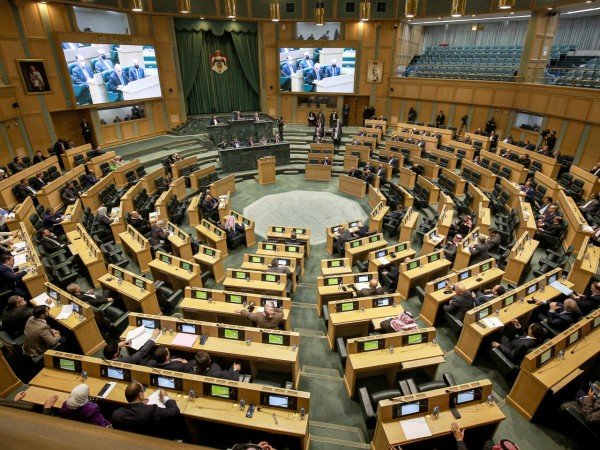
Representative Mazen Al-Qadi’s presidency of the House of Representatives in the second regular session came in the context of a broad parliamentary consensus, which developed at the opening of the session into a state of parliamentary consensus that ended with his election as Speaker of the House by acclamation, in a scene that reflected a level of understanding within the legislative institution.
Since assuming his duties, the judge has set a number of priorities that focused on enhancing citizens’ confidence in the House of Representatives, and raising the level of parliamentary presence in political life, by improving legislative and oversight performance, and interacting with citizens’ issues, in addition to expanding the circle of openness to society, the media, parties, and various activities.
Sources and even observations within the Office of the Presidency of Parliament confirm that the judge is keen to meet with citizens and listen to their problems and issues constantly and without delay.
The judge’s policy in dealing with representatives has contributed to achieving achievements at all legislative and oversight levels for the House of Representatives. Before each session of the House of Representatives, the judge is keen to communicate with representatives of the parliamentary blocs and listen to their positions and viewpoints for many goals, including achieving consensus and also providing the opportunity for representatives to express their positions under the dome, in addition to devoting institutional work and strengthening the principle of consensus and cooperation between the parliamentary blocs to maximize achievements through the House of Representatives exercising its constitutional role in legislation and oversight to the fullest extent and in a manner It achieves the national interest.
The judge also worked to activate the role of the permanent committees in the House of Representatives so that they are the main body for legislation and oversight and that their work is institutional, continuous and permanent through follow-up of the work of the ministries.
The House of Representatives, headed by the judge, achieved remarkable legislative achievements, as (19) laws were approved. The first of these pieces of legislation was a draft law amending the Scientific Service Law, which came at the initiative of Crown Prince Hussein bin Abdullah II, and which constitutes a major national project.
The important issue on the legislative side that faced the Speaker of the House of Representatives was the government sending a draft law amending the “controversial” Social Security Law. Here, the Presidency of the Council worked to achieve the equation of preserving the rights of security subscribers while at the same time preserving the continuity and sustainability of the Social Security Institution in providing insurance services and retirement salaries. The judge was keen to follow up on the dialogues of the Parliamentary Work Committee on Social Security and support the committee’s work in conducting a broad and comprehensive national dialogue.
As for the supervisory role of the Council, the judge was keen to strengthen the supervisory role of the Council, as the Council held 11 oversight sessions in which the representatives discussed the ministers’ responses to their parliamentary questions. The judge was also keen to strengthen the new developments clause by giving the representatives the opportunity to raise urgent issues during the sessions to conduct a dialogue with the government about them. The cooperation or understanding that the Speaker of the House of Representatives receives from the Prime Minister helped in strengthening the oversight role of the representatives, especially since the Prime Minister, Dr. Jaafar Hassan, requests Ministers are required to answer MPs’ questions within the periods specified by the bylaws of the House of Representatives, which MPs constantly praise.
Discussions under the dome are one of the main factors for evaluating the performance of the House of Representatives and the performance of the Speaker of the House. Here the judge was keen to promote fruitful discussions under the dome by giving the representatives the opportunity and the right to speak under the dome in accordance with the bylaws and parliamentary norms. He was always keen for all opinions for and against to appear during the discussions so that the House of Representatives reflects all trends. Representatives have the right to express opinions and positions under the dome, and the President’s keenness on this right comes to strengthen democracy and parliamentary life.
The issue that must be discussed is what is described as the issue of “infiltration” by representatives to talk about general issues in legislative sessions, but this infiltration is sometimes desirable and required and sometimes it is outside the topic, so the voice on it is cut off by the president because it violates the internal rules. But in any case, this issue needs to search for a parliamentary custom to frame it in a way that does not violate the internal rules and to limit it to urgent issues that cannot be postponed.
The important issue was the issue of strengthening the role of the parliamentary blocs under the dome, and here the Speaker of the House of Representatives was keen to strengthen this role in an institutional manner, as he always gave the heads of the blocs time to talk under the dome on topical issues. Even if the session was legislative, he would allocate the beginning of the session to the heads of the blocs to express their positions on political, national and national issues. The judge also made sure that the parliamentary delegations that participated in international parliamentary conferences were representative of all the parliamentary blocs. The judge also worked to activate the role of the Executive Office of the House of Representatives, which includes members of the permanent office and heads or representatives of the parliamentary blocs, with the aim of maximizing the role of the blocs and the institutional work under the dome.
In general, the experience of the Presidency of the House of Representatives in this session reflects an approach based on consensus, openness, and strengthening institutional work, with a focus on developing legislative and oversight performance within an internal atmosphere characterized by a degree of stability and understanding between the various parliamentary parties.