This year there was a lot of rain in the mountain pastures of Tajikistan, so there was plenty of grass. Shepherds are satisfied with the condition of the meadows, but they are concerned about the issue of ownership of pastures. This entire paradise belongs to private individuals, who literally “tear off three skins” from them. Livestock farmers have to rent pastures for a lot of money, which ultimately affects the final product.
How shepherds live and work, how they multiply and maintain the country’s livestock production – in our material.
We first published this report back in 2019 – and during this time little has changed in the way of life of shepherds
To where the roads end
We visited the shepherds of the Shakhrinav district. They graze their herd on the Pashmi-Kuhna pasture in the upper reaches of the Shirkent River. You can get there in three ways.
The shortest is to climb along the bank of the Shirkent River in Tursunzade. But it is very complex and dangerous. On the second path – medium in distance – you need to climb paths from the side of the border with Uzbekistan. But the transition to Pashmi Kukhna is complicated by a dangerous descent along the Sandal River, which, near the mountain village of Pashmikukhna, merges with the Yakhob River and forms the Shirkent River. Just below is the Kharkush River and the famous tract with dinosaur tracks.
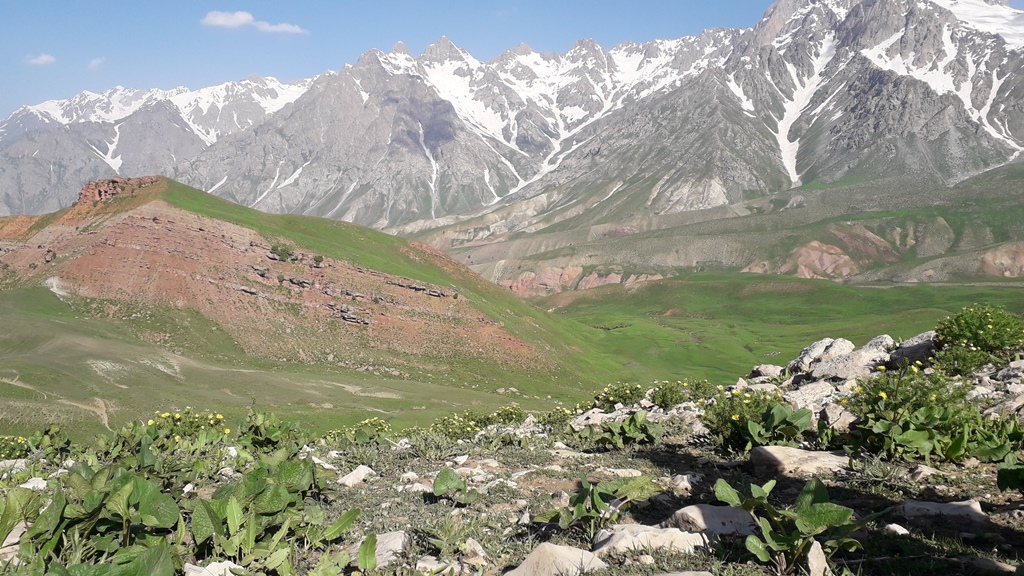
The third longest, but more or less safe route is through the Karatag Gorge.
The car took us to the confluence of the Sarmin and Karatag rivers, and, before reaching the village of Hakimi, we turned west. The climb here is long and consists of three passes – Sarmin, Kajob and Charogmazor. The last one is the highest, about 3-3.5 thousand meters.
Having overcome Charogmazor, we found ourselves in the valley of the Yahob River, where flocks graze.
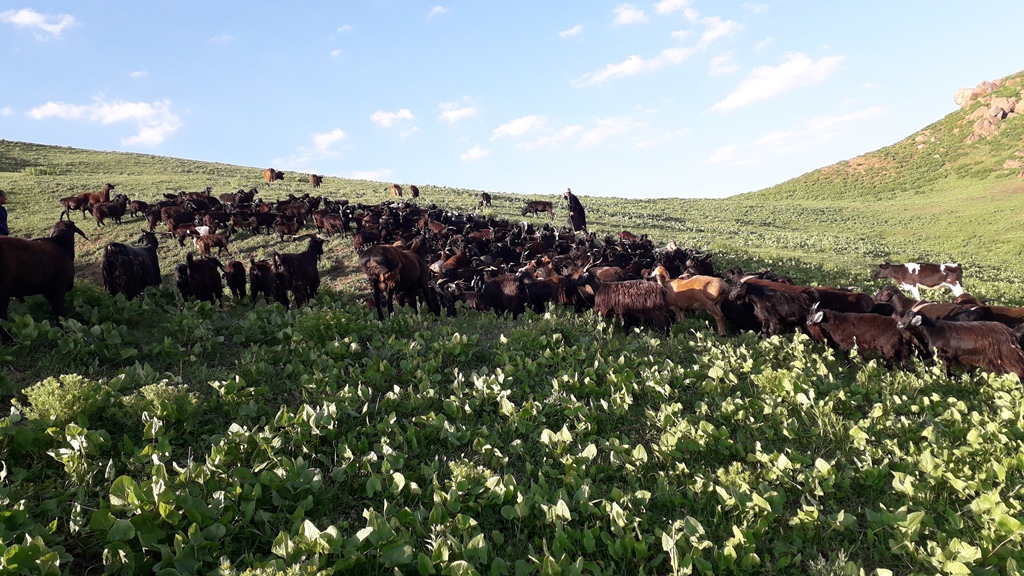
This flock belongs to the Shakhrinav breeding farm.
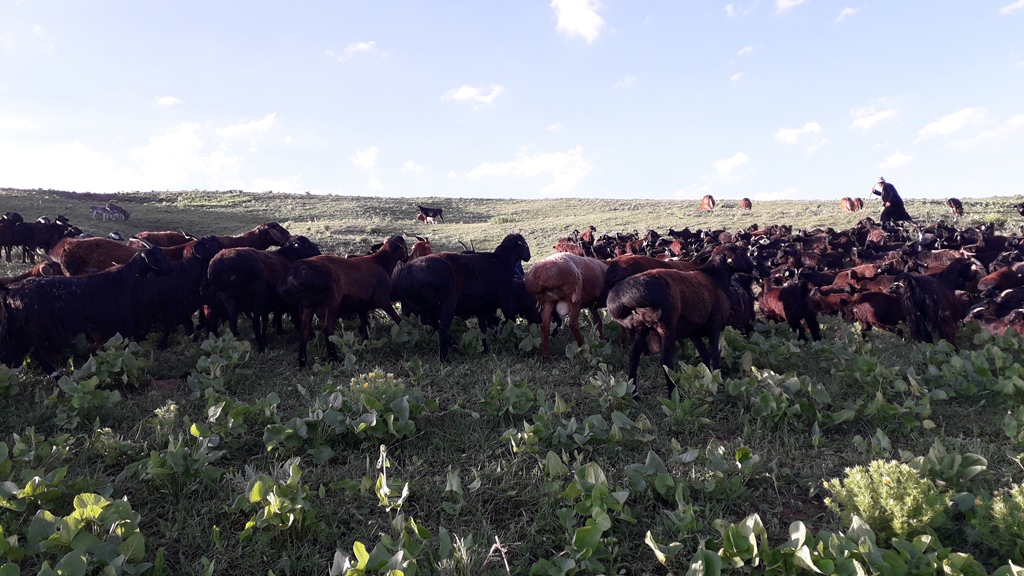
The chief shepherd, named Boboyor, has his flock divided into two groups: one consists only of ewes, the other of rams and goats.
Breeder rams are being prepared in the flock.
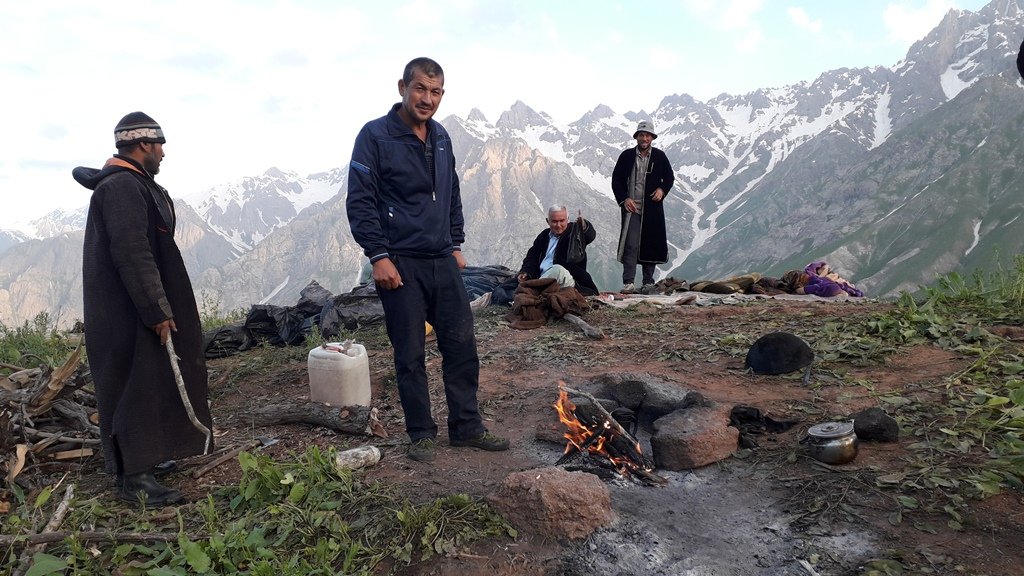
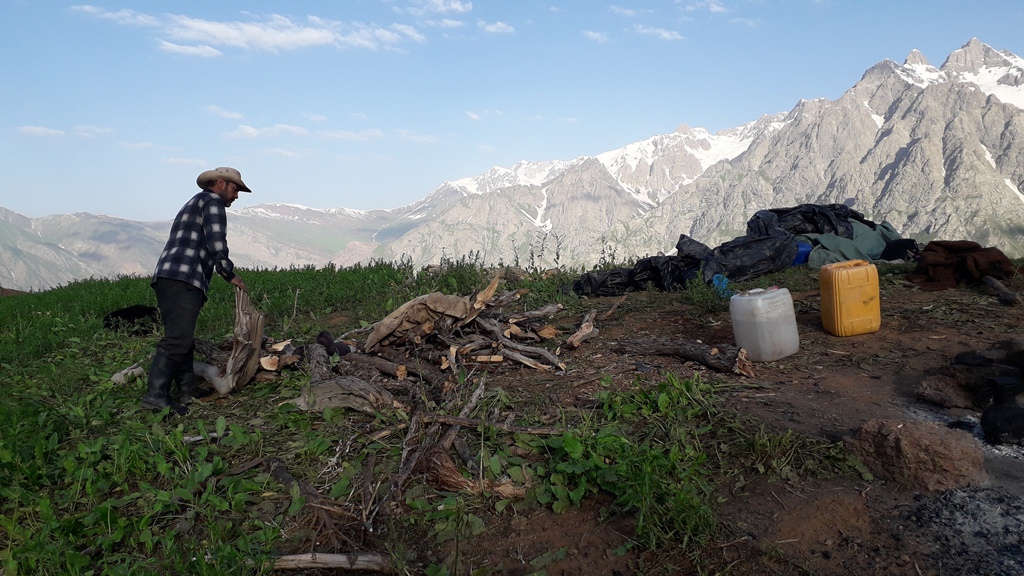
The shepherds’ camp is located at the top. They set up a parking lot here to control the entire pasture. Shepherds say that in a crevice where there is no wind it is cozy, but there is more danger. For example, bears do not climb to the top.
The shepherd’s main assistant is a dog. This is an ordinary shepherd dog, although it is not a purebred, but faithfully guards the flock. He is not afraid of wolves, he twice fought with a snow leopard, but lost and lay wounded for several days.
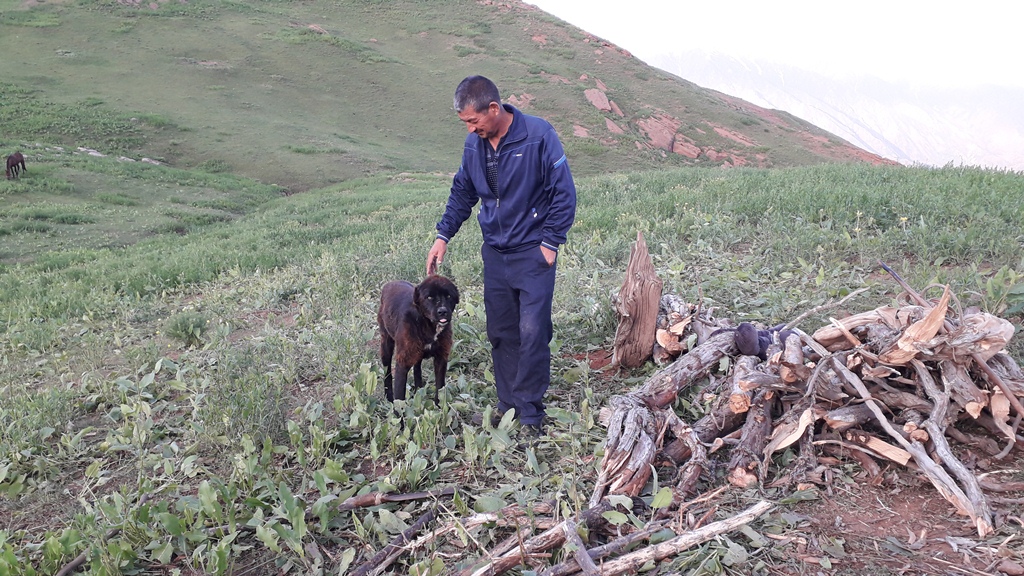
“When a bear is encountered, it warns its owners with a loud bark. This year the bear was not able to carry off a single sheep,” says Boboer. According to his information, there are few wolves this year. There are 6 dogs in the flock, but the rest followed the flock and were not included in the shot.
The flock goes to pasture. Ordinary shepherds are changed every 15-20 days. Ikrom and Abduhalil are hereditary shepherds. They don’t care about cold and hunger. Soon they will return home, and replacements will take their place.
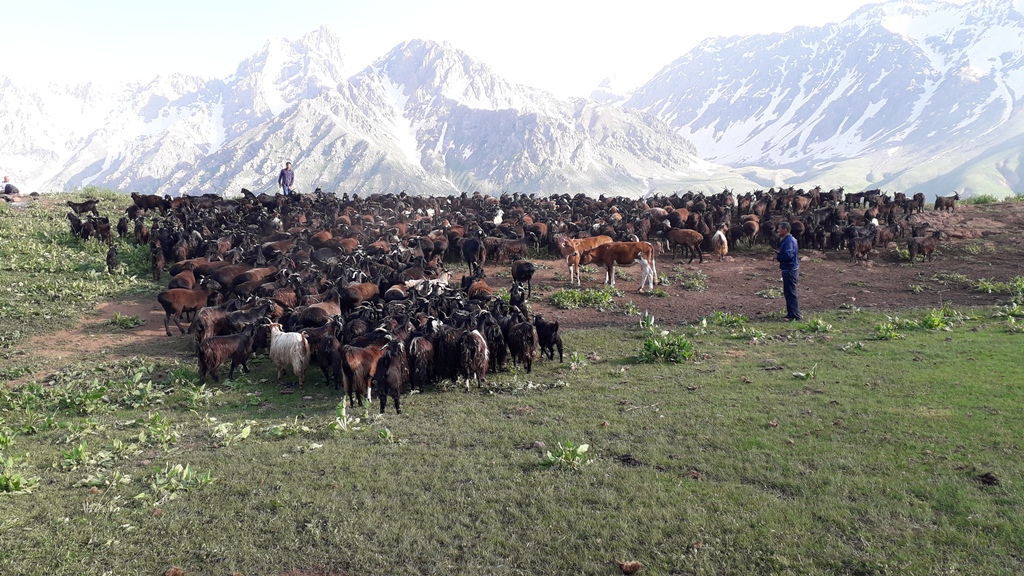
The time is approaching that they begin to separate the breeding rams from the flock. They are being prepared for the next season to produce offspring. The mating season takes place in October, so that lambing occurs in March, and not earlier, so that newborn lambs do not freeze in cold weather.
Morning. Otara woke up. Arkor (chief shepherd) Boboyor tells his subordinates where to send the herd today. Only he knows the boundary of the pasture plot allocated to him. Sometimes students enter someone else’s area, and there are scandals. Therefore, you need to obey the main thing.
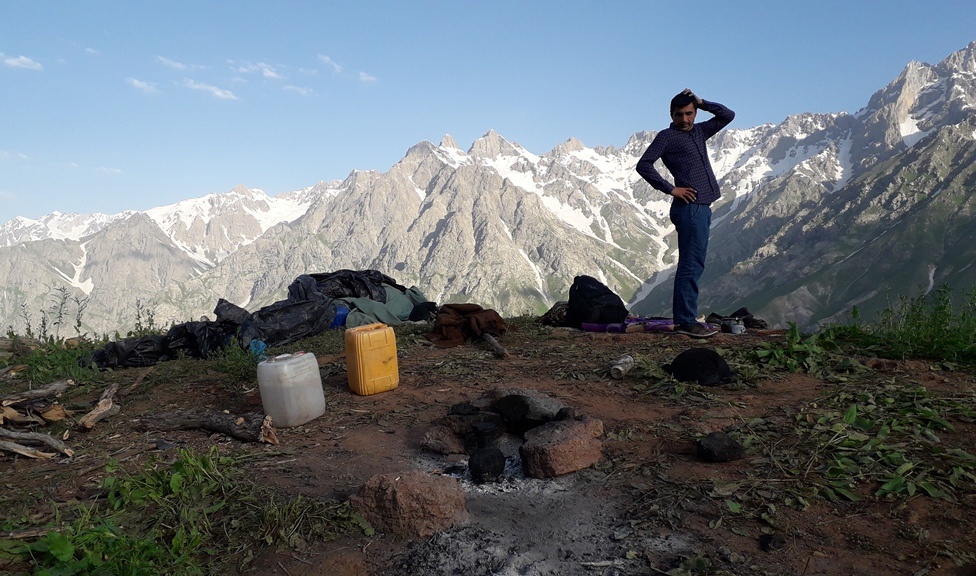
The beaver personally checks the flock in order to leave sick and wounded animals near the parking lot.
Where donkeys are smarter than GPS, and life follows the laws of nature
It is impossible to imagine the life of a flock without donkeys. “My dogs are not very good, but my donkeys are highly professional,” jokes Beaver.
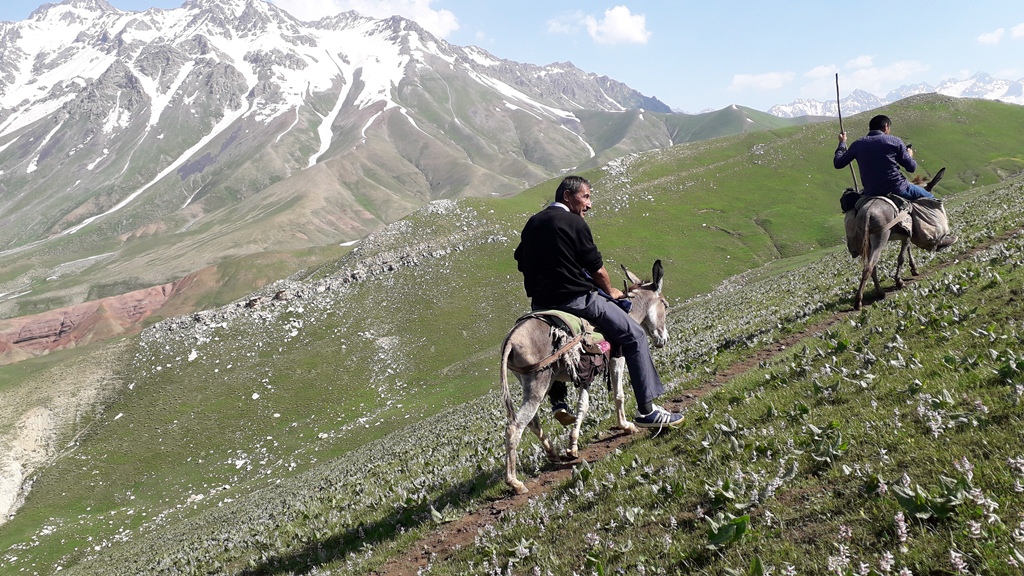
There are five donkeys serving the flock. They carry cargo, firewood, water, food. They do not require special care. And besides, they travel along paths that other animals cannot.
Having loaded the donkeys, the shepherds send them along the route, they themselves find the “address” and deliver the cargo safe and sound.
“Do not believe anyone who says that a donkey is an animal completely without reason. If the path is narrow, then the donkey finds another, safer one,” shepherds say.
One donkey delivers a load of up to 100 kg.
Shepherds’ camp. She is temporary, wandering after the flock. Here shepherds cook, sleep, and do laundry. Each shift (duration from 15 days to 1 month) brings provisions.
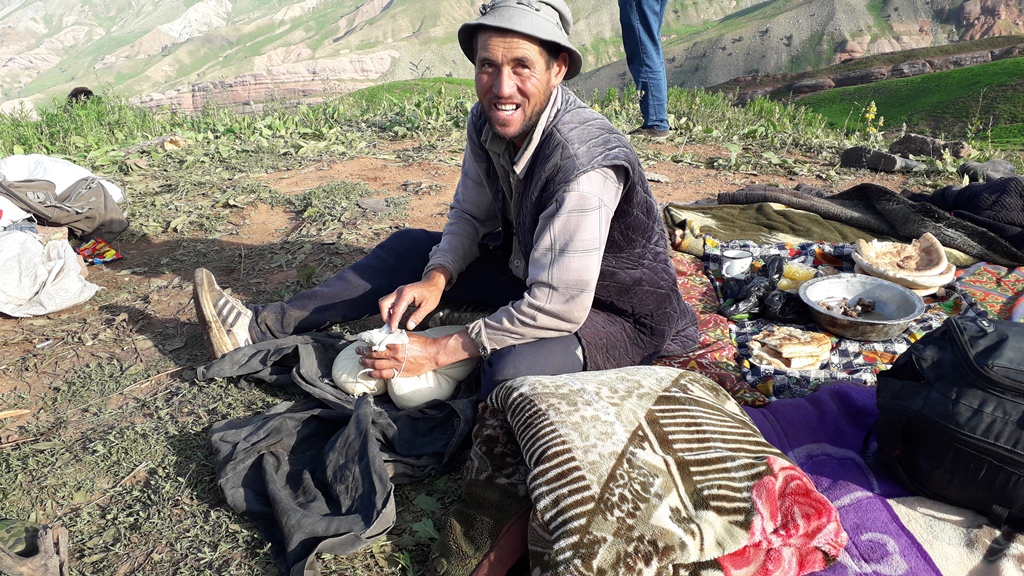
This is flour for making flatbreads, salt, sweets, and sometimes some vegetables and fruits. The diet mainly consists of meat and chalob (a drink made from sheep and goat milk). The flatbread is prepared in two ways – in a cauldron or in a special frying pan. Add jazz and you get an excellent “kumoch” – a flatbread baked under ash in a frying pan or foil.
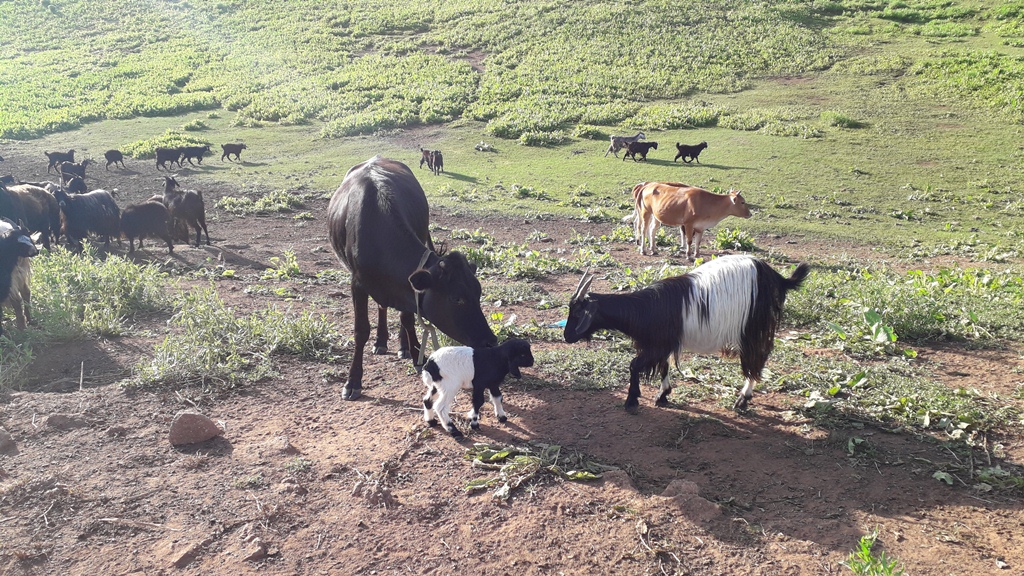
The herd consists not only of sheep and goats, there are also cows and horses that graze around.
This cow surprised the shepherds themselves with its care. The other day a baby goat was born. In cold, windy weather, he could have died because his mother was unable to lick and dry him quickly. Then a cow came to the rescue, and in a matter of minutes, with her long tongue, she cleaned the kid and put it on its feet. Now this beautiful little goat is not in danger.
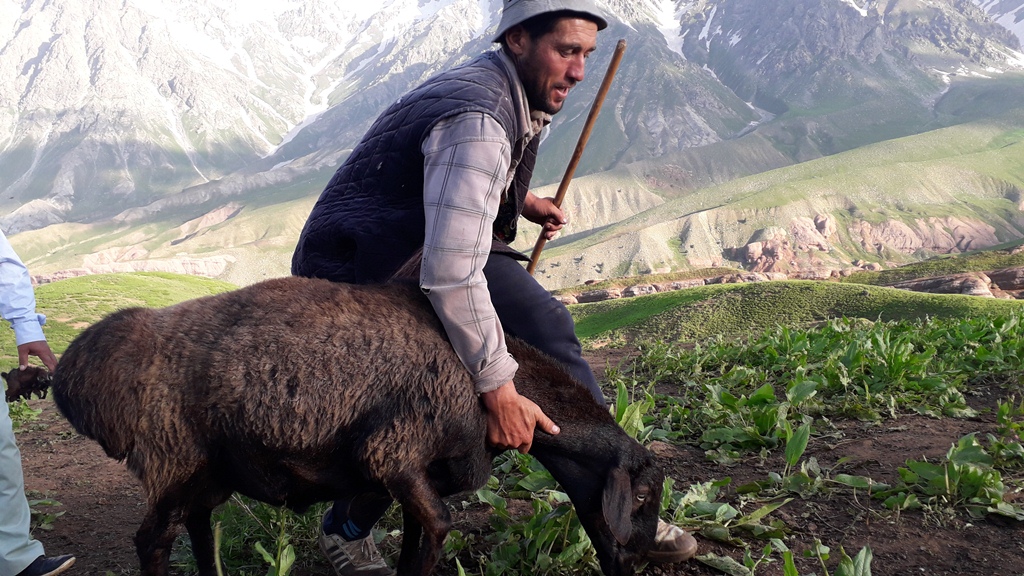
Breeding ram of the Gissar breed. This kuchkar is a chori (4 year old). This year it is used for the last time for procreation. Next year, when he becomes a panji, he will be spayed and fattened.
A few words about the food. This year, the pastures of Tajikistan are abundant with grass. In the upper reaches of the Shirkent River, spring is in full swing. Here you can see wildflowers that are just beginning to break through the stones, eremurus delight the eye with their appearance, and chazorispand (harmola) has not yet bloomed.
One of the natural enemies of the flock is small glaciers. Shepherds check their density, whether it is possible to move a flock through them or not.
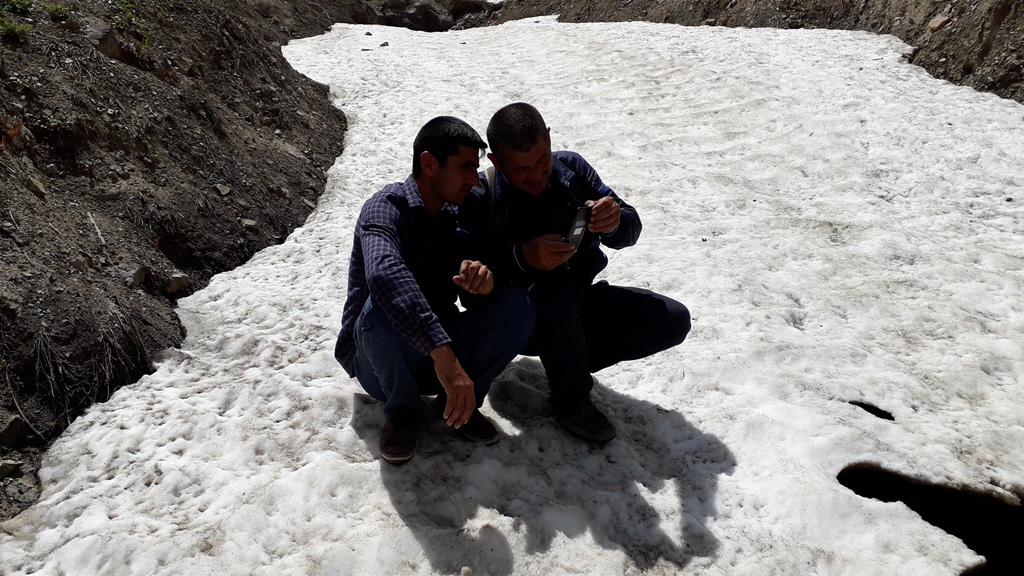
Glaciers continue to melt, seemingly beautiful lawns have turned into swamps due to the flood. They can suck a person in, and animals, once they get here, cannot get out.
Unwritten law
Chief shepherd Boboyor says that he and his assistants like the harsh life of a shepherd.
“This is the most courageous profession,” he believes. “Every day we walk tens of kilometers in the highlands, trying to keep the herd safe and sound.”
Today there are more than 20 flocks from Shakhrinav and Regar at Pashmikukhna. Each of them consists of 1000 or more small cattle. Three or four shepherds cope with this farm, despite the fact that they are warned of dangers at every step. But they like such a harsh life.
Shepherds have an unwritten law; they always provide assistance to tourists, climbers, geologists, and pilgrims who are in trouble, who go to distant mountains for various purposes.
And most importantly, the shepherds of Tajikistan live in harmony and harmony with nature, because this is their second home.
The editors of Asia Plus would like to thank the Ministry of Agriculture, the Shakhrinav hukumat and the breeding farms of this region for their assistance in preparing the report.