In May, the mineral oil tax will only be reduced to two cents per liter instead of the previous five. Criticism comes from the union and energy traders – and the opposition.
After negotiations about an extension of the fuel price cap almost failed, there is now an agreement on a fuel price cap in a reduced form just a few hours before the measure expires. The Neos, the ÖVP-led Ministry of Economic Affairs and the SPÖ-led Ministry of Finance announced this in broadcasts on Thursday afternoon.
Specifically, as has already been reported, the mineral oil tax in May will only be reduced by 2 cents per liter instead of the previous 5 cents because there is no longer any potential from the additional revenue from VAT on fuels. If the additional VAT revenue turns out to be higher, it should be “distributed back” in June, the Ministry of Economic Affairs said. As far as the margin limitation is concerned, another 5 cents will be lost in the first two weeks of May, and then only 2.5 cents.
“In addition to price developments, security of supply is the top priority. In order not to endanger this, the margin limit will be halved in May and will then expire,” said the Minister of Economic Affairs Wolfgang Hattmannsdorfer (ÖVP). “Market interventions may only be a short-term measure in extremely exceptional cases.”
“The reduction in the mineral oil tax on fuels will be passed on in the amount of the additional revenue that arose from the increase in the price of fuel in the budget,” said the Finance Minister Markus Marterbauer (SPÖ). “We don’t want to repeat the old mistakes of paying out money that isn’t there. Neither the state nor the oil companies are allowed to profit from the energy crisis at the expense of the citizens.”
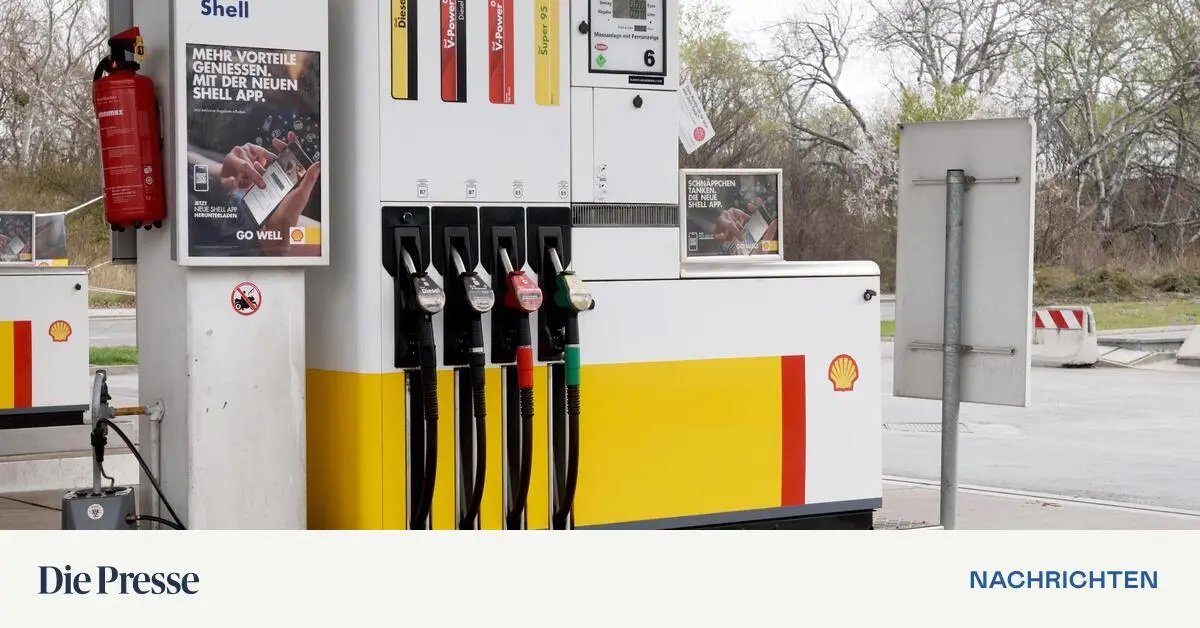
“Our goal was to ensure that even small gas stations that do not benefit from the 5 cent reduction and still have to lower prices due to high competitive pressure can survive in the market,” said Neos energy spokeswoman Karin Doppelbauer. With the expiration of the margin reduction from June it will be ensured that “small businesses can again keep up with the corporate filling stations”.
Both the intervention in the margins of the mineral oil companies and the legally associated reduction in mineral oil tax are, as provided for in the law, limited to one month and will therefore expire at the end of May. However, the coalition can then decide on an extension – in the same or modified form – as it did now at the end of April. At the end of April, the two measures, which together are considered a “fuel price brake”, formally expired – until they were extended at the last moment.
FPÖ General Secretary Michael Schnedlitz sees a “chaos and undignified spectacle” from the government surrounding the extension of the fuel price cap. The agreement is “a slap in the face for every driver, every commuter, every entrepreneur and simply every citizen.” In a broadcast, Schnedlitz recalls the FPÖ proposal to halve the mineral oil tax and abolish the CO2 tax, which could reduce the price of fuel by 40 to 44 cents per liter.
Immediate criticism of the slimmed-down fuel price cap came from various quarters, including those close to the coalition parties. The ÖVP sub-organization Economic Association criticizes that the measure is “completely incomprehensible in this form and a clear additional burden for small businesses”. Small businesses would continue to be “required an additional 5 cents”, while the state would only reduce the mineral oil tax by 2 cents. This is “neither fair nor understandable” and “a clear additional burden for small businesses,” writes the Secretary General of the Economic Association Tanya Graf in a broadcast.
Like Graf, WKÖ General Secretary Jochen Danninger criticizes the fact that the current design of the measure maintains a serious state intervention in the free economic planning of companies and that this particularly hits small, independent gas stations hard. Danninger also sees a threat to security of supply in Austria.
Jürgen Roth, spokesman for the Energy Trade Association in the Austrian Economic Chamber (WKÖ), describes the agreement as “irresponsible” and the industry is “stunned”. Large oil companies would be forced to offer cheaper prices than the smaller ones. “Unfortunately, another month has passed in which small energy traders are effectively pushed to the wall and their existence is threatened,” said Roth.
From the point of view of the trade union federation, the relief for consumers is being reduced “at an inopportune time”. The planned cuts are “a clear step backwards at the expense of the employees,” criticizes Angela Pfister, head of the economics department at the ÖGB. (APA)