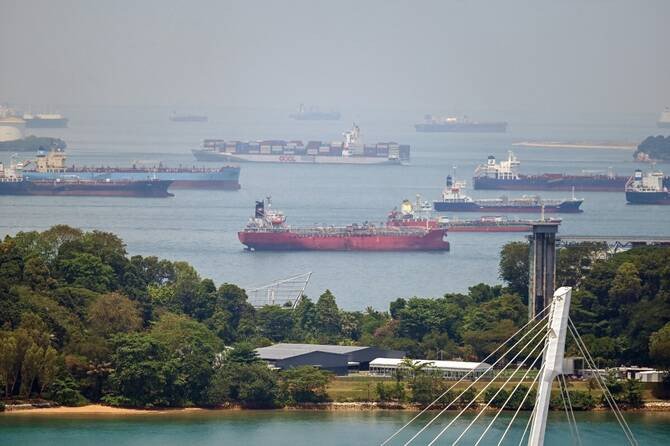
he blockade of the Strait of Hormuz since February has divided Southeast Asian nations. As the closure resulted from the strategic ambitions of external powers, primarily the United States and its closest allies, ASEAN giants like Indonesia, Malaysia and Singapore have succumbed to the pressures of national sovereignty and domestic economic interests.
The struggle to maintain stable domestic energy prices while navigating the violent waves of superpower rivalry is threatening the very foundation of regional stability. Furthermore, Indonesia’s granting of potential airspace navigational rights to the US has projected new tensions onto the Strait of Malacca’s vital choke point.
Singapore’s Foreign Minister Vivian Balakrishnan, has taken a stern and categorical stand, asserting that transit passage through such waterways is a right, not a privilege. He argues that Singapore will not supplicate for a license or pay tolls to “assaulted states” like Iran, as doing so would erode the legal principles of the United Nations Convention on the Law of the Sea (UNCLOS).
However, this rigid legalism has sparked sharp criticism from regional neighbors. Nurul Izzah Anwar, Malaysia’s People’s Justice Party deputy president, described Singapore’s refusal to negotiate as “regrettable”. She argues that this stance reflects a “narrow strategic posture” that prioritizes alignment with external powers over regional responsibility.
According to Nurul Izzah, Malaysia chooses dialogue because disengagement invites escalation. She contrasts Singapore’s rigidity with Malaysian Prime Minister Anwar Ibrahim’s engagement, which is rooted in safeguarding ASEAN regional stability and energy security. She warns that Singapore’s posture appears to echo the preferences of Western powers rather than practicing a truly principled neutrality.
While Malaysia uses its cultural and solidarity ties to keep trade flowing, Indonesia finds itself in a much more precarious position. Recent policy choices, some of which have since been suspended, such as signing a reciprocal trade agreement with the US and joining the Board of Peace (BoP), have been widely criticized in Jakarta as strategic missteps.

Every Thursday
The latest defense pact signed between Indonesia and the US further signals a drift away from Indonesia’s “free and active” nonaligned doctrine, displaying a blunt leaning toward the US orbit.