Monday, May 4, 2026
    The GeoStrategic Consensus
    No Result
    View All Result
    • Login
    • HOME
    • AMERICAS
      • Argentina
      • Brazil
      • Canada
      • Chile
      • Colombia
      • Costa Rica
      • Cuba
      • Dominican Republic
      • Ecuador
      • El Salvador
      • Greenland
      • Guatemala
      • Honduras
      • Mexico
      • Nicaragua
      • Panama
      • Paraguay
      • Peru
      • United States
      • Uruguay
      • Venezuela
    • ASIA-PACIFIC
      • Australia
      • Brunei Darussalam
      • Cambodia
      • China
      • Federated States of Micronesia
      • Fiji
      • Indonesia
      • Japan
      • Kiribati
      • Laos
      • Malaysia
      • Marshall Islands
      • Mongolia
      • Myanmar
      • Nauru
      • New Zealand
      • North Korea
      • Palau
      • Papua New Guinea
      • Philippines
      • Samoa
      • Singapore
      • Solomon Islands
      • South Korea
      • Taiwan
      • Thailand
      • Timor-Leste
      • Tonga
      • Tuvalu
      • Vanuatu
      • Vietnam
    • CARICOM
      • CARICOM – Non-English
        • Haiti
        • Suriname
      • CARICOM Associates
        • Anguilla
        • Bermuda
        • British-Virgin-Islands
        • Cayman-Islands
        • Curacao
        • Turks-and-Caicos
      • CARICOM English
        • Antigua and Barbuda
        • Barbados
        • Belize
        • Dominica
        • Grenada
        • Guyana
        • Jamaica
        • Montserrat
        • Saint Kitts and Nevis
        • Saint Lucia
        • Saint Vincent and the Grenadines
        • The Bahamas
        • Trinidad and Tobago
    • EURASIA
      • Armenia
      • Azerbaijan
      • Balarus
      • Georgia
      • Kazakhstan
      • Kyrgyzstan
      • Moldova
      • Russia
      • Tajikistan
      • Turkmenistan
      • Ukraine
      • Uzbekistan
    • EUROPE
      • Albania
      • Andorra
      • Austria
      • Bosnia and Herzegovina
      • Bulgaria
      • Croatia
      • Cyprus
      • Czech Republic
      • Denmark
      • Estonia
      • Finland
      • France
      • Germany
      • Greece
      • Holy See
      • Hungary
      • Iceland
      • Ireland
      • Italy
      • Kosovo
      • Latvia
      • Liechtenstein
      • Lithuania
      • Luxembourg
      • Malta
      • Monaco
      • Montenegro
      • Netherlands
      • North Macedonia
      • Norway
      • Poland
      • Portugal
      • Romania
      • San Marino
      • Serbia
      • Slovakia
      • Slovenia
      • Spain
      • Sweden
      • Switzerland
      • United Kingdom
    • MIDDLE EAST AND NORTH AFRICA
      • Algeria
      • Bahrain
      • Egypt
      • Iran
      • Iraq
      • Israel
      • Jordan
      • Kuwait
      • Lebanon
      • Lybia
      • Morocco
      • Oman
      • Palestinian Territories
      • Qatar
      • Saudi Arabia
      • Syria
      • Tunisia
      • Turkey
      • United Arab Emirates
      • Western Sahara
      • Yemen
    • SOUTH ASIA
      • Afghanistan
      • Bangladesh
      • Bhutan
      • India
      • Maldives
      • Nepal
      • Pakistan
      • Sri Lanka
    • SUB-SAHARAN AFRICA
      • Angola
      • Benin
      • Botswana
      • Burkina Faso
      • Burundi
      • Cabo Verde
      • Cameroon
      • Central African Republic
      • Chad
      • Comoros
      • Cote d’Ivoire
      • Democratic Republic of the Congo
      • Djibouti
      • Equatorial Guinea
      • Eritrea
      • Eswatini
      • Ethiopia
      • Gabon
      • Gambia
      • Ghana
      • Guinea
      • Guinea Bissau
      • Kenya
      • Lesotho
      • Liberia
      • Madagascar
      • Malawi
      • Mali
      • Mauritania
      • Mauritius
      • Mozambique
      • Namibia
      • Niger
      • Nigeria
      • Republic of the Congo
      • Rwanda
      • Sao Tome and Principe
      • Senegal
      • Seychelles
      • Sierra Leone
      • Somalia
      • South Africa
      • South Sudan
      • Sudan
      • Tanzania
      • Togo
      • Uganda
      • Zambia
      • Zimbabwe
    • HOME
    • AMERICAS
      • Argentina
      • Brazil
      • Canada
      • Chile
      • Colombia
      • Costa Rica
      • Cuba
      • Dominican Republic
      • Ecuador
      • El Salvador
      • Greenland
      • Guatemala
      • Honduras
      • Mexico
      • Nicaragua
      • Panama
      • Paraguay
      • Peru
      • United States
      • Uruguay
      • Venezuela
    • ASIA-PACIFIC
      • Australia
      • Brunei Darussalam
      • Cambodia
      • China
      • Federated States of Micronesia
      • Fiji
      • Indonesia
      • Japan
      • Kiribati
      • Laos
      • Malaysia
      • Marshall Islands
      • Mongolia
      • Myanmar
      • Nauru
      • New Zealand
      • North Korea
      • Palau
      • Papua New Guinea
      • Philippines
      • Samoa
      • Singapore
      • Solomon Islands
      • South Korea
      • Taiwan
      • Thailand
      • Timor-Leste
      • Tonga
      • Tuvalu
      • Vanuatu
      • Vietnam
    • CARICOM
      • CARICOM – Non-English
        • Haiti
        • Suriname
      • CARICOM Associates
        • Anguilla
        • Bermuda
        • British-Virgin-Islands
        • Cayman-Islands
        • Curacao
        • Turks-and-Caicos
      • CARICOM English
        • Antigua and Barbuda
        • Barbados
        • Belize
        • Dominica
        • Grenada
        • Guyana
        • Jamaica
        • Montserrat
        • Saint Kitts and Nevis
        • Saint Lucia
        • Saint Vincent and the Grenadines
        • The Bahamas
        • Trinidad and Tobago
    • EURASIA
      • Armenia
      • Azerbaijan
      • Balarus
      • Georgia
      • Kazakhstan
      • Kyrgyzstan
      • Moldova
      • Russia
      • Tajikistan
      • Turkmenistan
      • Ukraine
      • Uzbekistan
    • EUROPE
      • Albania
      • Andorra
      • Austria
      • Bosnia and Herzegovina
      • Bulgaria
      • Croatia
      • Cyprus
      • Czech Republic
      • Denmark
      • Estonia
      • Finland
      • France
      • Germany
      • Greece
      • Holy See
      • Hungary
      • Iceland
      • Ireland
      • Italy
      • Kosovo
      • Latvia
      • Liechtenstein
      • Lithuania
      • Luxembourg
      • Malta
      • Monaco
      • Montenegro
      • Netherlands
      • North Macedonia
      • Norway
      • Poland
      • Portugal
      • Romania
      • San Marino
      • Serbia
      • Slovakia
      • Slovenia
      • Spain
      • Sweden
      • Switzerland
      • United Kingdom
    • MIDDLE EAST AND NORTH AFRICA
      • Algeria
      • Bahrain
      • Egypt
      • Iran
      • Iraq
      • Israel
      • Jordan
      • Kuwait
      • Lebanon
      • Lybia
      • Morocco
      • Oman
      • Palestinian Territories
      • Qatar
      • Saudi Arabia
      • Syria
      • Tunisia
      • Turkey
      • United Arab Emirates
      • Western Sahara
      • Yemen
    • SOUTH ASIA
      • Afghanistan
      • Bangladesh
      • Bhutan
      • India
      • Maldives
      • Nepal
      • Pakistan
      • Sri Lanka
    • SUB-SAHARAN AFRICA
      • Angola
      • Benin
      • Botswana
      • Burkina Faso
      • Burundi
      • Cabo Verde
      • Cameroon
      • Central African Republic
      • Chad
      • Comoros
      • Cote d’Ivoire
      • Democratic Republic of the Congo
      • Djibouti
      • Equatorial Guinea
      • Eritrea
      • Eswatini
      • Ethiopia
      • Gabon
      • Gambia
      • Ghana
      • Guinea
      • Guinea Bissau
      • Kenya
      • Lesotho
      • Liberia
      • Madagascar
      • Malawi
      • Mali
      • Mauritania
      • Mauritius
      • Mozambique
      • Namibia
      • Niger
      • Nigeria
      • Republic of the Congo
      • Rwanda
      • Sao Tome and Principe
      • Senegal
      • Seychelles
      • Sierra Leone
      • Somalia
      • South Africa
      • South Sudan
      • Sudan
      • Tanzania
      • Togo
      • Uganda
      • Zambia
      • Zimbabwe
    No Result
    View All Result
    Agentially
    No Result
    View All Result
    Home ASIA-PACIFIC Papua New Guinea

    Valuing our Melanesian way of life

    The Analyst by The Analyst
    April 14, 2026
    in Papua New Guinea
    Valuing our Melanesian way of life


    CULTURE

    CULTURE is more than a dance, or a tattoo or a practice.

    It also involves what people believe in and also what they think and do.

    READ ALSO

    How has the Portuguese language influenced PNG?

    Tribe finds peace after seven years

    That was what I confirmed while teaching students in English a few years ago.

    This knowledge should help guide us into the subject of this article, a look at a Melanesian way of thinking, as unique from cultures from other parts of the world, including the western world.

    What is culture?

    To really understand and appreciate one’s culture or the culture of other people, it is good to define what the term “culture” means.

    And that is true for those of us who are educated in fields outside of humanities and social sciences.

    I discovered a good description of what culture is when I used the 11 Applied English save buk text to teach Grade 11 students English a few years ago.

    The book states that culture is a term that can be used to “refer collectively to a society and its way of life”.

    Culture involves three parts – what people think, what people do, and what people produce.

    It goes on to say that processes, beliefs, knowledge and values are part of culture.

    Culture is shared, learned, symbolic, transmitted between generations, integrated and able to be adapted.

    So, in effect, culture is more than just a dance, a tattoo, a name or value. It is a way of life.

    Interestingly too, a culture can be learned, transmitted from one group to another and it can be adapted.

    Good and bad in culture

    I have learned a long time ago that we in Papua New Guinea have unique cultures, and we have some interesting and practical ways of doing things, as in supporting one and other in our villages, tribes or neigbourhood.

    Our different ways of cooking food, by roasting, using mumu, or cooking in bamboo are part of our culture as well.

    Additionally, we also abided by the principle of sharing and caring, as in the extended family members chipping in to pay a bride price for a young man or fulfilling obligations related to a death of a loved one.

    The network of relationships further extends over the seas, as exemplified by the traditional trades that our local people conducted, whether it was salt trading in Laiagam, Enga, or trading that involved sailing, as in Kula trading in Milne Bay, Hiri trade in Central and Gulf, and Wonkau trade in Wewak, East Sepik. But, we must also be honest to say that some of our cultures are bad.

    Such practices include the use of sorcery, pay-back killings, nepotism and excusing the bad ways of our people who may have harmed others. The way forward for any ethnic group is to stop the bad practices in their culture and major on the good ones, as well as incorporating other better practices as learned from other cultures.

    Bible culture challenges people

    For those who have joined a church or fellowship that teaches the Bible, over time they will adopt a new way of living.

    Their goals in life, their values and ethics will also change. In effect, they will adopt a new culture, and discard the older way of living, which is a Biblical teaching.

    It is a tough decision for many people to make, particularly if they love their old way of living more than anything else.

    However, we must also be aware that if someone comes from a culture that promotes love and respect, the adoption of the Christian culture should not be too hard to make.

    That is because their values align with Christian doctrines and practices, which promote values or principles of love and respect and truth.

    And, the Bible stresses that truth is important in life and “there is no respect of persons with God”.

    That also means, all men and women, and children will be judged equitably by the Maker.

    There will be any bending of rules or cutting corners.

    With the Creator, there will be no nepotism, wantokism or favouritism when it comes to matters of judgment.

    And, for many traditional cultures, that can be a hard concept to take.

    And, sadly, some people may decide to stay away from Christianity because of that.

    Concern to protect and preserve

    When people talk about culture, they will also usually highlight the need to protect and preserve it. As new cultures are entering our villages and communities, the ways of the old are disappearing. That is often the concern for many because many of those ways are their identity.

    That set them apart from other ethnic groups. Moreover, we find that today western ways of doing things, and entertainment have also replaced the older ways, and often posE a threat to the preservation of people’s identity as distinct groups.

    Knowledge of local dialects is also diminishing as people are using a more common vernacular, such as English or Tok Pisin.

    In the process, people forget their mother tongue. There are realities and the challenges that we are facing these days.

    Melanesian Way

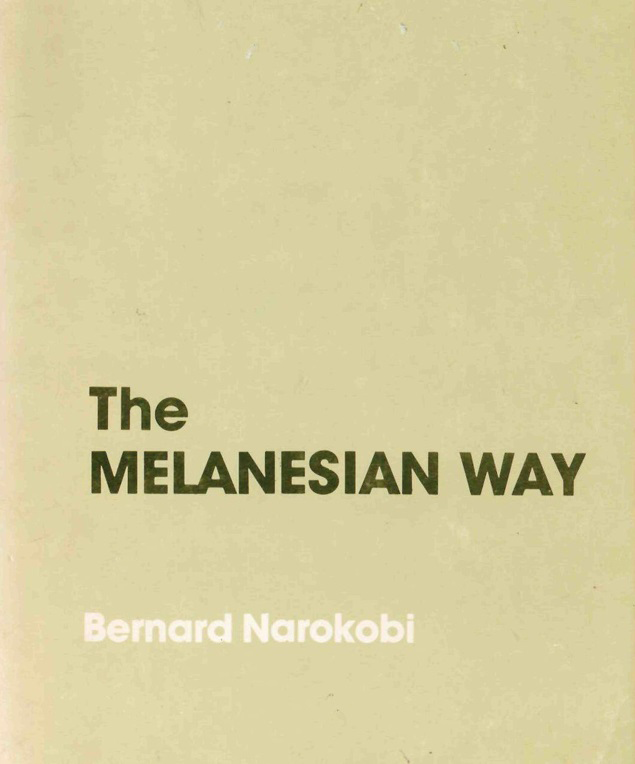
    Bernard Narokobi is known as an academic, jurist, politician, diplomat and a philosopher. He is the author of The Melanesian Way, a book that proposes some unique themes, and which may be debatable.

    Yet the book highlights certain concepts that are not appreciated enough by Melanesians, Pacific islanders or other indigenous peoples in the world.

    I think some of these concepts are important for indigenous people – to know and appreciate the fact that they have histories or legacies long before westerners reached their shores, and the Melanesian writer captures that and expresses that succinctly.

    Here are some passages from Narokobi’s 1983 book: “Melanesians managed to live on these islands for thousands of years before Europeans came into contact with them. It is assumed therefore that Melanesians have had a civilization with its cultures, values, knowledge and wisdoms which have guided them through the ages …

    “Our civilisation did not start with the coming of Christian missionaries. Because we have an ancient civilisation, it is important for us to give proper dignity and place to our history. We can only be ourselves if we accept who we are rather than denying our autonomy.”

    These are important statements.

    That should remind people about their own history: Our meaningful existence did not start when westerners reached our shores.

    Our people lived well-rounded lives for thousands of years before westerners made first contact with them.

    Think about this: If the westerners did not reach our shores, our people will still survive as distinct ethnic groups, but without the conveniences of today’s technology, medicine and transport systems.

    The same would be true for other Pacific islanders, the First Nations people of Australia and all the ethnic groups around the world. 

    Melanesian thinking and leadership

    Narakobi’s book generally highlights this part of our culture: The way we think.

    As someone who has lived and worked in Nauru and Fiji and studied in and travelled frequently to Australia, I am very aware of the unique way that Melanesians think and do things, particularly people from PNG.

    Additionally, I have lived in a village and absorbed the norms and values of that setting and it has shaped the way I think.

    This is not so obvious, but when you sit back and think a bit, you will understand what I am saying.

    Even though we are dressed almost the same and speak English, the way we think and approach life is shaped by our cultures, whether traditional, modern, Biblical, eastern or western, a combination of those.

    I am of the view that the Melanesian way of thinking can help us and other islanders and indigenous peoples of the world in finding better paths for our respective people groups.

    The Bible teachings have also influenced us and some Melanesians have developed a certain way of thinking that is new, with concepts of Melanesia merging with Christian principles.

    The Melanesian way of thinking has and will continue to influence our region, as exhibited in the lives of leaders like Ratu Sir Kamisese Mara, the Fijian, and Sir Michael Somare and others, who led other island states in pursuing self-rule in the 1960s-80s.

    Such Melanesian leaders did not want the colonisers to rule them. Some people groups would rather sit back and let others rule them, but that is not common in Melanesia.

    Sooner or later they would get tired from being directed and would want to take charge of their own destiny.

    That point was also stated by Narakobi in his book. I should also be fair to say that Sir Kamisese also had Tongan roots and was from a chiefly clan and that also impacted his outlook in life.

    Towns have cultures

    There is one more aspect of culture that I want to highlight before I end this article. The place you live I can shape you and your culture, for good or bad. It can influence the way you speak, interact with other people or what you do in different situations.

    The city or town or village you grow up in has a culture.

    In some towns in PNG, people respect one another, and people do not tolerate petty crimes, harassment or the use of vulgar language.

    That is not the case in other centres. And, if you know the history of the place, you can see how the culture of that locality has also changed over the past decade or so.

    I am of the view that many of our towns and cities have changed for the worse over the past decade. People have developed a culture of being disrespectful and selfish. Despite the advancement in technology, accessibility of education and transport systems, people’s way of living and thinking have not progressed. This is sad.

    Having lived in Adelaide, South Australia, for two years, I have noticed the culture of that city in welcoming people from all over the continent and elsewhere. But that culture was built over decades, it did not just pop up. And credit goes to the leaders of that metropolitan centre and its people. 

    Such observations have further deepened my appreciation of places and the cultures they have.                                                                                             

    New Melanesian thinking  

    As I end this article, I am of the view that PNG and the Pacific need to promote a new way of thinking to help our states progress in the next decade or so.

    Sir Kamisese, Sir Michael and philosopher Narokobi have all left us, but we can still promote our best Melanesian practices with its confluence with others, including the Christian teachings, and progress our people.

    We must encourage a new generation of thinkers who can – like Narokobi – challenge us to look into our history and be brave to move forward with our people, knowing that our ancestors have survived for thousands of years before making contact with westerners.

    Although we must protect and preserve the good in our cultures, we must be mature enough to discard what is bad in them and adopt other better practices.

    That should be the way forward.  


    Source link

    Related Posts

    How has the Portuguese language influenced PNG?
    Papua New Guinea

    How has the Portuguese language influenced PNG?

    May 4, 2026
    Papua New Guinea

    Tribe finds peace after seven years

    May 4, 2026
    Culture of a village shapes lives
    Papua New Guinea

    Culture of a village shapes lives

    May 4, 2026
    Papua New Guinea

    Kainantu sets a record at uni

    May 3, 2026
    Committees are there to scrutitinise government
    Papua New Guinea

    Committees are there to scrutitinise government

    May 3, 2026
    That there be peace in Aiyura Valley
    Papua New Guinea

    That there be peace in Aiyura Valley

    May 3, 2026
    Next Post
    Prominent NFL reporter resigns amid probe into relationship with Patriots coach

    Prominent NFL reporter resigns amid probe into relationship with Patriots coach

    POPULAR NEWS

    Justin Bieber fans flood Coachella festival for headlining show – Entertainment

    Justin Bieber fans flood Coachella festival for headlining show – Entertainment

    April 20, 2026

    Over 600 flee homes as Army, NPA clash in Negros Occidental

    April 21, 2026

    Ex-DPWH exec recalls P800-M ‘delivery’ to Zaldy Co 

    April 20, 2026

    Former PM Paluckas suspends party membership, to waive immunity over criminal probe

    April 24, 2026
    Pres. Ali challenges CARICOM to transform into health research powerhouse

    Pres. Ali challenges CARICOM to transform into health research powerhouse

    April 23, 2026

    EDITOR'S PICK

    Lower Austria: Hergovich unanimously nominated for SPÖ chairmanship – DiePresse.com

    Lower Austria: Hergovich unanimously nominated for SPÖ chairmanship – DiePresse.com

    April 21, 2026

    1

    May 2, 2026
    Education Loses Ground as Energy Gains in MCC Deal

    Education Loses Ground as Energy Gains in MCC Deal

    April 9, 2026
    Help for Emīls Kudins – nra.lv

    Help for Emīls Kudins – nra.lv

    May 2, 2026

    Recent Posts

    • The Prime Minister of Italy arrived in Yerevan – ARMENPRESS Armenian News Agency
    • How can this pan-Armenian shrine, an architectural pearl, be distorted like this? Lilit Galstyan
    • Turkmenistan plans 10 bcm gas processing plant at Galkynysh field – Turkmengaz
    • Gomel Economic Forum scheduled for 21-22 May

      © 2026 Agentially - Navigating shifting sovereignties and global risk .

      Welcome Back!

      Login to your account below

      Forgotten Password?

      Retrieve your password

      Please enter your username or email address to reset your password.

      Log In
      No Result
      View All Result

        © 2026 Agentially - Navigating shifting sovereignties and global risk .

        This website uses cookies. By continuing to use this website you are giving consent to cookies being used. Visit our Privacy and Cookie Policy.