The price of liquefied petroleum gas (LPG) will increase from this Monday, according to the president of the Paraguayan Chamber of Liquefied Petroleum Gas Fractionation Companies (Capagas)Gustavo Lucero, who attributed the measure to a combination of international, logistical and seasonal factors.
“Starting next week, the gas prices “They are going to rise,” Lucero reported, while pointing out that, although the values have remained stable since February or March 2025the current context presents new challenges for the sector.
The owner of Capagas explained that, with the arrival of the colder months, historically the demand for LPGa fact that puts pressure on raise prices. Added to this is the increase in the price of the “international propane and butane awards”, as well as an increase close to 22% in land logistics costs.
“We are evaluating our cost structure, both in Copetrol as in Sugas; The increase will be around 500 guaranies per kilo and of 300 guaraníes per liter“, accurate.
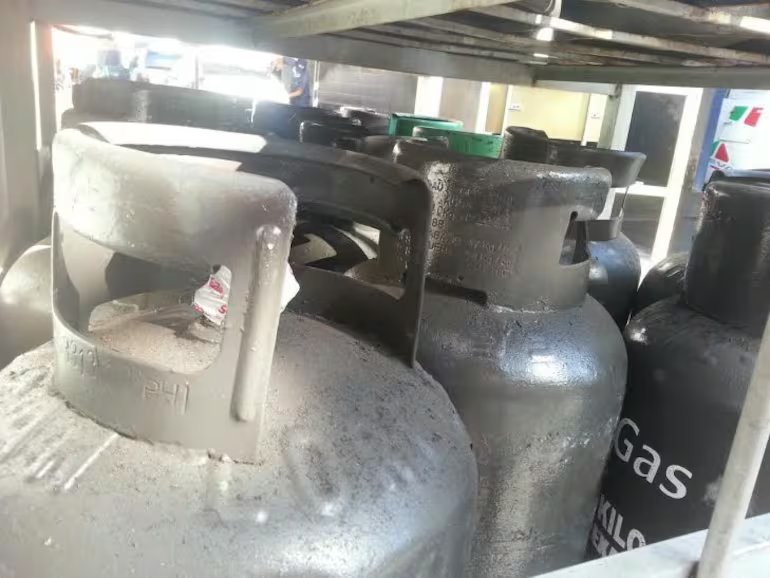
The adjustment will directly impact the domestic gas. Currently, the bottle of 10 kilos costs around G. 105,000although the price may vary depending on the fractionator and the distance. With the estimated increase of G. 500 per kilo, this container would register an approximate increase of G. 5,000while the 13 kilo bottle would increase by about G. 6,500.
Read more: The dollar falls, but not gas: Why are prices still high?
Volatility of the international energy market
Lucero recalled that, despite the high volatility of the international energy market, LPG prices in Paraguay they kept relatively stable in recent months. “This responds to regional economic factors, mainly linked to the only supplier that is Argentinaand also to the high supply that had existed since USA”, he indicated.
In that sense, he mentioned that Bolivia stopped supplying the country last year, which consolidated Argentina as the main and only current supplier. However, he warned that the international prices continue to rise.
“Despite the fact that the war conflict (in the Middle East) has ceased, the international pricesboth for butane and propane, continue to push. The situation is really becoming unsustainable,” he said.
The leader added that the increase in transportation costs It also directly impacts the final price of the product. “It must be added that prices for international freight also rose a 22% as a consequence of the diesel rise”he explained.
Read more: Gas rise: why did some fractionators increase their prices?

Gas price: increase will be gradual
Given this scenario, he pointed out that companies in the sector seek to apply gradual adjustments to avoid a sudden impact on consumers. “We don’t want to affect that much, so the only way to do it is gradually,” he said.
Lucero also considered that the increase will affect all companies equally. “I think so, because we have to start from the basis that our only supplier is Argentinaand the one that sets the standard in prizes and prices is Argentina. Added to this the freight prices, all companies would be evaluating their cost structure,” he indicated, estimating that “it is almost a fact that next week “People start to notice.”
Read more: Is the fourth wave of fuel increases coming?: “Now it’s about not losing”
Finally, he warned that the sector’s priority is to guarantee the supply during winteralthough he recognized uncertainty in future contracts. “The most important thing is that we have to ensure supply and that the product is not lacking in winter. Today we are looking for that,” he stated.
In this context, he revealed that current agreements only cover the short term. “We only have closed contracts until May. As of June, July and August we have not closed yet. “I know that no company has yet closed for the winter periods,” he concluded.
Consumers are recommended to be attentive to the prices of their suppliers, given that, according to the free marketeach company will determine the exact moment of application of its new values according to its remaining stock.