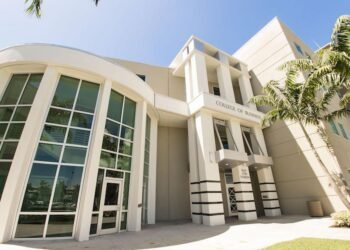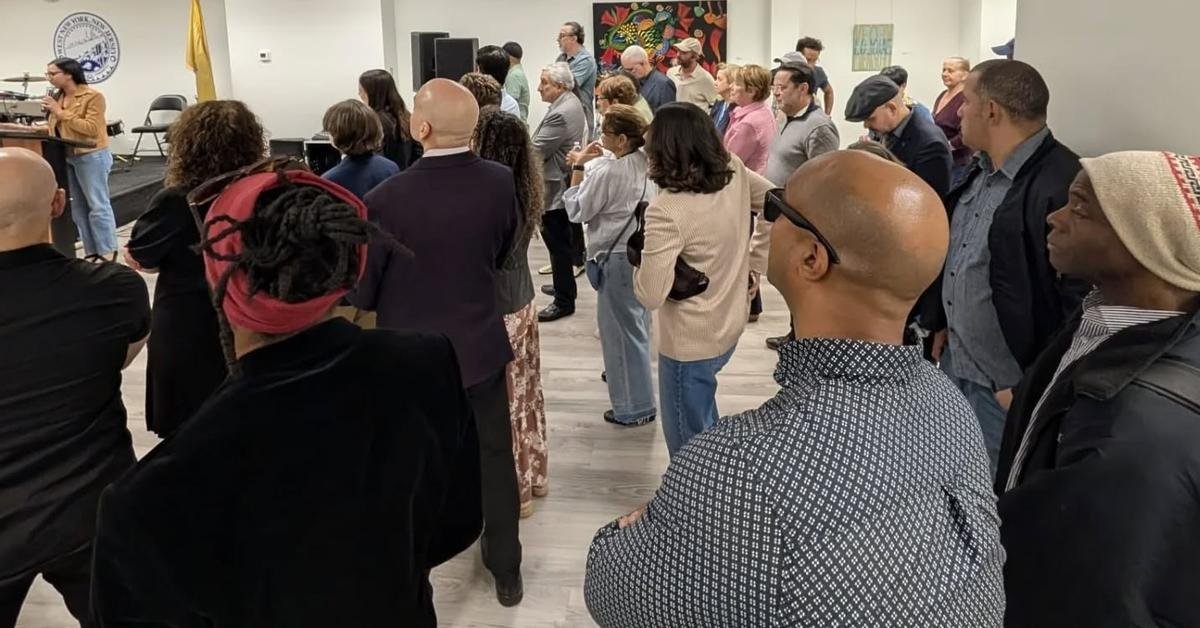
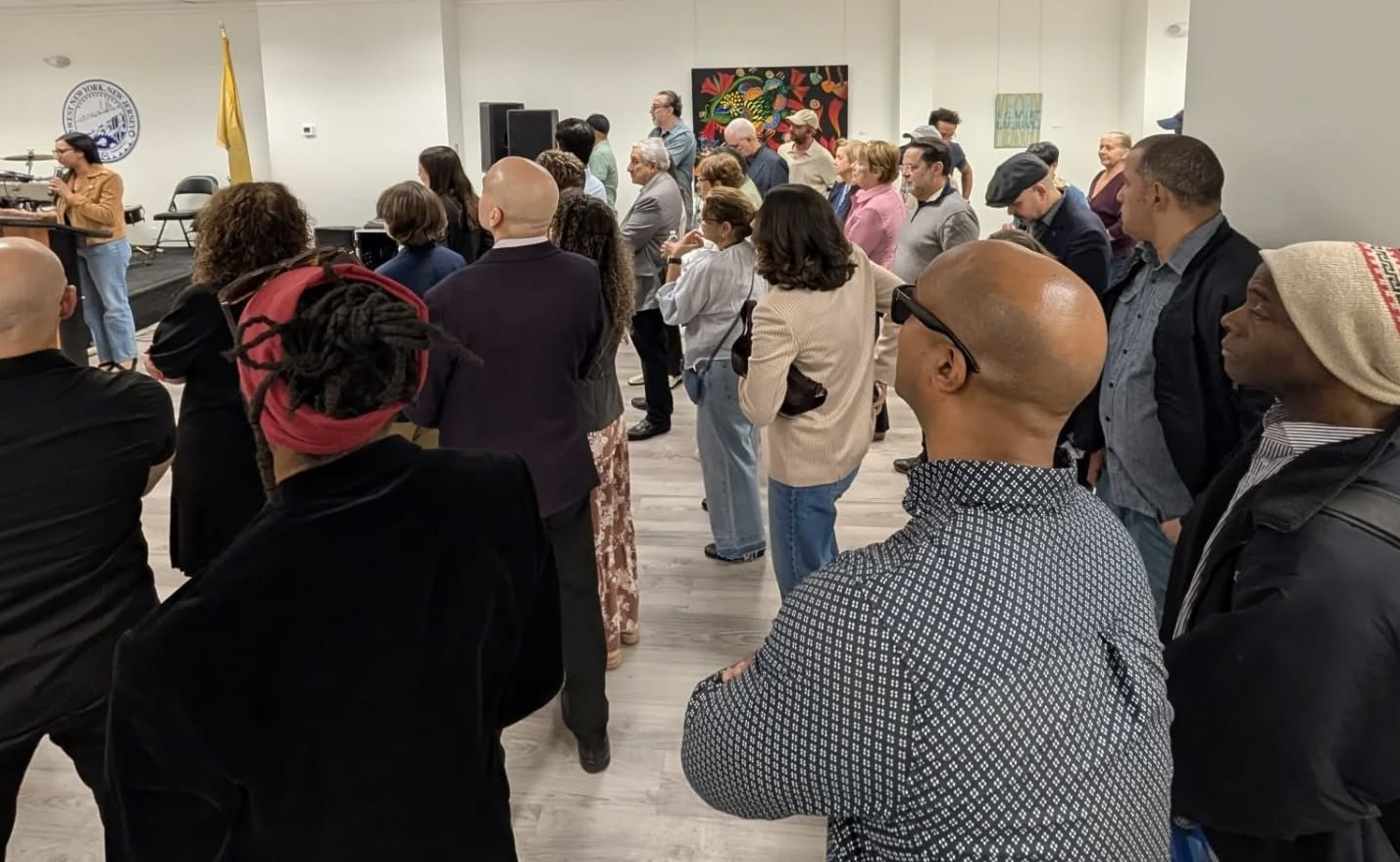
New Jersey/Last Thursday we inaugurated the West New York Cultural Center. I write it, I read it, and still it’s hard for me to believe it. For this was, at the same time, a culmination and a beginning. Started a couple of years ago, a process – of planning, meetings, waiting, desires – ended on April 23, 2026, and in its place emerged an institution that already exists beyond our imagination. Serendipity wanted us to choose International Book Day for the debut of this venue that at its opening – in addition to the usual speeches – dared to combine an exhibition of twelve artists from the area and a concert by musicians who sing in the plains, but are from the hills of New Jersey.
Those of us who carry West New York between our chests and our backs have always been struck by the fact that, in a community where art and its artists enjoy the gift of ubiquity, there was no place where all that local talent could find a place to hang its hat, paintings or verses.
I use the plural majestic because this was a collective effort. But, like any group project, the idea had a leader. The instigator in chief was none other than Enrique del Risco; the same architect of those jíbaro ball games that began in a pandemic and in less than five years have become a Sunday baseball tradition that we now affectionately call the Ibuprofen League.
Therefore, while the members of The Bergenliners were performing the Mambo influenced of Chucho Valdés in front of a full venue, I did nothing but think about how many times I had – or, rather, we had – dreamed of having a place in the community that would host events of this nature. And that said place did not depend on the hospitality of those who have opened its doors to us for decades nor abuse the patience of its neighbors.
Located in one of the central arteries of West New York, the “presidential house” has given us poetic asylum and the best of Cuban culinary tradition
Whenever they ask me if I miss – or if I would like to return – to the island, whose soil I have not set foot since I escaped in 1999, I answer that I have Cuba half an hour away by road. Because Cuba is the home of Eida and Enrique Del Risco. The Del Riscos – perhaps unintentionally, but I suspect with every intention – throughout this last quarter of a century have turned their home into a refuge – the word is not trivial – that brings together – and unites – artists from an endless number of vocations, disciplines and a wide range of generations, which includes both a winner of the presidential medal for the arts and more than fifteen Grammy Awards and a writer who has not yet seen his name in print. mold between the covers of a book or an artist who has just inaugurated her first individual exhibition.
Located in one of the central arteries of West New York, the “presidential house” – as we call it in homage to Enrisco for president – has given us poetic asylum and the best of Cuban culinary tradition; It has given us a space in which we do not have to explain ourselves and where we can rehearse a possible Cuba in the distance; It has offered us a roof under which poetry is read and filin is sung, dominoes are played and the next ball game is planned, national sport is played – talk shit – and a job is found for the newcomer, jazz is improvised and songs from the Brazilian popular movement are sung, people who have not seen each other in years are reunited and new lasting friendships are made. Saying that this is, literally and figuratively, the house of culture is pleonasm. How else would you explain that the room is simultaneously Babel’s library and a recording studio containing a piano, a drum set, a bass, a guitar, some minor percussion instruments and a trombone (played by Enrique del Risco himself to the delight of the diners who come to devour what comes out of his kitchen)?
The first time I took my mother to one of those iconic parties, she confessed to me that she didn’t have that in Miami. And look, she has friends in the capital of the sun! And I responded that in Miami they don’t have an Enrique del Risco. And he agreed with me. The Del Risco house is kilometer zero, from which we measure distances: “I live half an hour away,” “I live five blocks away.” Blessed are those of us who have him close.
Therefore, now that – thanks to this joint work and the invaluable support of Mayor Albio Sires, illustrious son of Bejucal who served for 17 years as a representative in the United States Congress – we have a cultural center in which the community of West New York will have its window and its mirror in which to see and see itself, I publicly congratulate us for not stopping dreaming until our dream finally came true.