The Croatian island of Cres captivates at first with its beauty and almost untouched nature. Rocky landscapes, dense forests, old villages perched on cliffs and hidden coves with some of the most beautiful beaches in Europe can often be seen on postcards and in tourist brochures.
However, behind those beautiful scenes something much more serious than an ordinary tourist attraction is hidden – the question of survival.

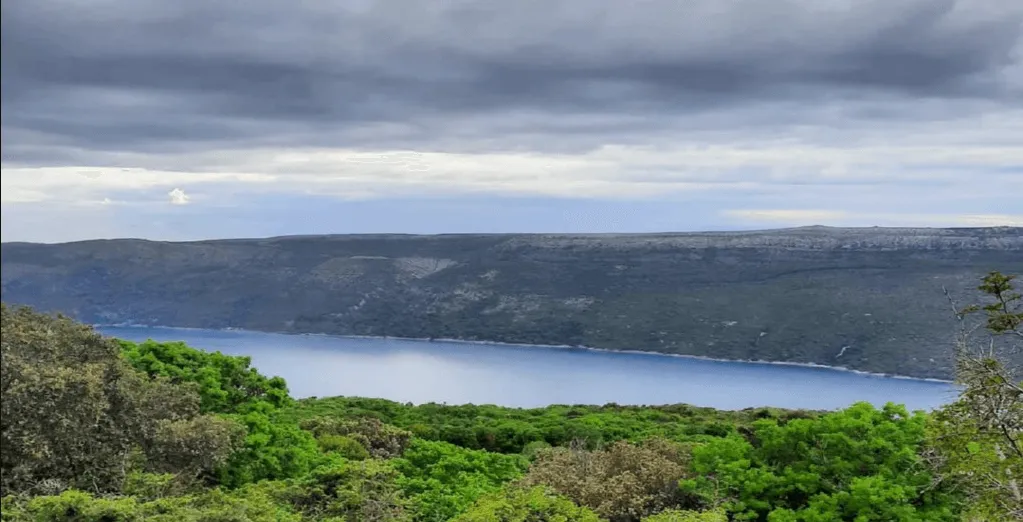
It is about Lake Vrana, a natural phenomenon that is crucial for supplying drinking water not only to Cres, but also to neighboring Lošinj. What makes this lake special is its unusual structure – its surface is above sea level, while the bottom descends up to 60 meters below sea level.
It was created in the karst basin and was shaped through thousands of years of complex geological processes. The water in the lake is extremely clean and of high quality.
Thanks to the natural filtering through the rocks, it almost does not need additional treatment before it reaches the inhabitants of these two islands.
This is precisely why access to the lake is strictly limited – swimming, fishing and any activities near the water are prohibited. This is not a place for tourism, but a protected natural resource on which the daily life of a large number of people depends.
The lake can only be viewed from certain vantage points. Its preservation and isolation are the key reasons why nature in the area continues to function almost without direct human influence. The surroundings of the lake are rich in plant and animal life and represent an important habitat for many species of birds.
It got its name from the nearby village of Vrana, although local residents usually call it simply – the lake. The name Vrana Lake became established later, when in the 18th century it was recorded by the travel writer Alberto Fortis.