With the implementation of laws with spending initiatives, enacted by Congress, the fiscal deficit could increase by close to 3 percentage points of GDP between 2026 and 2036; but it is not the only consequence, since the investment grade could even be compromised.
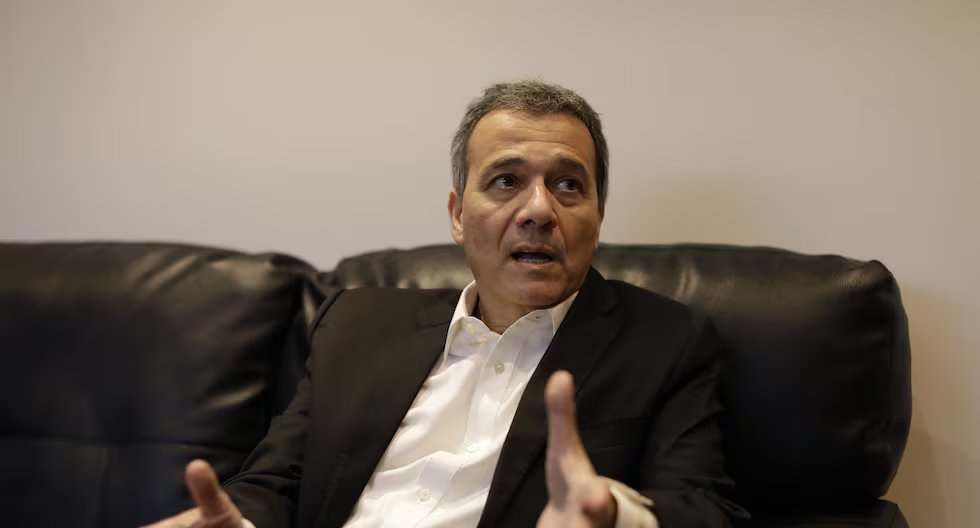
According to Alonso Segura, president of the Fiscal Council, this consequence “would not be immediate,” but there is the possibility of repeating Colombia’s history, if the next government maintains the same path as the current one. “The problem is that we are blowing up the credit card knowing that we have no way to pay it later,” he said during his speech at the Public Finance and Macro Fiscal Challenges conference, organized by the Fiscal Council.
“It is a plausible scenario if we continue on a fiscal path of that type, and in a 5-year management if there is time for these problems to continue to worsen and the rating agencies give us two rounds of ‘downgrade’ (reduce two ratings). As the Fiscal Council we are not predicting that it will happen either, the important thing is that if the course is not corrected, it is a scenario that does not have zero probability,” he explained.
Likewise, he added that to lose the investment grade we would need at least two rating agencies to place the country below the investment grade and for now, the scenario is favorable. “In one (qualifier) we are two levels above, in another three,” he said.
The problem
Peru has been failing to comply with the fiscal rule for the last three years and with measures approved by Congress, the scenario looks adverse. In the last 18 months alone, laws were approved that cost the country S/36.7 billion or 3 points of annual GDP.
“March (2026) has been the month with the highest generation of public spending in the history of Peru by the Congress of the Republic. In two sessions of Congress, they approved a series of measures that together generate a total cost of 1% of GDP, basically in pensions and work benefits,” he said.

The Peruvian Congress has gained growing power over the Executive Branch in recent years, experts say.
In addition, there is a group of laws that, due to their nature, would be implemented permanently and could demand up to 2.6% of GDP. Many of them have not yet been implemented and have to do with labor benefits such as the increase in pensions for teachers (S/8,018 million), the payment of CTS and bonuses (S/2,044 million), etc. In fact, Segura says, these should be reversed before they come into force.
According to the Fiscal Council, the implementation of the laws would cause, between 2026 and 2036, the fiscal deficit to increase by close to 3 percentage points of GDP on average. Furthermore, public debt could increase by 22 percentage points of GDP over a 10-year horizon.

Added to this bag of regulations are the onerous legislative initiatives that are in process. Those with a permanent fiscal cost such as the appointments of regular basic education teachers or the standardization of remuneration of CAS personnel, among others, would involve 1.4% of GDP and a transitory norm such as ‘the extension of the loss carryover regime’ that would cost the State 0.4%.
Criticism of the Constitutional Court
For Segura, the trigger for these spending initiatives was the Constitutional Court’s interpretation of article 69 of the Constitution, with respect to the powers of Congress. With this, the way was left clear for the Legislature to “do what it wants” with respect to the regulations.
“We have three parties still in contention for the second round and all three have approved – here there are no right or left – mostly these laws,” he mentioned.
Added to this is the inaction of the Executive. According to Segura, in the last three years, no unconstitutionality action has been filed and he has made few observations on congressional spending initiatives.

The Government will seek to stop spending laws in the Constitutional Court while negotiating the progressive application of other regulations. (Image: Andina)
“Unfortunately, governments have not been willing to present these actions, even though they knew that these laws generated opinions against them and that they faced severe constitutional questions. However, they have not used the instruments they had at their disposal,” he said.
Given this scenario, Segura mentioned the need to rectify, especially those laws that generate labor benefits such as the payment of CTS and bonuses to workers, among others. In fact, some payroll and pension laws to be implemented such as teacher pensions, appointment of CAS during COVID, etc. They mean 9 times more than the budget allocated to Pensión 65 and eight times more than what was allocated to Pronabec.
Loss of the compass, according to the BCR
The general manager of the BCR, Paul Castillo, also participated in the conference, who considered that “Peru has lost the compass of growth” during the last 10 years. This is because the country is not focusing on improving its productivity, but only on defending itself against external shocks, which becomes a harmful scenario taking into account that the country and the region face a favorable outlook, thanks to the terms of trade.
“Calculations we make at the Central Bank tell us that in the last 10 years productivity has either not grown or has been slightly negative in Peru, and in the region it is not very different,” he mentioned.
He also highlighted the situation in the region, where the fiscal deficit was slightly above 1%, between 2000 and 2014, and now exceeds 3%. The same thing happened with debt levels, which went from less than 50% to close to 70% of the product.