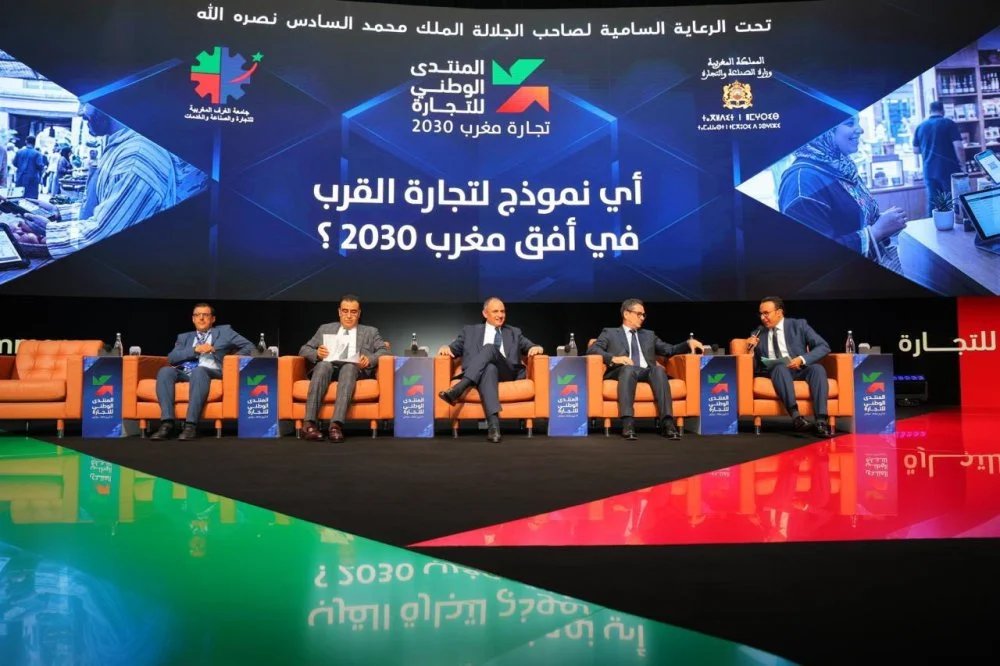
It was the minister himself who made the diagnosis, straightforwardly, in front of an audience made up of the presidents of the regional chambers, representatives of the General Directorate of local authoritiesfrom the Federation of Chambers of Commercethe General Union of Businesses and Trades and professional coordinations. “The law is clear: the trader needs a declaration, not a license. But in reality, this declaration was transformed into conditional authorization, which created significant problems,” said Ryad MezzourMinister of Industry and Commerce. His demonstration aims at a legal distortion with critical consequences for traders established for thirty or forty years in premises whose town planning documents, including the property plan, are today impossible to find.
A declaration disguised as authorization
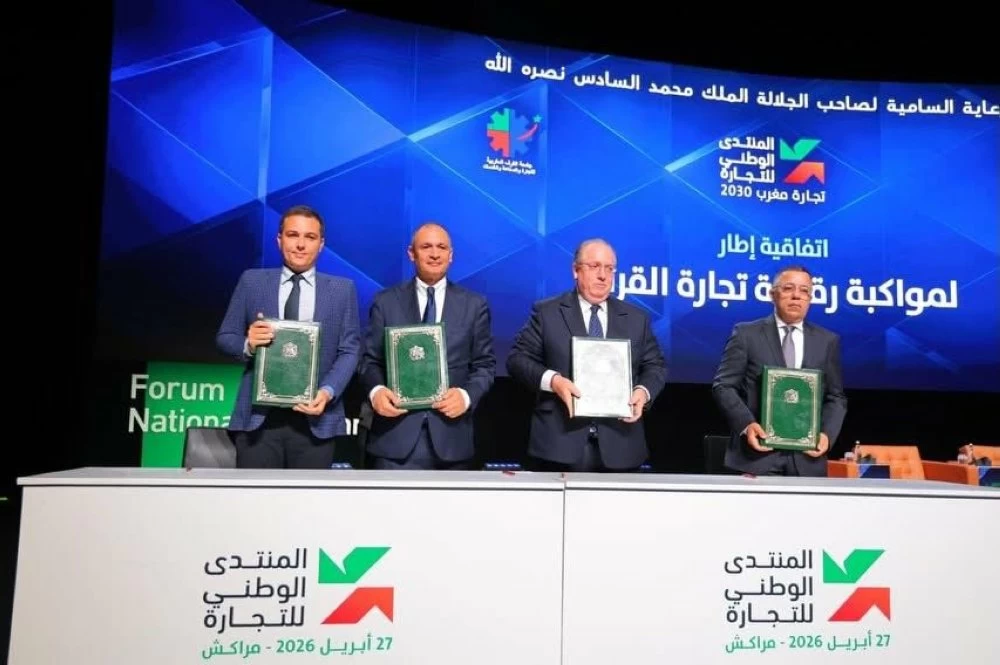
The roadmap adopted at the end of the forum explicitly lists the modernization of the legal framework among eleven priority areas consolidated from 1,077 recommendations resulting from regional consultations and thematic workshops. Alongside the organization of the geographical distribution of commercial activities, the upgrading of platforms and the modernization of local commerce, this axis presents itself as the sovereign condition for credible reform. The minister recalled that the department had been working, since the previous traders’ conclave also held in Marrakech in 2019, on nearly 1,500 recommendations, of which around 80% have already been implemented, without counting yet.
The DGCT on the front line
Added to this structure is Organic Law No. 113.14, which gives municipal presidents the prerogative to organize commercial, artisanal and industrial activities likely to have an impact on health, sanitation or the environment. “Practice has revealed a disparity in application between municipalities, as well as a difficulty in classifying multiple, evolving and variable activities depending on the territories,” acknowledged Mr. Souissi. Hence the development of a model guide which divides commercial activity into three lists: those subject to simple declaration via municipal electronic platforms, those requiring authorization accompanied by specifications and those also requiring a prior administrative investigation.
More than 120 model specifications have been produced in partnership with the Ministry of Industry and Commerce, the Ministry of Health, the Ministry of Energy and theNational Food Safety Office (ONSSA), following workshops and field visits. Around twenty of them were subject to revision with the assistance of international experts, starting with that dedicated to the coffee sector. The “Rokhas” platform and several other digital tools are deployed in parallel to accelerate the circulation of files and establish transparency.
The cry of alarm from professional coordination
“We find ourselves faced with a digital platform imposing complex procedures without real consultation with professionals,” he denounced, citing the case of traders who have been operating for forty or fifty years from whom the administration requests building plans that cannot be found. Mr. Nouri opposed this blockage with a pragmatic proposal: the 500,000 traders already registered with the Unified Professional Contribution (CPU) system have data verified by the tax administration, which can serve as a basis for issuing declarations without additional requirements. “If this situation continues, we will be forced to defend our dignity,” he warned, also raising the question of citizens’ access to local businesses in the event of massive closures.
Houcine Alioui, president of the Federation of Chambers of Commerce, Industry and Services, also placed the legal issue at the center of the debate. “The strengthening of the legal and regulatory framework remains an urgent necessity, to guarantee the balance between the protection of the trader and the rights of the consumer, the simplification of procedures and the establishment of fair competition within the market,” he argued, pleading for more coherent territorial governance and commercial planning.
It remains to articulate the legislative triptych – declaration, simple authorization, authorization subject to investigation – with the reality of an often informal and long-established commercial fabric. This is the whole purpose of the dialogue announced between the departments of Industry, the Interior and the professional coordinations. By 2030, and on the threshold of major deadlines for the Kingdom, the resolution of the legal equation will condition, more than any other axis, the credibility of the road map adopted in Marrakech.