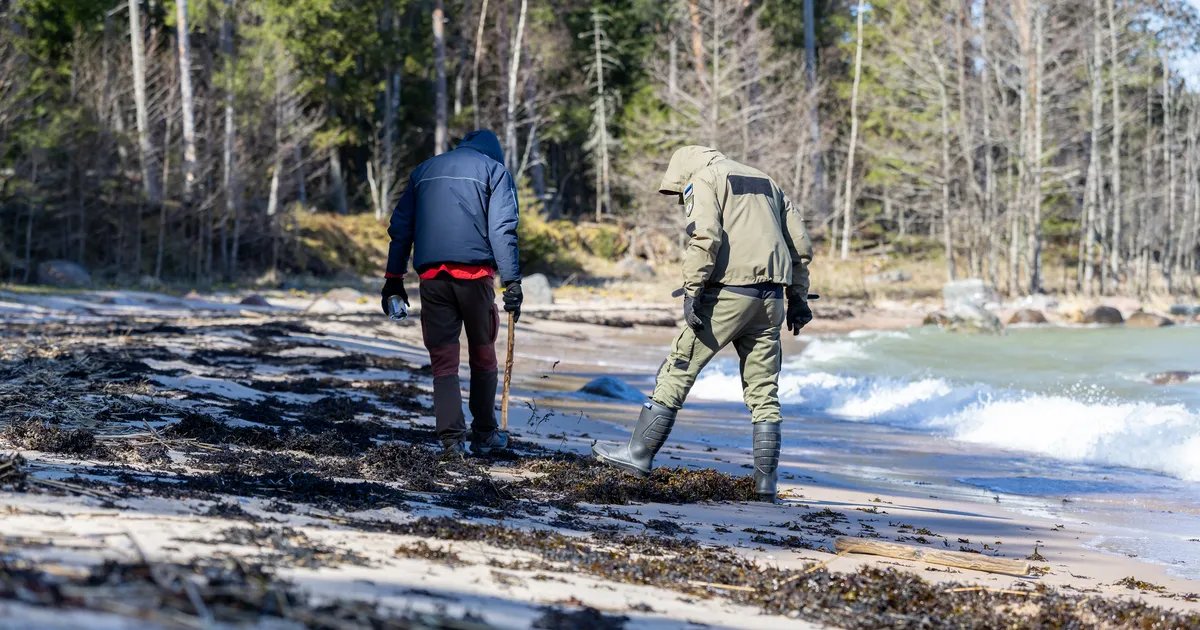
Haljala municipality, which has been most affected by the pollution, is delivering metal barrels to villages for collecting the contaminated material. Larger joint beach cleanups are also planned for this weekend. The work is urgent because cooler weather keeps the fuel oil more solid and easier to collect, while in warmer conditions it becomes soft.
So far, about 760 kilograms of contaminated material have been collected from the shore, although this also includes sand and other debris. No pollution floating at sea has been detected, and the navy is monitoring the situation.
“The total volume of the pollution and the environmental damage cannot yet be accurately assessed,” Lizdenis said. «Our hope is that birds and animals remain unaffected, but contaminated feathers have been found.»
Comparable pollution has rarely occurred in Estonia. The last such case was a couple of years ago in Lääne County; in contrast, according to officials, fuel oil pollution has not been seen in Lääne-Viru County for nearly two decades.
Interior Minister Igor Taro (Estonia 200), who at the end of March described the fire at Ust-Luga port as »very powerful and beautiful,» now said that the exact origin of the pollution is unknown. At the same time, he tried to link it to Russian tankers.
“Compared to 2022, the number of tankers sailing in the Baltic Sea has multiplied, and Russia’s maritime transport operates with the support of a shadow fleet,” the minister noted. «These ships are old and worn out and have always posed a major environmental risk. It cannot be ruled out that the current pollution was indeed caused by Russia’s shadow fleet.»