Austria releases 325,000 tons of crude oil from the mandatory emergency reserve. Who really benefits from this?
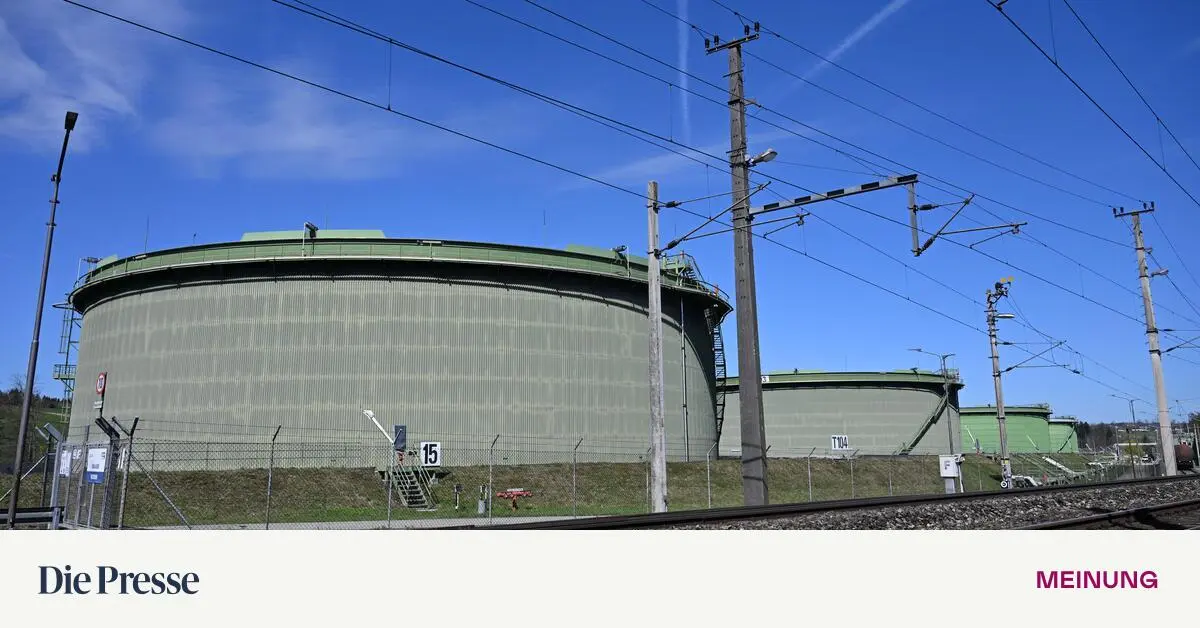
At the beginning of the week, the federal government started using the national strategic oil reserve to stabilize fuel prices. This is intended to dampen extreme price fluctuations and at the same time ensure security of supply in Austria. For this purpose, 325,000 tons of crude oil – equivalent to around eleven days of Austria’s mandatory emergency reserve – will be released over the next three months.
In line with the EU Petroleum Stockpiling Directive, the Petroleum Stockpiling Act requires importers of petroleum and petroleum products to stockpile compulsory emergency reserves (PNR) equal to 25 percent (90 days) of their annual net imports. The majority of the reserves are held by the specially established petroleum storage company (ELG) instead of the importers themselves. Their share owners are OMV (over 55%), BP (23%), Shell (17%) and ENI (5%).
Economics Minister Wolfgang Hattmannsdorfer has now released the first 56,000 tons of crude oil. Processing into fuel is carried out by the OMV refinery in Schwechat. The products produced in this way may only be sold in Austria. The release takes place “at the market price” – and therein lies the crucial point.
A notice:
Guest comments and contributions from external authors like this one do not have to reflect the opinion of the editorial team.
Anyone who processes crude oil based on current market prices does not reduce fuel prices. What arises from the sale of stored crude oil (i.e. purchased at previous, lower prices) at current market prices are so-called windfall profits (risk profits), often called “Körberlgeld” in Austria. The planned sale of a total of 325,000 tons of crude oil can quickly lead to a profit in the three-digit million range. The price stabilization promised by politicians leads to massive crisis profits. According to Section 9 of the Petroleum Stockpiling Act, profits from the sale of inventories must be allocated to a tied, untaxed reserve of the petroleum storage company. If the reserve is not used to procure inventory within five years of creation, it must be dissolved for tax purposes.
The measure does not mean that the economy, citizens and consumers actually benefit from it. In addition, the decision to attack the national oil reserve did not specify when the reserve would have to be replenished to its target level of 90 days. This creates a further economic advantage for those involved (the tax authorities, storage companies, oil companies).
Surprisingly, there has been no real political discussion about this fact so far. While there was at least one urgent request (and the associated open discussion) in the National Council regarding the so-called “Austrian surcharge” on food, something similar has not yet happened with the price of fuel. The fact that the current transfer of crude oil to the OMV refinery was agreed to remain silent “at the market price” does not strengthen trust in politicians. It would be high time to bring transparency to what is happening. It would be desirable, for example, to have a parliamentary committee of inquiry to investigate the question of whether politicians are simply overwhelmed when it comes to price stability measures.
Stefan Brocza is an expert in European law and international relations, Gernot Fiebiger Business lawyer. Both have been publishing for more than two decades, among other things. on questions of energy and antitrust law.