Stress management usually focuses on things like exercise, sleep, or relaxation techniques relaxation. However, an equally important but often overlooked factor is where you spend your time. More and more research shows that natural environments can directly influence how the brain and body react to stress.
Compared to crowded urban spaces or screen time, outdoor activities, especially in green areas, are associated with less stress-related brain activity, lower levels of stress hormones and better ability to concentrate. These effects don’t require a trip to the wilderness: even short, constant exposure to nature can help the body to come out of a state of alertness and recover more easily from daily demands.
Why spending time in nature reduces stress
It can reduce brain activity associated with stress
When you’re stressed, one area of the brain that becomes more active is the amygdala, the region responsible for detecting danger and the fight-or-flight response, according to Eatingwell.
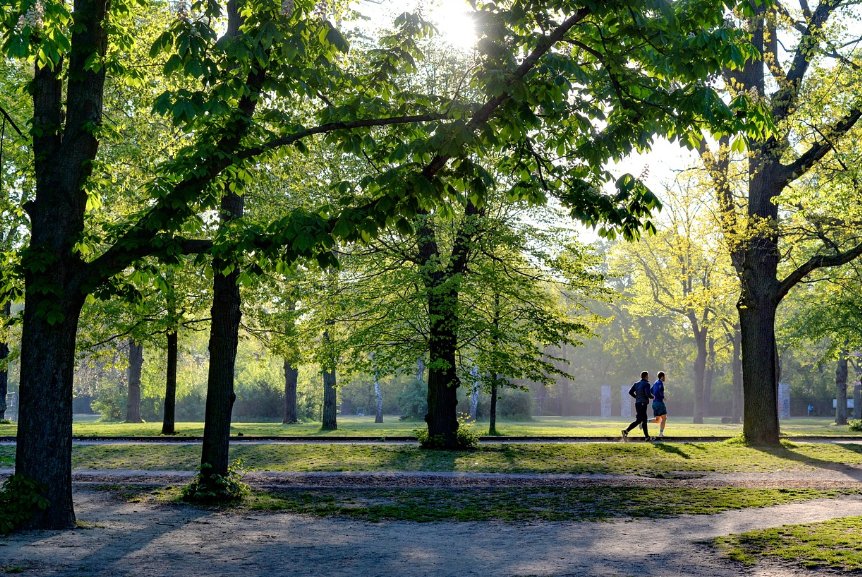
To analyze this effect, the researchers asked healthy participants to take a one-hour walk in either a forest or a busy urban route, after which they assessed their brain activity during a stressful task. Those who walked in nature showed lower amygdala activation, while the urban participants did not have the same changes.
“Amygdala activation is closely related to the response to stress and trauma. When we see reduced amygdala activity after time spent in nature, it means the brain is operating in a less reactive state,” psychiatrist Sid Khurana explains to the aforementioned source.
He adds that many people under chronic stress live in a constant state of vigilance: “Natural environments promote the restoration of attention and reduce the feeling of constant danger. This change can support a state of calm and better emotional regulation.”
That’s not to say that a walk in the park is a substitute for therapy or medical treatment, but that it can help the brain temporarily come out of a state of alertness and return to a more balanced level.
Can take the body out of fight or flight mode
In the case of chronic stress, the nervous system remains activated for a longer time. That means increased heart rate, higher blood pressure, and constant cortisol levels.
Studies show that natural environments are associated with positive changes in these indicators. A large review showed that time spent in nature reduces cortisol, heart rate and blood pressure compared to urban environments. Basically, a simple walk in a green space can work as a physiological “reset” for the body.
Therapist Lindsey Paoli explains that the benefits are visible in everyday life: “Time spent in nature helps the nervous system to regulate more efficiently than indoor environments. People often notice better sleep, clearer thinking and more stable emotional reactions.”
She points out that exposure to nature works best as a foundation, not as a one-stop solution: Even a few minutes a day, a short walk, a break outside or sitting on a bench, can send a signal of safety to the brain.
It can reduce stress hormones
Even short exposures to green spaces can influence cortisol levels. In studies that compared walks in green areas with those in the city, it was observed that cortisol levels decrease in both cases, but the reduction is more pronounced in nature.
“Even brief exposure to a natural environment can shift physiological indicators of stress in a healthier direction,” says Khurana. In practice, this may mean a walk in a park or along a tree-lined street in the middle of a busy day.
It helps to restore attention
Stress not only affects the emotional state, but also the ability to concentrate. When you’re constantly switching from emails to meetings and notifications, attention is constantly being demanded, which leads to mental fatigue.
Researchers call this effect “attention recovery,” meaning the process by which the brain regains its ability to focus after periods of sustained effort. In nature, attention relaxes and is no longer constantly forced, which reduces mental fatigue and improves clarity of thought later.
Unlike indoor activities like scrolling on your phone or streaming, which demand continuous attention, nature offers a deeper form of relaxation.