Along the banks of the Danube, the news that the era of Viktor Orbán had come to an end triggered several hours of celebration. Joy spread throughout Hungary as people hugged and greeted each other. For some, however, the convincing defeat set off a panic race.
Private jets, allegedly laden with the spoils of those whose fortunes grew during Orbán’s 16 years in power, have regularly taken off from Vienna as others rush to invest their assets abroad, sources told the Guardian. Meanwhile, senior officials close to Orban are inquiring about US visa options, hoping for jobs at institutions linked to the MAGA movement.
It’s just a glimpse into the turmoil gripping Hungary as it prepares to turn the page on Orbán’s reign. Since coming to power in 2010, a small circle of associates linked to the leader and his Fidesz party have amassed vast fortunes, thanks in part to increasing control over the country’s economy and EU-funded public infrastructure contracts.
The Guardian has learned that, after the election, three members of that inner circle began moving assets abroad. Wealth is transferred to Middle Eastern countries – Saudi Arabia, Oman and the UAE – while others are directed to Australia and Singapore, two Fidesz sources said.
Peter Magyar, whose opposition Tisa party won a landslide victory this month, warned against the process, accusing Fidesz-linked figures of rushing to protect their wealth from liability before his government takes power in early May.
“Oligarchs connected to Orban transfer tens of billions of forints to the United Arab Emirates, the United States, Uruguay and other distant countries,” the Hungarian said on social media on Saturday. He called on the chief prosecutor, the chief of police and the director of the tax administration to “bring the criminals into custody” and “not allow them to escape” to countries from which extradition would be unlikely.
The Hungarian said that among those expected to leave the country is the family of Lorinc Mesaros, one of Orban’s closest friends, whose journey from gas installation fitter to the richest man in Hungary was fueled in part by public procurement contracts. Mesaros’ company did not respond to a request for comment, the Guardian writes.
“I have also been informed that several oligarchic families have already left the country,” the Hungarian added. “According to reports, several influential oligarchic families have already withdrawn their children from school and are organizing confidential security for their departure.”

The race to move wealth abroad was first reported by independent journalists in Hungary, including the investigative website Vsquare, which said key figures linked to Orbán were trying to protect assets before the Hungarian government could freeze, confiscate or nationalize them. The website 444.hu claimed back in March that key figures are already moving assets to Dubai.
Their efforts could be hampered by numerous bureaucrats and law enforcement officials who partially know what happened during Orbán’s rule, Vsquare said, “opening the way for years of attempts to recover allegedly stolen public wealth and arrest those who committed financial crimes.”
Since the election, the Hungarian has repeatedly said that his government will work to combat the corruption and clientelism that, in his opinion, marked the years of Fidesz’s rule. “Our country has no time to waste. Hungary is in trouble in every way. It has been robbed, devastated, betrayed, indebted and destroyed,” the Hungarian told reporters the day after the election, the Guardian recalls. “We have become the poorest and most corrupt country in the EU”.
The future leader has repeatedly claimed that during the last weeks of Orbán’s rule, potentially compromising documents are being destroyed. “We are receiving more and more reports about the mass destruction of documents in various ministries, related institutions and companies close to Fidesz,” he wrote earlier this month on social media.
Outgoing Foreign Minister Peter Szijarto, whose ministry was among those accused of destroying classified documents, described the allegations as “nonsense” and “outrageous” in a statement to the Hungarian Telex portal. The ministry said it “only discarded previously printed, redundant paper versions of documents that were electronically stored.”

The Foreign Ministry and Orbán’s cabinet, which has for years denied allegations of corruption and illegality, did not respond to The Guardian’s requests for comment.
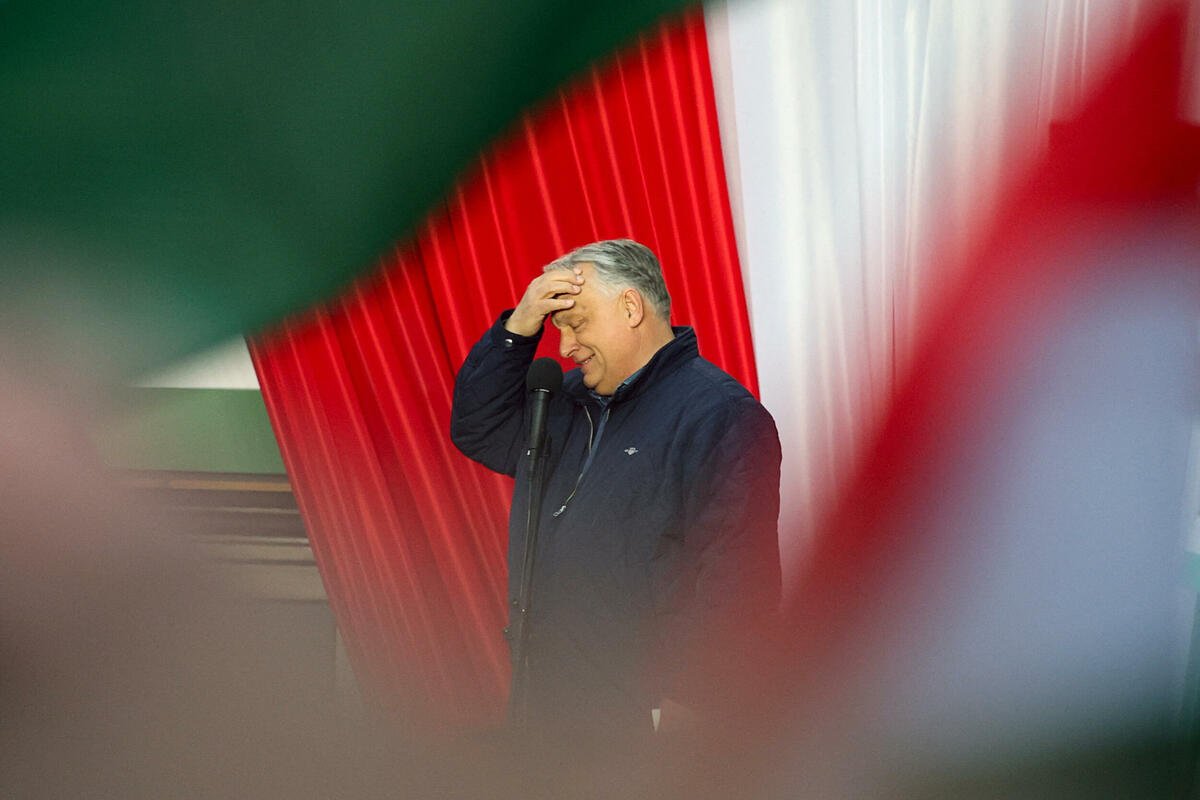
The election result opened up questions about what’s next for Orban, a hardliner whose efforts to turn Hungary into what he called a “Petri dish of illiberalism” inspired Donald Trump’s administration and the global far right.
On Saturday, Orbán announced on social media that he will not take up a parliamentary seat, but that he intends to remain at the head of Fidesz in order to lead the “renewal” process.
The EU’s longest-serving leader is expected to travel to the United States around the time the World Cup kicks off and is likely to spend several weeks there, a source linked to Fidesz told the Guardian. The source said the trip was planned long before the April 12 election.
It is not known exactly where Orban will travel, although his eldest daughter and son-in-law moved to New York last summer.
The son-in-law, István Tiborc, came into the public spotlight in 2018, when the European Anti-Fraud Office, OLAF, announced that a two-year investigation into the contract for the supply of street lighting to Hungarian cities, financed by EU money, found “not only serious irregularities in most projects, but also a conflict of interest”. Although OLAF does not publish its reports or reveal who is mentioned in them, the Guardian states that the irregularities relate to contracts signed when Tiborc was the owner of the company in question.
A representative of Tiborc referred the Guardian to an interview from July, in which Tiborc described the EU investigation as politically motivated. Hungarian prosecutors, led by an Orbán loyalist, also investigated the case and concluded that there was no violation of the law.
Other senior Fidesz-affiliated actors are applying for US work visas, hoping to use their experience in institutions linked to the Republican Party, one US administration source in Washington and one Fidesz source said.
“The connection already exists,” the American source said, adding that years of lobbying by Orbán and Fidesz have allowed Hungarian officials to build a wide network within the MAGA movement. Those ties became visible ahead of the election, when US Vice President JD Vance came to Budapest to support Orbán’s faltering campaign.
Days after the election, one of Hungary’s best-known investigative journalists, Sábolc Pangy, said sources told him that the U.S. had long been seen as a plan B for many connected to Orbán, despite questions still surrounding Orbán and his government’s ties to Moscow.
“While the Trump administration is in power, even the United States could become a safe haven for the highest echelons of the Orbán regime,” Panji said.
Download the application and follow the news


FOLLOW US ON

News