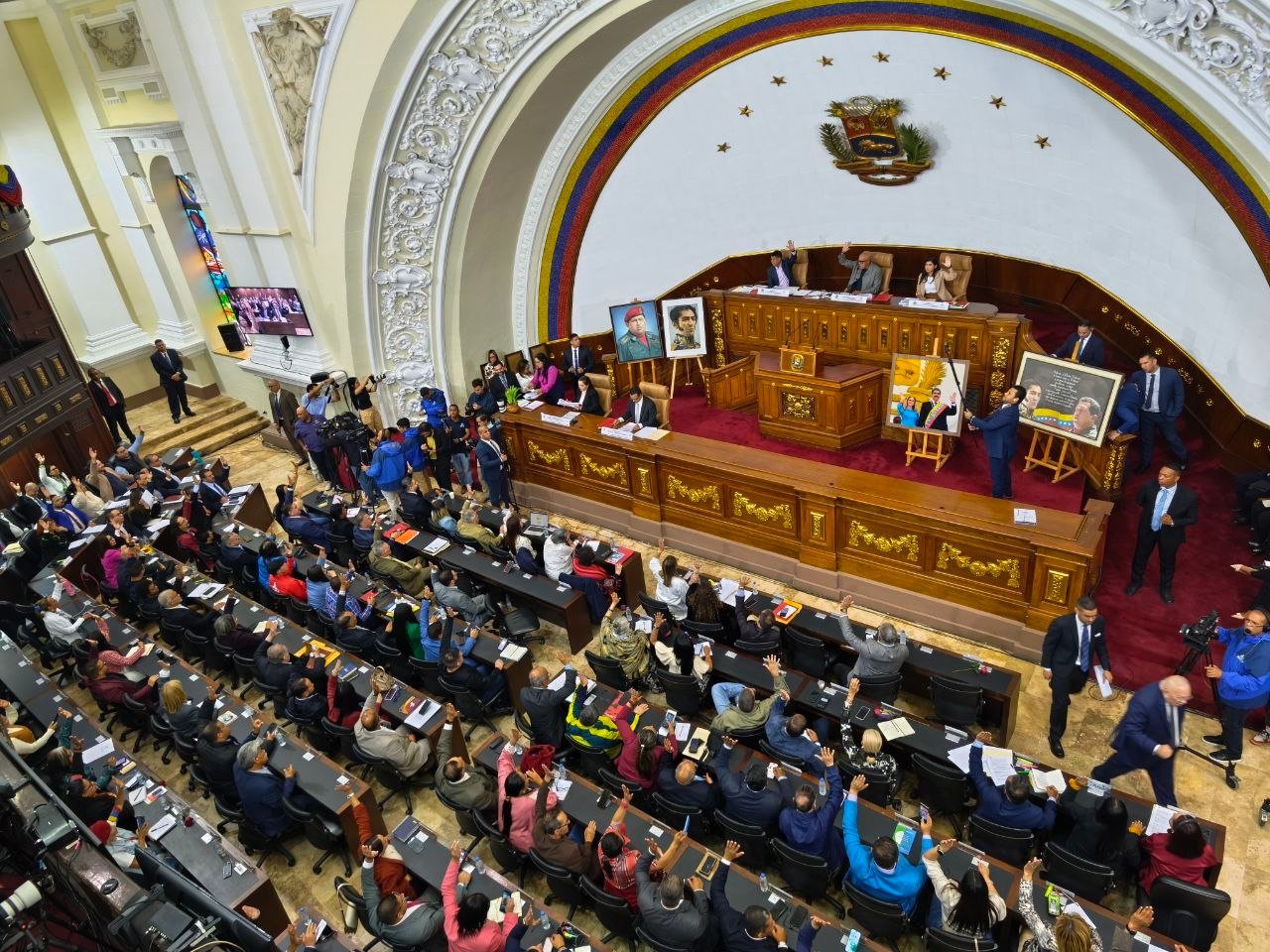
After the sanctions of the partial reform of the Organic Law of Hydrocarbons, the laws of Amnesty, Mines and Acceleration of Procedures, the Organic Law for the Protection of Socioeconomic Rights (all proposed by the Executive in charge) would be next in line for its second discussion and final approval in the National Assembly (AN) dominated by Chavismo.
The president of the Finance subcommittee, deputy (Psuv) Fernando Bastidas, indicated that the bill approved in the first discussion on January 22 will be brought back to plenary in the next few days for article-by-article sanction.
In an interview with VTV, the deputy maintained that the law is part of a strategy of the government in charge of Delcy Rodriguez to “safeguard” the family economy, because it establishes “protection mechanisms” against “speculative conditions that unscrupulous sectors seek to impose on the national market.”
The new legal instrument of 96 items replaces the Decree with Rank, Value and Force of Organic Law on Fair Prices of 2015 and creates the National Price Observation System between the State and economic agents, as a substitute for the National Superintendency for the Defense of Socioeconomic Rights (Sundde).
During the first discussion in the chamber, the Psuv highlighted that the legal text promises access to quality goods and services for the Venezuelan population at the right time and at appropriate prices. He also assured that he will contribute to the defense of salary.
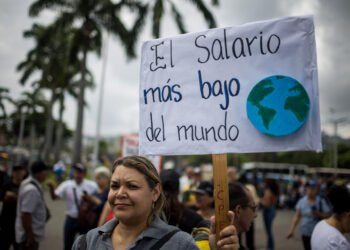
It is worth remembering that the governor in charge promised a “responsible increase” in workers’ income, on April 8, without specifying whether it was the minimum wage, anchored at only 130 bolivars, or a bonus.
“Shortage” alert
Deputy Bastidas mentioned that the legal text contemplates user committees whose task will be to “supervise” to avoid abusive practices. These committees must work in coordination with grassroots organizations of the so-called popular power.
“It is a meeting point between the State and economic agents set prices by mutual agreementin order to guarantee access to the population, but also the sustainability of the productive event. At no time does the State seek for anyone to produce or sell below production costs. We have to guarantee reasonable profitability because that also guarantees merchandise on the shelves,” said deputy (Psuv) Ramón Lobo during the first discussion.
Lobo warned that the law contemplates a sanctioning scheme, although it is punitive, it “adapts” to the circumstances of seeking agreements.
The first vice president of the AN, Pedro Infante, added in defense of the new regulations that behaviors classified in the AN are decriminalized. Fair Price Law which become sanctioned as “administrative infractions” and the discretion of officials to decide measures such as occupation or temporary closure of establishments is reduced, since the highest authority of the Superintendency is the one that must decide in this regard.
At the time, the Libertad group bench, made up of Unión y Cambio and Un Nuevo Tiempo (UNT), warned that if the State exceeds its ability to set prices again, it will end “killing the offer” and, consequently, shortages will be generated.
Another law waiting, according to Deputy Bastidas, is the Tax Harmonization Lawwhich has also been prioritized by the interim. In his speech on April 8, Delcy Rodríguez announced the creation of a National Economic Council to design a new tax model.