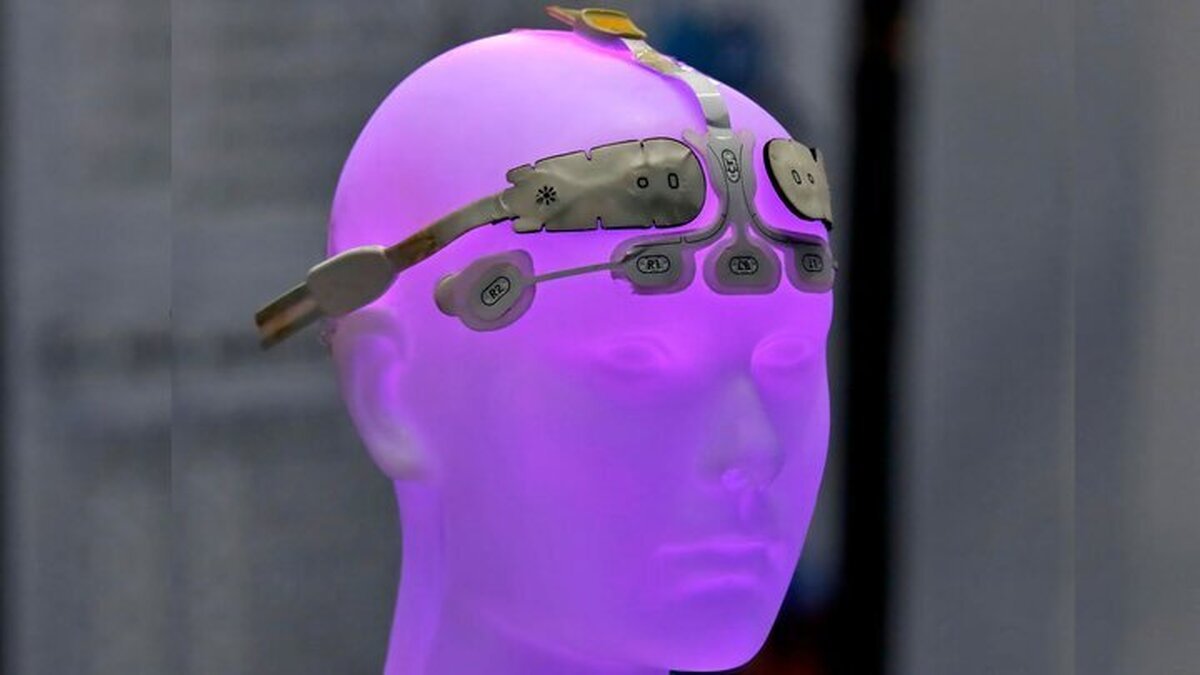
According to Jam Jam Online, citing Interesting Engineering, this achievement shows that wearable brain monitoring devices can work without batteries in the future.
The researchers tested the system outdoors in summer conditions with temperatures as high as 89.6 degrees Fahrenheit. This device works by collecting energy from the temperature difference between the human body and its surroundings. In this way, it does not require an external power source or air flow to perform the process.
EEG systems track the brain’s electrical activity and are often used for long-term monitoring in healthcare and research. But its wireless versions may consume a lot of electricity over time and limit its battery life, maintenance and operational capabilities.
By designing an energy-efficient structure that reduces the amount of data that needs to be recorded and transmitted, Osaka University researchers helped the device work with a small amount of harvested energy.
Instead of continuously sending full EEG signals, the system randomly undersamples brainwave data. An algorithm at the receiving end then reconstructs the original signal from a smaller data set. Such a low demand for energy and maintaining usable signal quality makes battery-free wireless EEG transmission possible.
Daisuke Kanemoto, the senior author of the research, says: Our long-term goal is to create a sensor system that can work indefinitely without the need for maintenance. A wireless EEG transmission system without the need for an external power source is an important step towards creating operational sensing technologies without maintenance processes.
Researchers tested this device in real conditions at the Expo 2025 in Osaka. The mentioned tool was still working even in hot weather outside despite the small temperature difference between the skin and the air. The importance of this is because thermoelectric systems usually produce less electricity when the ambient temperature rises to near body temperature.