Madrid/Iran and the United States agreed this Wednesday (Tuesday, in Washington) to a two-week ceasefire, during which they will negotiate a peace agreement in Pakistan based on a ten-point plan presented by Tehran that includes, among others, Iranian control of the Strait of Hormuz. The announcement has caused an almost immediate collapse of gas (19%) and oil (13%), in addition to the rise of the stock markets.
However, Israel, which also accepted this truce, noted that hostilities will not cease in Lebanon, where its Army maintains a tough air and ground offensive.
The US president assured that the possibility of reaching a “definitive” peace agreement with Iran is at “a very advanced stage”, in addition to maintaining that the reason for this pact is to have “met and surpassed all military objectives”, despite the fact that the regime remains in place.
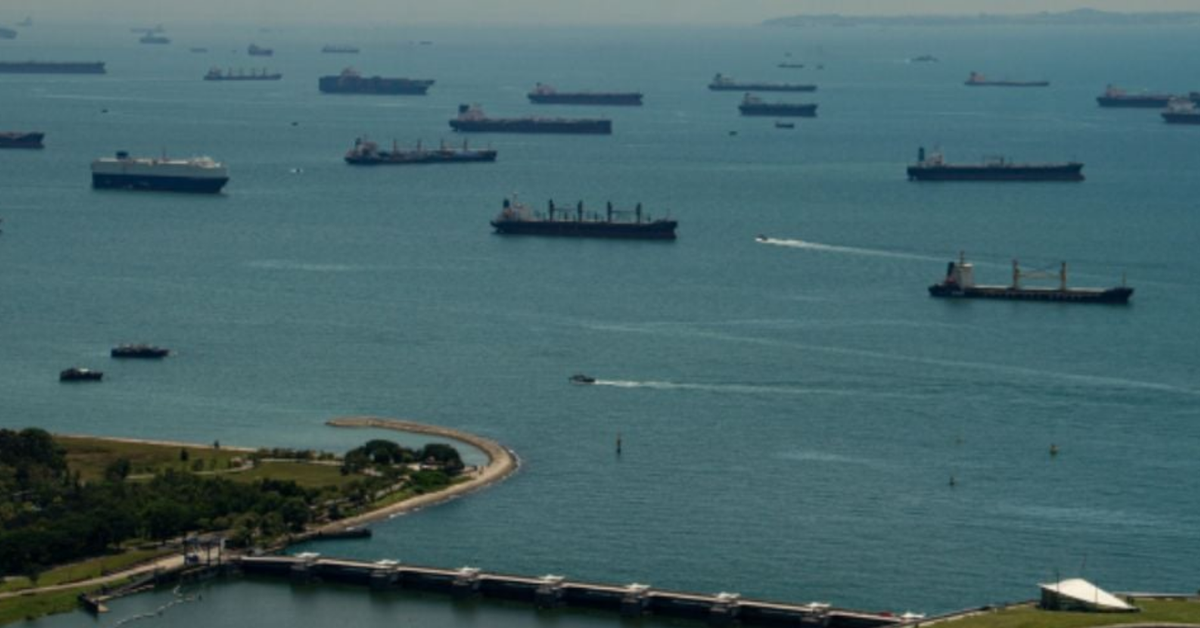
Trump claimed Tuesday night as a “great day for world peace” and has advanced that it will help “decongest” traffic in the strategic Strait of Hormuz, which Tehran has committed to unblocking in a controlled manner for the same period of time.
Trump claimed Tuesday night as a “great day for world peace” and has advanced that it will help “decongest” traffic in the strategic Strait of Hormuz.
The American president pointed out that “there will be many positive initiatives” and “a lot of money will be made” to the point that “the Golden Age of the Middle East” could arrive; while the Islamic Republic “will be able to begin the reconstruction process.”
“We will load all kinds of supplies and we will simply be around to make sure that everything goes well,” said the head of the North American Executive, stating that he is “sure that this will be the case.”
The Iranian authorities affirmed that during this period, “safe” passage through the strategic Strait of Hormuz will be possible, “through coordination” with the Army.
“For a period of two weeks, safe passage through the Strait of Hormuz will be possible through coordination with the Iranian Armed Forces and taking due account of technical limitations,” Iranian Foreign Minister Abbas Araqchi announced in a statement released through his social networks, on behalf of the country’s Supreme National Security Council.
With the same tone as that adopted by the American president, Tehran presented its decision that “if the attacks against Iran cease” its “powerful Armed Forces will end their defensive operations” in the region, as a “response to the fraternal request of the Prime Minister of Pakistan, Shehbaz Sharif”, mediator of the agreement.
Likewise, Tehran justified this announcement by claiming to have taken into consideration “the request of the United States to enter into negotiations based on its 15-point proposal”, as well as in the heat of the announcement by the tenant of the White House about “the acceptance of the general framework of Iran’s 10-point proposal as a basis for negotiations.”
Seconds after the publication of the aforementioned statement, the Fars news agency has released another document, this time issued by the Supreme National Security Council, which has specified that “the completion of the negotiations” will take place in Islamabad, the capital of Pakistan.
“In light of Iran’s advantage on the battlefield and the enemy’s inability to carry out its threats, despite its claims, and the official acceptance of all the legitimate demands of the Iranian people, it has been decided that the completion of the negotiations would take place in Islamabad,” the text advances, adding that “within a maximum period of 15 days, Iran’s victory will also be consolidated in the political negotiations.”
“In light of Iran’s advantage on the battlefield and the enemy’s inability to carry out its threats, despite its claims, and the official acceptance of all legitimate demands of the Iranian people, it has been decided that the completion of negotiations would take place in Islamabad.”
In this sense, it should be noted that in the early hours of this Tuesday, Pakistan called on Washington and Tehran to “continue negotiations and reach a definitive agreement” in its capital next Friday, April 10, showing its hope that these “Islamabad Talks” will achieve “lasting peace.”
In the aforementioned Iranian manifesto, the Supreme National Security Council has made reference to the ten-point plan sent to the United States, through Pakistan, in which, as it has specified, “fundamental” aspects are contemplated such as the “controlled” passage through the Strait of Hormuz or the “need” to “end the war against all the components of the resistance axis”, made up of Iran, the Lebanese Shiite militia party Hezbollah, Iraqi Shiite militias, various Palestinian armed groups and Yemen’s Houthi rebels.
In turn, the aforementioned decalogue of points focuses on the withdrawal of US combat forces “from all bases and deployment sites in the region”, the establishment of a “safe passage protocol” in the Strait of Hormuz that “guarantees Iranian dominance in accordance with the agreed protocol”, the “full” compensation to Iran according to the evaluations or the lifting of “all primary and secondary sanctions.”
Their approval, as claimed by the Iranian authority, must be carried out in a “binding resolution of the Security Council.”
The Prime Minister of Israel, Benjamin Netanyahu, for his part supported the US decision, although he has specified that this ceasefire “does not include” Lebanon, a country in which the Israeli Army has been carrying out attacks since last March 2 as a result of the offensive launched by Washington against Tehran days before.
“Israel supports President Trump’s decision to suspend attacks against Iran for two weeks, as long as Iran immediately opens the Strait (of Hormuz) and ends all attacks against the United States, Israel and countries in the region,” the Israeli prime minister’s office said in a statement released early Wednesday, in which it warned that “the two-week ceasefire does not include Lebanon.”
These statements by Netanyahu differ from the words of the Prime Minister of Pakistan, Shehbaz Sharif, who has stressed that this ceasefire is of an “immediate” nature for “the entire territory”, including Lebanon and other places.
These statements by Netanyahu differ from the words of the Prime Minister of Pakistan, Shehbaz Sharif, who has stressed that this ceasefire is of an “immediate” nature for “the entire territory.”
Next, the Israeli leader stressed that his country supports the “efforts” of the United States “to ensure that Iran stops posing a nuclear, missile and terrorist threat to the United States, Israel, Iran’s Arab neighbors and the world.”
Likewise, the presidential office noted that Washington has communicated to Israel that “it is committed to achieving these objectives, shared by the United States, Israel, and Israel’s regional allies, in upcoming negotiations.”
Opposition leader Yair Lapid said that Israel’s absence from the talks that led to the ceasefire with Iran constitutes the “biggest political disaster” in the country’s history.
“Israel was not even at the table when key decisions were made for our national security,” wrote the politician, leader of the ‘Yesh Atid’ (There is a future) party, on the social network X.
Lapid criticized that Israel’s Prime Minister, Benjamin Netanyahu, has “failed strategically” in the war, which is now entering a two-week ceasefire, by not having met “any of the goals that he himself had set.”
“It will take us years to repair the political and strategic damage that Netanyahu has caused by his arrogance, negligence and lack of strategic approach,” he concludes.
Due to the waves of attacks perpetrated against Lebanon, more than 1,500 people have already lost their lives, as well as more than 4,800 injured in that same situation, according to the latest balance sheet released this Tuesday by the Lebanese authorities.
The ceasefire agreement has already left its mark on the price of oil, which has dropped below $100. The barrel of Brent, a reference in Europe, fell 13.3% to $94.74 and Texas fell 14.19% to $96.92. Likewise, the main indices of Tokyo, Seoul and Europe soared at the opening with increases of around 5%.