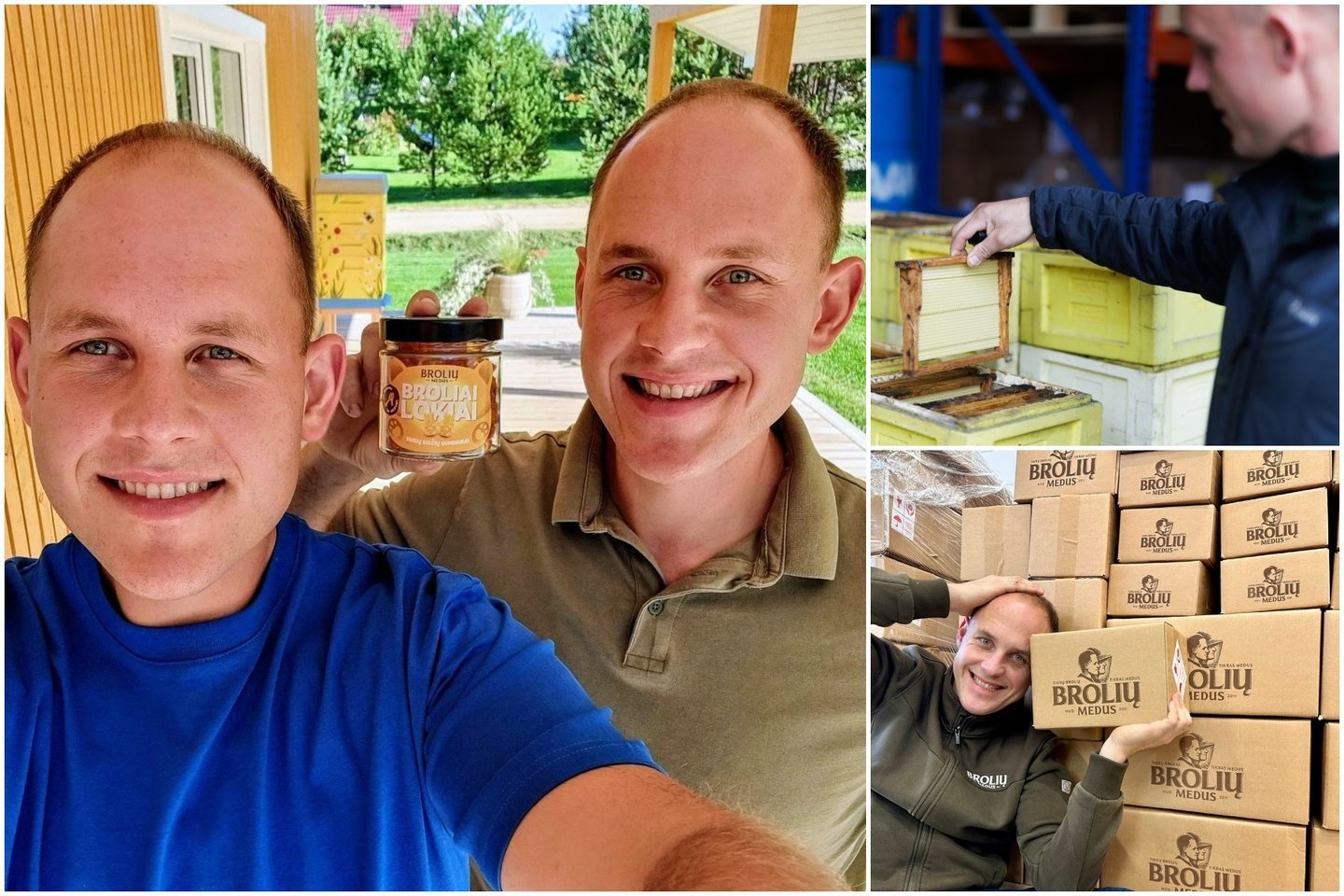
The twins came to beekeeping quite unexpectedly. Although this craft is often passed down from generation to generation, Ignas and Vilius were the first to take up beekeeping seriously.
“The classmate’s parents were beekeepers, he kept telling how he used to help his father spin honey. They say, maybe you want to start beekeeping?”
My grandmother had an old beehive, probably unused for 15 years. As I remember today, I painted the beehive bright yellow and parked it on the other side of the road in the garden,” says Ignas.
A week later, a neighbor came and said that he had a swarm in his hive. Ignas laughs – 2011 There wasn’t much information on the internet about what the swarm was. The guy put on a simple t-shirt, put on a beekeeper’s hat, took a half-hole cardboard box and went to the neighbor.
“He took part of the swarm with his bare hands, he says, take it. He got a bee itch in the eye The eye swelled up very quickly, and he ran away very quickly. It was only while running that he asked me to splash the bees – when you splash the bees with water, the wings get wet and they don’t fly as well,” Ignas remembers.
That day he created his first colony of bees. How funny, he didn’t even have a driver’s license yet, but he already started beekeeping. At first, he supplied his family, neighbors, and friends with honey, and managed to sell another kilogram.
“I really liked it myself. I put a frame with a wax plate and every other day I checked to see if they had brought honey. It was very curious,” he says.
Brother Vilius also helped Ignatius. And after finishing school, they both chose to study automotive engineering, but they didn’t stay away from the bees.
“Many people say that these are unrelated things, but I often deny this. We make professional equipment ourselves or improve it, it is very useful,” Ignas discusses the advantages.
True, after his studies, brother Vilius found a job advertisement in Germany with one of the biggest queen bee growers in Europe. He gained experience there for two years – the guy liked it so much that he worked 16 hours a day.
When he returned to Lithuania, Ignatius, who had been beekeeping for seven years at that time, found it difficult to adapt to the advice of his experienced brother. The competition between the twins, Ignas laughs, probably started in the mother’s womb.
“Only later did I understand that he was beekeeping with professional beekeepers who are able to keep employees all year round, even though beekeeping is a seasonal job. And I studied with a second-generation uncle who has 10 hives and beekeeping as he comes up with,” says the interviewer.
Ignas notices that even now in Lithuania you can find successful examples where beekeeping becomes the main source of livelihood. However, at the time when the brothers were just learning the intricacies of this craft, there were not many such people. Therefore, parents reacted cautiously to the children’s new activity.
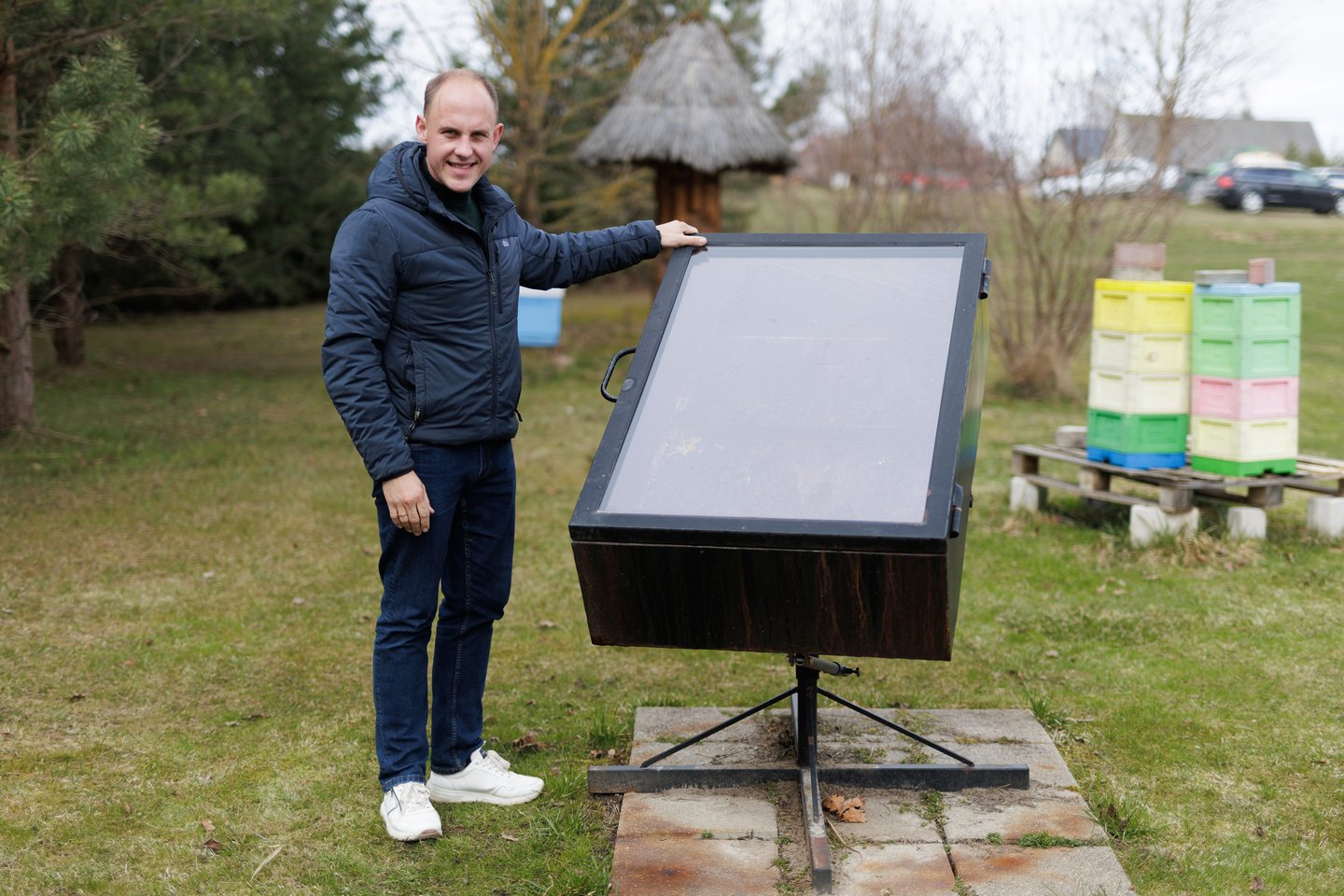 More photos (27)
 Photo by V. Skaraitis.
“They said, maybe you should do something else, not with bees. But we were stubborn – we want to beekeepers and make a living from bees. I think we’ve proved it perfectly,” says Ignas.
The brand “Brolių medus” founded by the twins is already 11 years old today. Since there are over 200 beekeepers in Kupiškis, and about 6 thousand in the whole of Lithuania, it was a challenge for Ignas and Vilis how to stand out from other brothers in the trade.
The recipe seems to have finally been found. And the warehouse built three years ago is already too cramped for beekeepers today. It is not for nothing that production premises with offices are also sprouting up in Lukonys.
“We want to become producers rather than collectors, create greater added value and educate people. For example, when you eat our gummy with honey, you also get vitamins.”
We released bars that contain four ingredients: a glass of natural cow’s milk, a little cream, a couple of teaspoons of honey and a handful of natural raspberries. Nothing more – not dyes, not solvents or anything like that”, says Ignas about the produced products.
The number of employees working for the brothers all year round reaches 14. These are local residents of the village or those who came from the surrounding towns. Some also work remotely.
“One of us goes to the bees, the other we make honey, pack rubber bands. There is also online work,” says one of the brothers.
In total, the twins raise up to 300 bee families located within a radius of approximately 50 kilometers – in the districts of Kupiškis, Panevėžys, Biržai and Rokiškis. True, you can meet brother bees in… Germany.
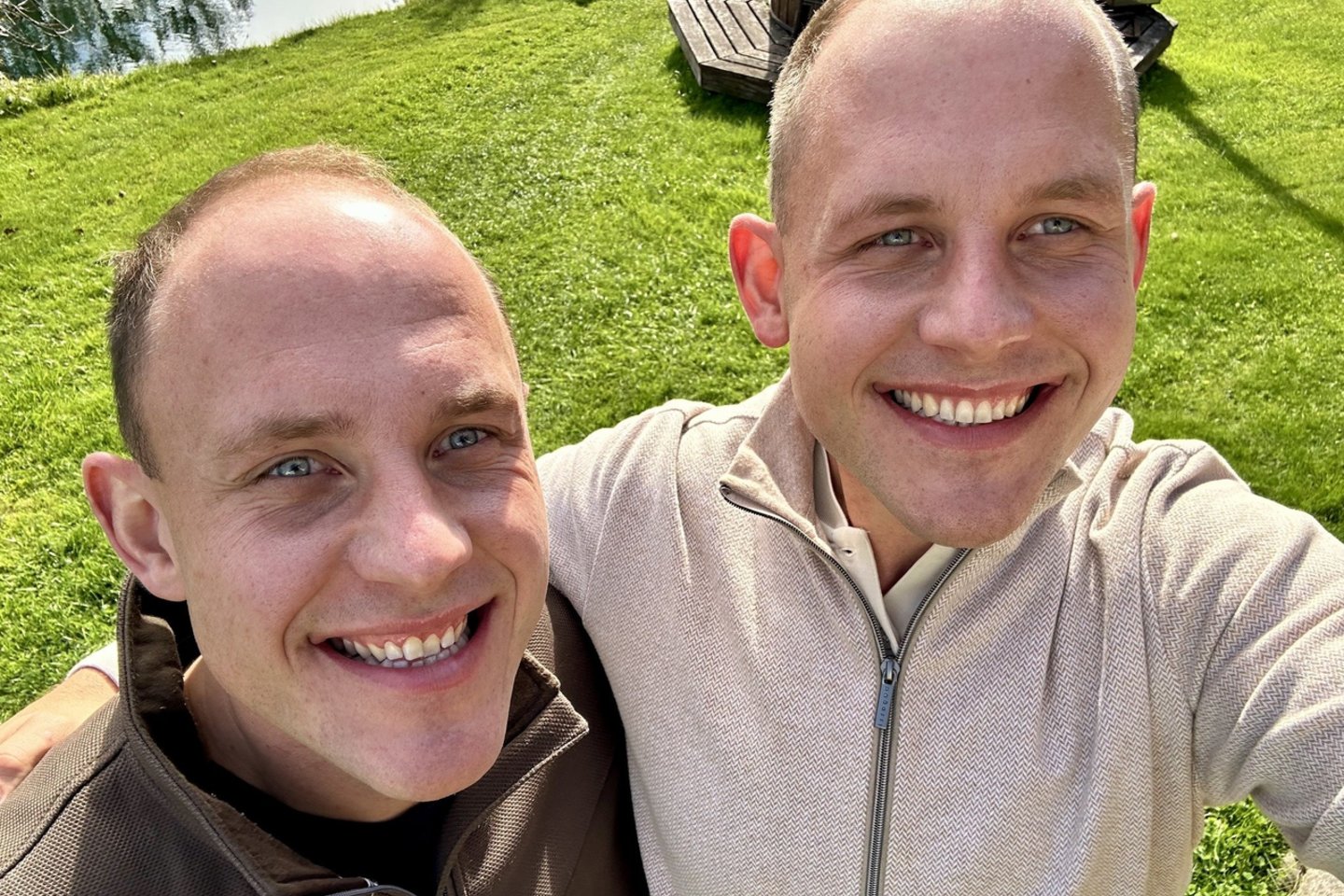 More photos (27)
 Personal archive photo.
“We are the only Lithuanians who take our queen bees to the mountains of Germany for fertilization – scientists only keep a certain breed of cranes there. Sometimes you have to plan your arrival a year in advance.”
We drive 1.5 thousand. kilometers one way without any overnight stays and long stops, we leave, for example, 120 hives there and bring them back two weeks later. The Germans call us crazy,” smiles Ignas.
After returning to Lithuania, brother Vilius watches the beehives brought back all year. Later, queen bees are selected from which the new generation will be raised.
I wonder what the outcome of these efforts is? Hint – the brothers don’t wear any special clothing when working with the bees.
“We are those beekeepers who don’t have clothes – we wear T-shirts and shorts. The bees are calmer, they take the frame – they stay on the comb, they don’t fly around. It’s more pleasant to work,” explained Ignas.
Those who want to get to know the brother bees are welcome at the educations held in Lukonys. Both five-year-old children and university representatives of the third century come here.
After asking what makes Brolių medu famous, it turned out that the answer does not lie on the shelves of supermarket chains.
“If you’re everywhere, you won’t be interesting. We don’t want to be everywhere. We never wanted and don’t want to be in big shopping centers, we want to be unique, which is why people choose us,” Ignas reasons.
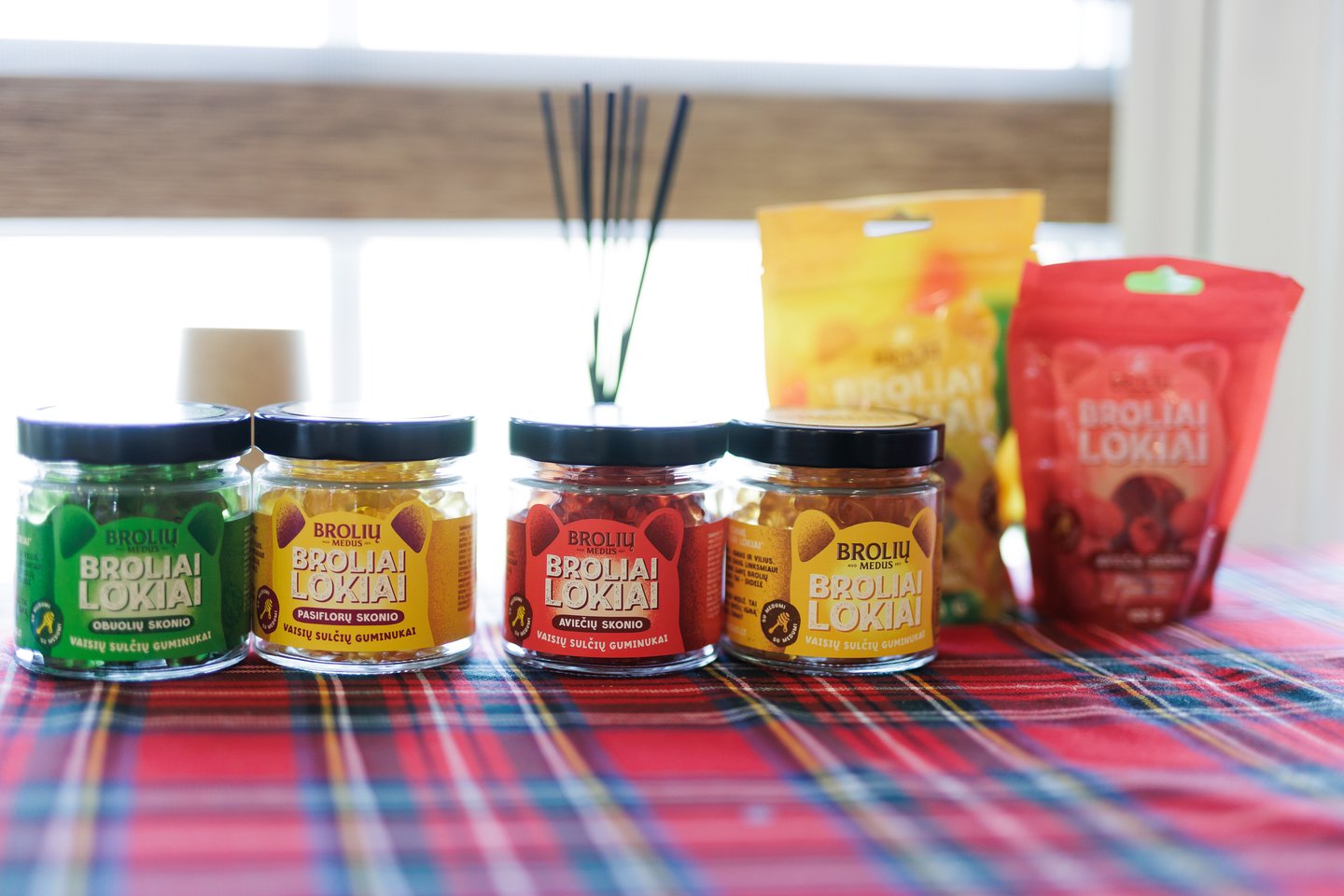 More photos (27)
 Photo by V. Skaraitis.
Most of the products produced are sold online – as Ignas says, they are sent almost all over the world.
Looking back on the long years of working together with his brother Vilis, Ignas boldly claims that they also brought maturity.
“It looks like two directors, but we are divided in work. As we say, two chairs cannot occupy one chair.
I conduct educations, work with a team, we take care of simple bee families. And my brother works with communication, marketing, raises queen bees in the summers”, says Ignas.