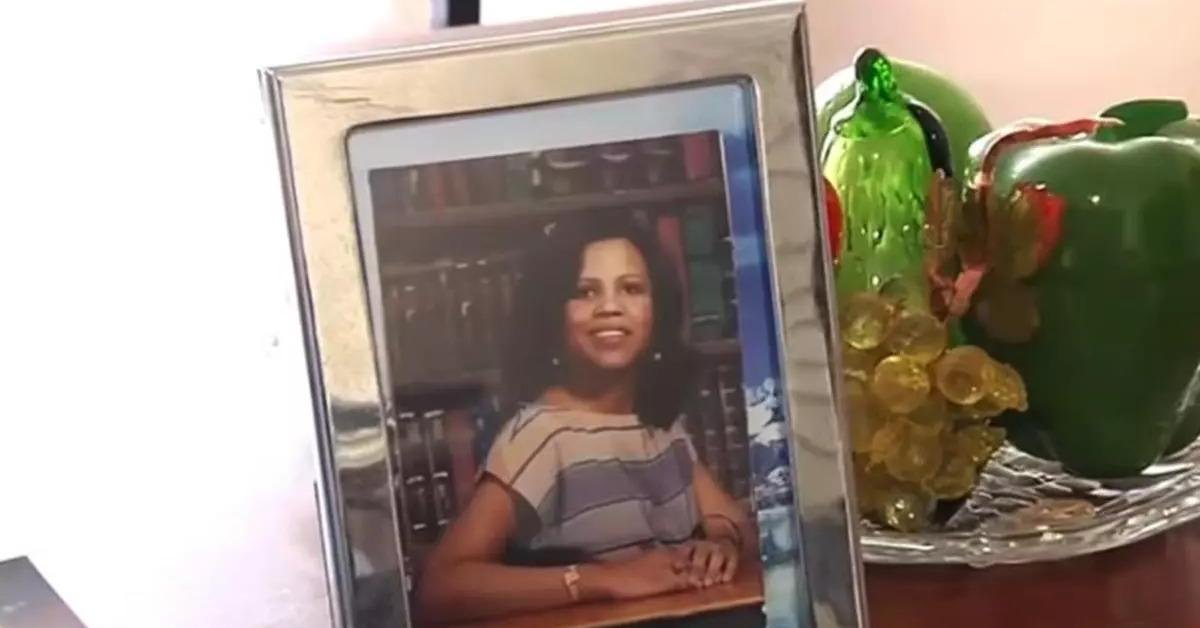
Havana/Cuban-American professor Alina López Miyares, 68, sentenced in 2017 to 13 years in prison for espionage, returned to the United States last September, after almost a decade without being able to leave Cuba. The operation, carried out discreetly by Washington and revealed this Friday by CNNallowed the return of the woman, who had obtained conditional freedom in July 2022, although the Cuban authorities prohibited her from leaving the country until 2030.
A team from the US Government traveled to Havana to pick up López Miyares and transfer her to her country. As confirmed by the State Department to CNN, the operation was not accompanied by a prisoner exchange. A source familiar with the efforts also assured that Washington did not provide money in exchange for his release.
The Secretary of State, Marco Rubio, supported the efforts to achieve his return, according to two sources consulted by the American network. Last March, Washington officials had raised the case with Cuban authorities for humanitarian reasons, although the details of the contacts that ultimately allowed his departure have not been disclosed.
The operation remained out of public knowledge for approximately two months. López Miyares’ lawyers, Jason Poblete and Dylan Barket, declined to comment and requested respect for their client’s privacy. It is also not known what decision the Cuban authorities took to authorize his travel before serving his sentence.
The Cuban Government maintained that López Miyares had maintained contacts with FBI and CIA agents, and that he received money for his collaboration.
Born in Cuba and naturalized American, López Miyares worked as a special education teacher. She was arrested on January 15, 2017 during a visit to the island, accused of participating in an alleged espionage operation related to her husband, Félix Martín Milanés Fajardo, former Cuban diplomat and reserve lieutenant colonel.
According to the version presented by the Havana authorities, the professor would have served as an intermediary between her husband and US officials to transmit classified information. The Cuban Government maintained that López Miyares had maintained contacts with FBI and CIA agents, and that he received money for his collaboration. The defense rejected the accusations and denounced irregularities in the process.
In October 2017, a military court sentenced López Miyares to 13 years in prison, while Milanés Fajardo received a 17-year sentence. The teacher was held in the Western Women’s prison, known as El Guatao, and was later transferred to the Ceiba 4 camp, in Caimito, Artemisa.
In July 2022, the Western Territorial Military Court he was granted parole for his good behavior in prison. The resolution, dated July 8, established that he could not leave Cuban territory until 2030, when his sentence was scheduled to end.
However, her situation became complicated again at the end of 2023. As her family later reported and the James Foley Foundation reported, the Cuban authorities took her back into custody and transferred her to a place whose location her relatives did not know. The legal circumstances of this measure or how long it remained in those conditions have not been publicly clarified.
During the years she was held in Cuba, López Miyares was also unable to attend her parents’ funerals.
The case had been examined by the United Nations. In April 2022, the Working Group on Arbitrary Detention concluded that his deprivation of liberty was arbitrary and asked the Cuban Government to release her and recognize her right to reparation.
The organization especially questioned the fact that a civilian citizen had been tried by a military court. He also noted that he remained without legal assistance for four months and that there was no evidence that he had received the corresponding US consular protection. The ruling identified serious violations of the right to a fair trial.
In March of this year, Michael Peralta, son of López Miyares, denounced in an interview with CNN about her mother’s situation and expressed her fear that the Cuban regime would use her as a negotiating instrument with the United States. He also explained that he suffered from health problems that could require surgical interventions and that he preferred to receive medical care in the United States.
During the years she was held in Cuba, López Miyares was also unable to attend her parents’ funerals. His family had repeatedly demanded Washington’s intervention to secure his return.
For the moment, Havana has not publicly explained the conditions under which it authorized his departure or whether the measure entailed any modification of the sentence. It has also not been possible to confirm the current situation of Milanés Fajardo, convicted in the same process.