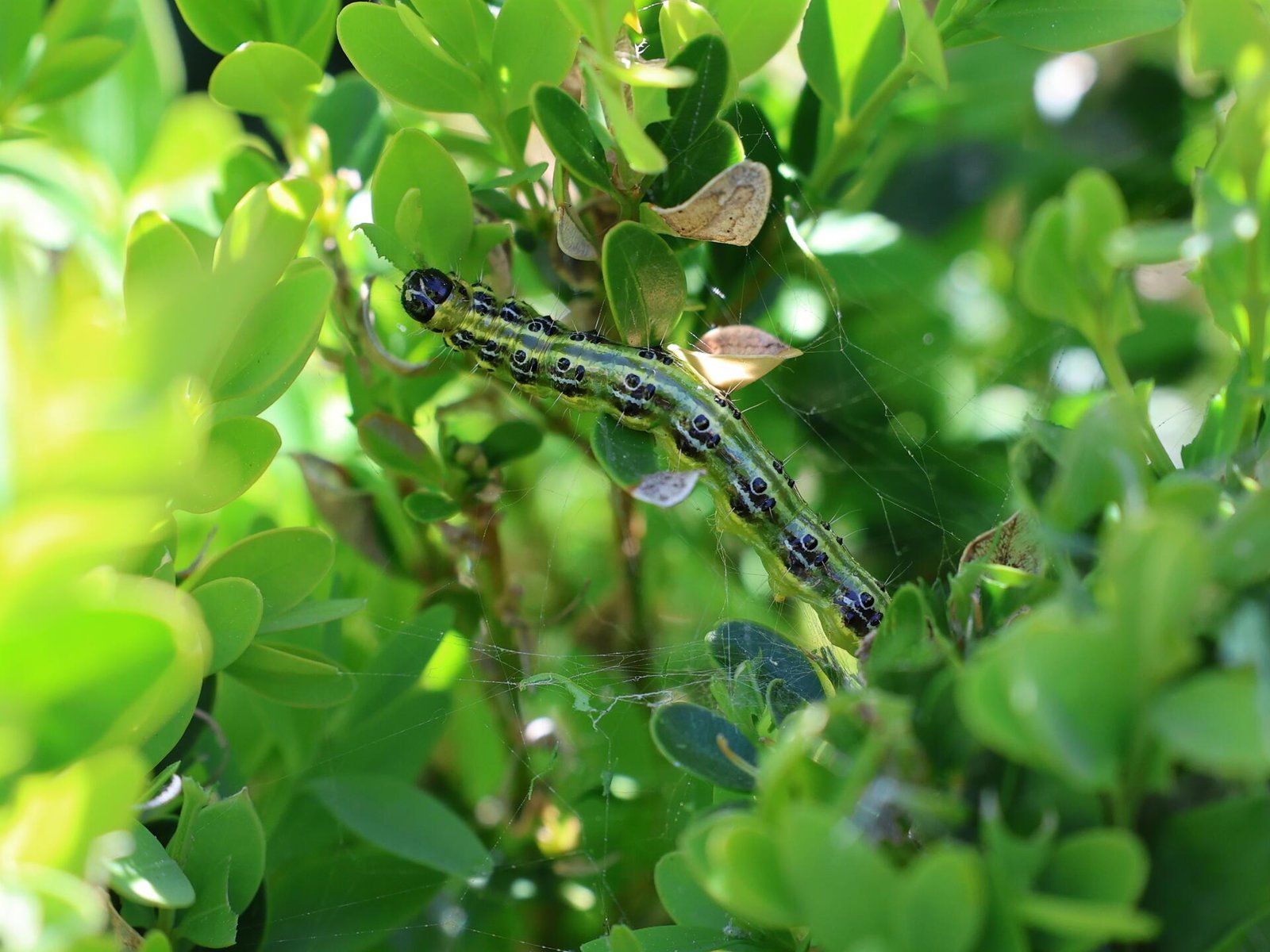
If your beloved, evergreen Buxus is suddenly bare, there is usually only one person behind it: the boxwood moth. The yellow-green striped caterpillar with black dots and bristles literally eats its way through the ornamental plant and leaves behind a sticky web – to the annoyance of all hobby gardeners. Communities also have to struggle with the voracious caterpillars from spring onwards. Two years ago this reported daily newspaper about a real plague of caterpillars in Esch, which left a trail of dead box trees in its wake.
The situation currently appears to be under control. At least that’s what the head of the Escher “Service espace vert”, Chris Fandel, said in a telephone conversation with on Friday daily newspaper: “As things stand, we haven’t seen anything yet.” Fandel suspects that this could be because the nights are still relatively cold at the moment. “And they need a certain temperature so that they can develop.” In principle, however, neither a positive nor a negative trend can be observed.
When asked whether only the boxwood (Luxembourgish: “Pällem”) is endangered, Fandel explains: “In very few cases in Europe it is known that the caterpillar attacks other plants, but only if it cannot find Buxus.” Things are generally bad for the boxwood, says Fandel: “Apart from the borer, there is also a fungus that attacks the plant.” In addition, the dry periods of recent years have taken a toll on the Buxus. The “Service espace vert” has therefore stopped replacing dead bushes with new boxwoods. And yet: “What makes Buxus so great is that you can make spectacular shapes out of it,” says Fandel. The community is therefore relying on other topiary trees.
Boss: Asian Hornet
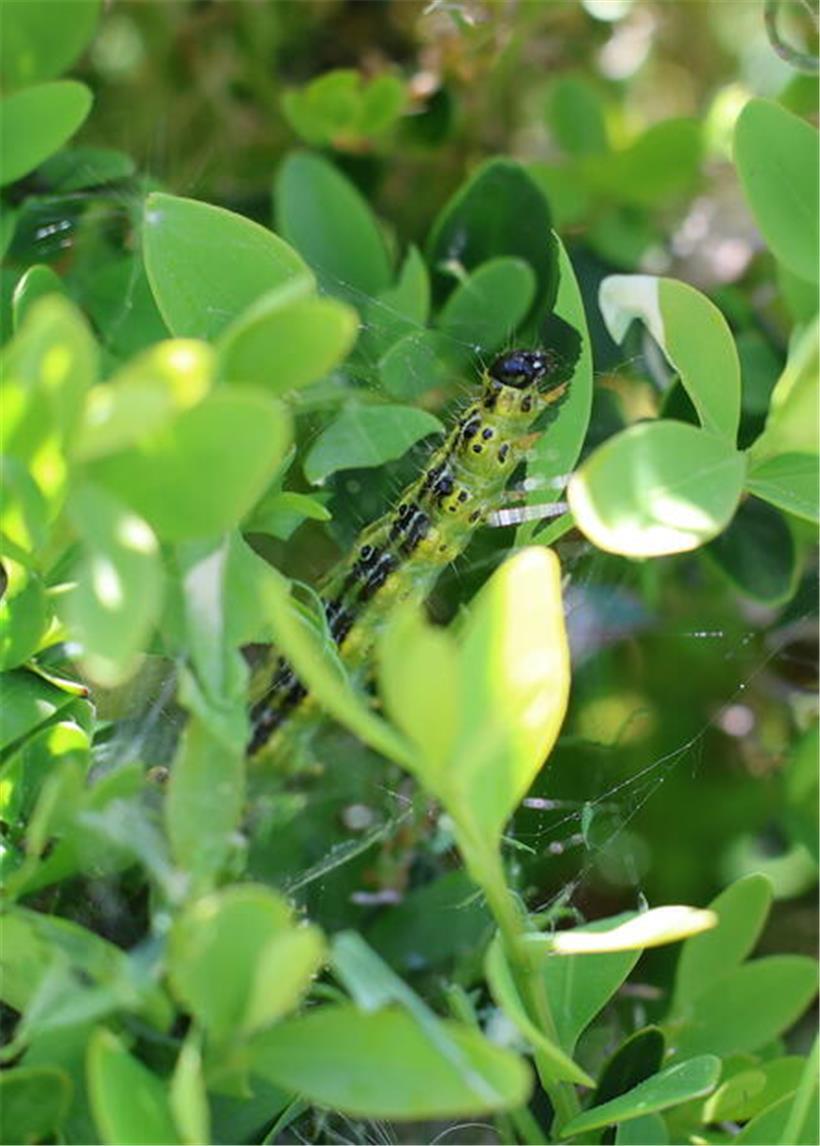
The caterpillars grow up to five centimeters long Photo: Editpress/Georges Sold
In the fight against the borer, the “Service espace vert” has made extensive use of biological sprays in recent years. It is currently being discussed whether this practice should be continued. Because even if the plants survived initially, they would still die in the following years, says Fandel. In any case, you should avoid using sprays if possible. What can you do yourself to combat the caterpillars? It is important to use biological agents and pay attention to the dosage, advises Fandel. Ultimately, the substances are harmful to people and the environment. “If you want to inject, you should get professional help from a specialist store.”
The box tree borer is an invasive species from East Asia. Fandel assumes that climate change will cause additional species to spread in Luxembourg in the future. One of them is already spreading – the Asian hornet. The good thing about it: It is a natural enemy of the boxwood borer. The problem, however, is that the Asian hornet also feeds on pollinator insects, such as bees. Fandel therefore advises supporting local birds that also have caterpillars on their dinner plates. By the way: After the borer has eaten its fill of the Buxus, it begins metamorphosis and emerges weeks later as a white butterfly.
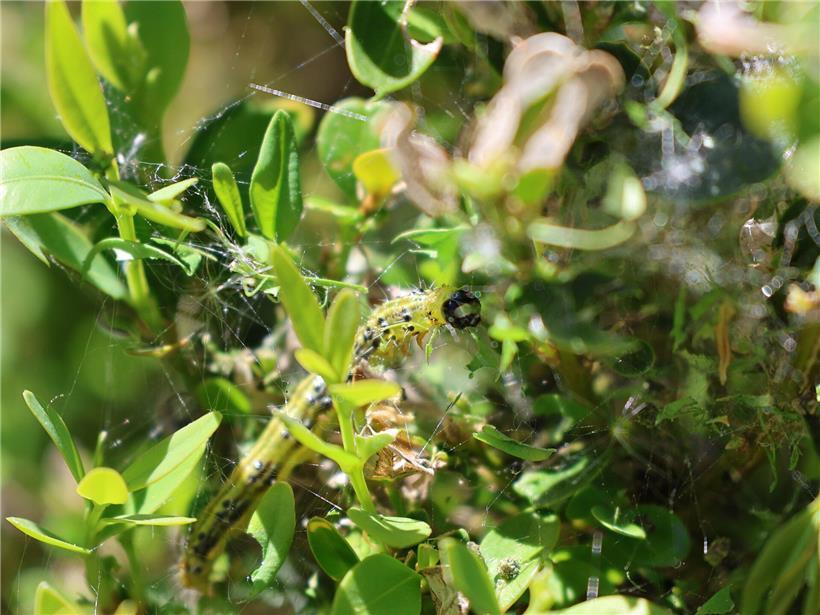
Sticky threads, bitten leaves: the boxwood moth eats its way through the bushes Photo: Editpress/Georges Sold