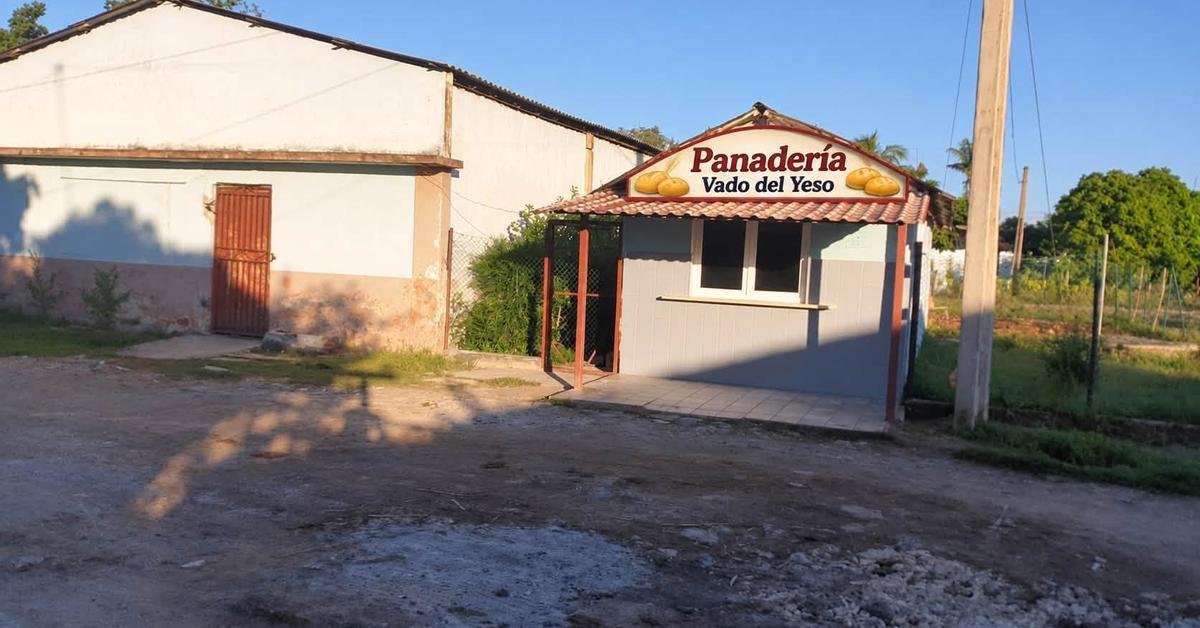
Havana/The private bakery Doña Nieves, located in the town of Vado del Yeso, in the municipality of Río Cauto (Granma), has temporarily suspended its production after its administrators reported irregularities in the production of bread and decided to reinforce controls on workers. The confrontation has left residents without service, while the family that runs the establishment looks for three new bakers to resume operations.
In one extensive Facebook postRobert Román Quezada, administrator of the Complejo Doña Nieves group, explained that his family maintains a lease contract with the Río Cauto Bread and Sweets Company. The agreement includes the payment of rent for the establishment and the delivery of 5% of the profits obtained to the workers.
According to the statement, for approximately two months consumer complaints began to multiply due to the poor quality, size and low weight of the bread. Given the lack of solutions from the establishment’s administration, the family decided to carry out a surprise inspection of the production process.
The results revealed that for every 25 kilograms of flour, about 120 additional breads were made than those provided for in the formula. Furthermore, the units that should weigh 30 grams after baking barely reached 24, while those of 50 grams remained at 44.

/ Facebook / Robert Roman Quezada
At a price of 40 pesos per unit, the additional 120 loaves would represent 4,800 pesos. If 50 kilograms of flour were processed, the difference would amount to 9,600 pesos. The family clarifies, however, that these figures correspond to the potential value of surplus production and do not constitute proof of appropriation of money by the workers.
To correct the irregularities, the tenants placed a representative in charge of supervising the ingredients, the quantities used and the weight of the finished product. They also eliminated two benefits that, as they explain, they voluntarily granted to the bakers: extraordinary remuneration and five loaves of bread per day per worker.
The family maintains that the employees decided to stop working after controls were put in place and incentives were withdrawn. He considers that it is not fair that the neighbors are left without bread for demanding that the quantities and quality of the product be respected.
The publication sparked a discussion on social media. Several commentators supported the measures and denounced that the diversion of raw materials and the deliberate reduction of the weight of bread are common practices in Cuba. Others questioned the calculations and recalled that during baking part of the weight of the dough is lost.
In response to these objections, Román Quezada responded that the portions intended to produce 50-gram loaves were initially cut with 70 grams of dough, precisely to compensate for the loss of moisture. He also provided a new fact: before monitoring, some finished units weighed between 34 and 44 grams.
“We have been supervising the entire process for 13 days, using the same bakers and using different types of flour. During that time, no bread has weighed less than 56 grams, and we have even found bread weighing up to 68 grams,” said the administrator.
/ Facebook / Robert Roman Quezada
Some participants mentioned the Cuban Baking Standard and its weight tolerances, although they disagreed about the allowed margins and the correct way to make measurements.
Another part of the debate focused on working conditions. Several users criticized the family for detailing the withdrawn incentives without specifying how much the bakers actually earned. “Don’t talk about, talk about how much each worker earned daily,” wrote Osmany Castro, who considered that taking away the five loaves of bread a day aggravated the economic difficulties of their families.
The complaints also spread to other provinces. Users from Holguín, Santiago de Cuba and Havana reported increasingly smaller breads, of poor quality and, in some cases, with hygiene problems. From Ciego de Ávila, a commentator stated that the bread from the warehouse had stopped being distributed and that it now depended on private sellers who charged 60 pesos per unit.
Meanwhile, Doña Nieves announced that she intends to resume production between Monday and Tuesday, although she acknowledged that new workers may need training. The family promises to maintain supervision and respect the amounts established in the formulas.
“We do not seek conflicts with the workers. We seek to ensure that the contract is respected, that work is done honestly and that each consumer receives quality bread with the corresponding weight,” the statement concludes. The residents of Vado del Yeso, meanwhile, are still waiting for the oven to be turned on again.