Madrid/While a new repressive wave develops in Cuba against independent journalism and dissident voices, state media executives defend “digital sovereignty” and “equal access” to artificial intelligence (AI) at a summit in China, arguing that technological gaps can deepen inequalities between countries.
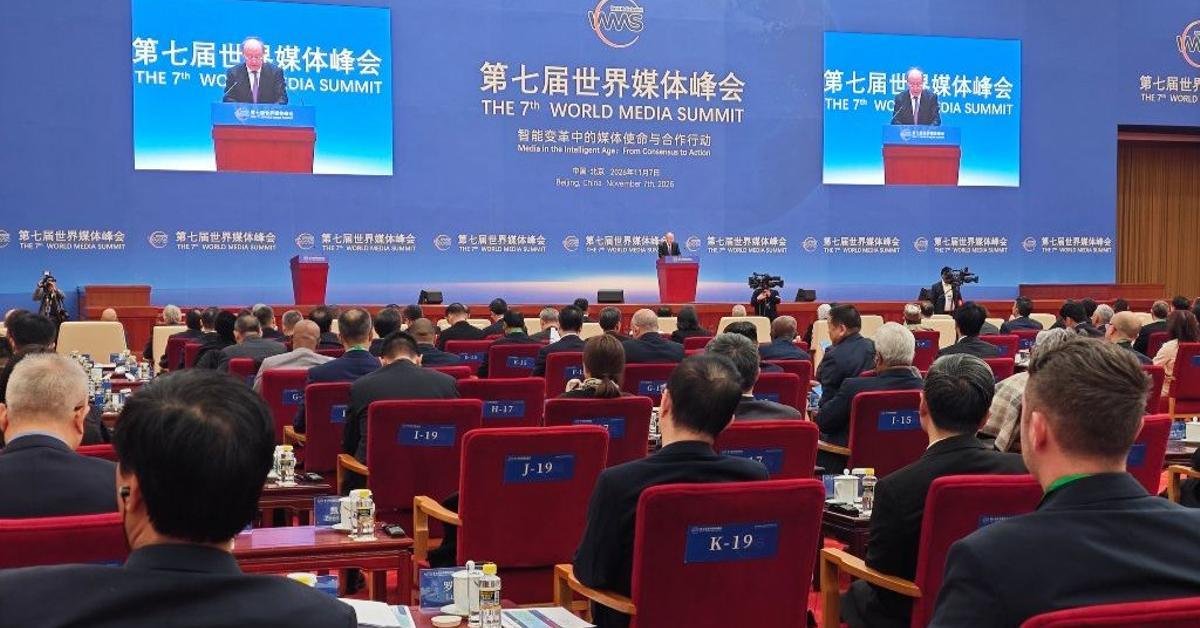
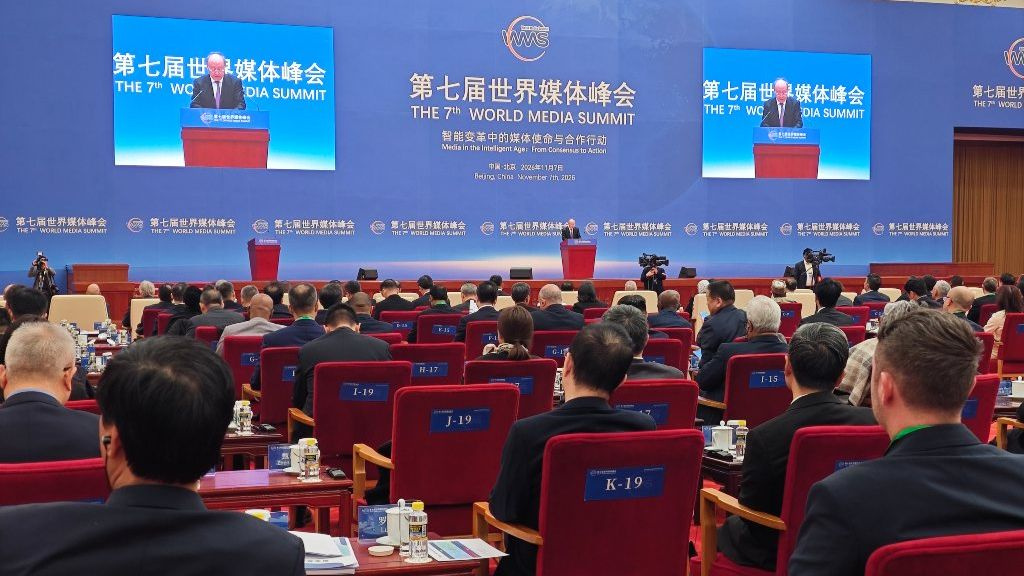
The VII World Media Summit was officially inaugurated this Saturday in Beijing, with almost 500 representatives of some 330 media outlets from 112 countries and regions, including Cuba. The activities began on the 5th and will continue until November 9. The event coincides with the 95th anniversary of the Chinese state agency Xinhua, which organizes the event together with the Beijing municipal government.
The Cuban delegation is led by Liudmila Álamo Dueñas, vice head of the Ideological Department of the Central Committee of the Communist Party of Cuba, and is made up of directors of the main Cuban official media.
Among them are the vice president of Prensa Latina, Alejandro Gómez; the director of IDEAS Multimedios – an organization that coordinates several of the main state media, such as Cubadebate or the Round Table–, Randy Alonso; the director of Rebel YouthYuniel Labacena, and the director of Cuban Television, José C. Zaragoza.
The Cuban delegation is led by Liudmila Álamo Dueñas, vice head of the Ideological Department of the Central Committee of the Communist Party of Cuba
The summit agenda will focus on the development of artificial intelligence solutions for the media sector, the exchange of technological resources and the reduction of the digital divide that separates developed countries from “the nations of the Global South.” At the center of the debate will be communication driven by artificial intelligence and algorithmic transparency, “that prevent a handful of Silicon Valley corporations from deciding what is true and what should be censored,” in the words of Telesur.
In his inauguration speech, Li Shulei, head of the Chinese Propaganda Department, called for work to ensure that AI is developed for the benefit of all nations without distinction and “not as a game for powerful countries and powerful people.”
The world’s first bionic humanoid robot designed as a news anchor made its official debut at the summit. A video broadcast this Saturday by the Cuban state press showed a disturbing robotic figure at the event, with a feminine appearance and a lost look, who dedicated a few words to the official media. Cubadebate, presenting it as “the main digital media in Cuba”, a statement very far from the information reality of the Island.
In interview with XinhuaRandy Alonso did not miss the opportunity to insist that Cuba is a country under siege “politically, militarily and in the media” by the United States, which is why it seems “key” to show “the reality of the Island” and denounce Washington’s policy before the media around the world.
Randy Alonso did not miss the opportunity to insist that Cuba is a country under siege “politically, militarily and in the media” by the United States.
The vice president of Prensa Latina declared that, for Cuban journalists, the summit is an opportunity to learn more about the development of artificial intelligence and “identify possibilities of cooperation with media from other countries, especially China.” Furthermore, he stated that this meeting is necessary “in an international scenario marked by misinformation, fake news and distortion of the truth.”
For his part, the director of Rebel Youth He noted that the event is important for the Cuban media now that “they are going through editorial, technological and economic transformations.”
The director of Cuban Television defended that AI can improve efficiency and productivity, but warned about the fact that it is also used “as an instrument of information manipulation”, which is why he considers it necessary to take advantage of the tool “without giving up surveillance, data comparison and the dissemination of truthful and objective information.”
Daniel Ortega Murillo, who serves as communications advisor to the Presidency of Nicaragua and is the son of the country’s co-presidents, was invited to speak as representatives of Latin America. Daniel Ortega and Rosario Murilloallies of the Cuban regime; and Patricia Villegas Marín, president of Telesur.
The image of the Cuban delegation in Beijing – with the person in charge of ideology of the Communist Party at the helm – contrasts with the situation of independent journalists
The image of the Cuban delegation in Beijing – with the person in charge of ideology of the Communist Party at the helm – contrasts with the situation of journalists who work outside the official system on the Island. In recent days, independent journalists have been harassed and detained by the Cuban political police, among others. Adelth Bonne, Camila Acosta and Yoani Sánchezdirector of this newspaper.
China, like Cuba, maintains tight state control over the media and the flow of information, a policy that has been denounced for years by human rights and press freedom organizations. Reporters Without Borders It ranks the country 178 out of 180 in its 2026 press freedom index and considers it the largest prison for journalists in the world. As one among many examples, this same september Human Rights Watch accused Chinese authorities of restricting journalists’ access and controlling information after the flood in Tibet.