The World Bank Group has released US$11 million to support the Republic of the Marshall Islands as it responds to the impacts of El Niño conditions and an ongoing dengue outbreak. The funding follows a State of Emergency declared by the Government on October 8, 2026, with support focused on helping protect communities and maintain critical services.
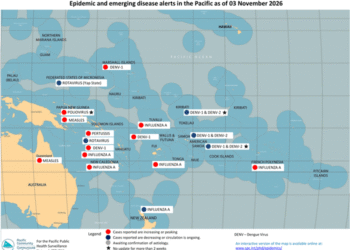
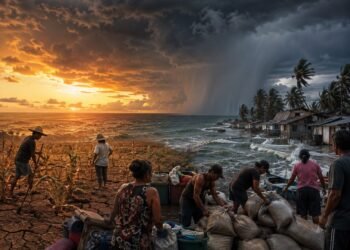
The El Niño conditions are bringing hazardous winds and ocean swells alongside increasingly dry conditions, which the World Bank says is adding pressure on water supplies, food security and livelihoods. Meanwhile, the dengue outbreak has affected Majuro and Ebeye, increasing strain on health services and government resources.
Catastrophe Deferred Drawdown Option activated
The US$11 million is being provided through the Marshall Islands’ Catastrophe Deferred Drawdown Option (Cat-DDO), a pre-arranged financing mechanism that can be accessed when a qualifying emergency occurs. The drawdown was released after the Government requested financing and declared a State of Emergency.
Tatiana Proskuryakova, World Bank Group Director for the South and North Pacific, said the financing is intended to get support to communities when they need it while helping keep essential services running. She linked the announcement to the urgent pressures families face as climate-related impacts and disease outbreaks overlap.
Building financial preparedness for overlapping shocks
The World Bank said the drawdown reflects steps the Marshall Islands has taken to strengthen its ability to respond quickly to shocks. Earlier in 2026, the Government activated the World Bank Group’s Contingent Emergency Response Project, which mobilized US$3.6 million from its existing World Bank Group portfolio to help households cope with the impacts of the fuel crisis.
Hon. David Paul, Minister of Finance for the Republic of the Marshall Islands, said the financing demonstrates the value of preparing before a crisis occurs, enabling the country to access resources quickly and respond more effectively to protect communities and maintain essential services.
Support for response and long-term resilience
Beyond the immediate financing, the World Bank said it is working with the Government to strengthen disaster risk management and public financial management to help the country withstand future shocks while protecting foundations for growth, jobs and opportunity. Technical assistance to support the Government is being provided by the Global Facility for Disaster Reduction and Recovery (GFDRR), a World Bank-managed trust fund.
Key Details
- Initiative or programme: Catastrophe Deferred Drawdown Option (Cat-DDO) activation for emergency response
- Lead organization: World Bank Group
- Partners: Government of the Republic of the Marshall Islands; technical assistance by GFDRR (Global Facility for Disaster Reduction and Recovery)
- Funding amount: US$11 million
- Geographic focus: Republic of the Marshall Islands, including Majuro and Ebeye
- Target groups: Communities affected by El Niño impacts and people affected by the dengue outbreak (specific beneficiary groups not detailed in the source)
- Duration or timeline: Financing released following a State of Emergency declared on October 8, 2026 (no end date specified)
- Expected reach or outcomes: Support to help protect communities and maintain critical services while the country responds to concurrent crises (specific service sectors or coverage not detailed in the source)
Why This Matters
For NGO leaders and development professionals, the World Bank’s release highlights how “contingent” disaster financing tools are being used to respond when multiple hazards converge. In small island contexts where humanitarian and health systems can be overwhelmed quickly, pre-arranged funding mechanisms can reduce delays between an emergency declaration and the availability of resources.
The announcement also points to a broader programming lesson: pairing rapid financing with efforts to strengthen disaster risk management and public financial management. For civil society and local organizations, this can affect how partners plan advocacy, support to affected communities, and coordination with government systems during concurrent climate and public health emergencies.
Finally, the mention of technical assistance through GFDRR signals continued emphasis on preparedness and resilience, including support that may strengthen institutions before the next shock.
Source: World Bank Group Supports Marshall Islands to Respond to El Niño and Dengue Outbreak