
The hospital remembers that one suspected 2014 Ebola infection (which was later discarded) to explain that for years it has been requested that the center have a highly specialized unit prepared for isolate patients with infectious diseases of high epidemiological risk as is the pathology detected for the first time in theAfrica central in the decade of the 70s. The functionality is to prevent its expansion and to protect the health personnel and other users of the infrastructure from eventual contagion. The incidence of this danger has been null, now “the isolation room is in the ICUand luckily it never had to be activated”, hospital sources indicate, but there is no zero risk. And, in fact, from a health point of view it has been argued that it would be necessary two biological isolation rooms (spaces are individual) but population size and investment have limited it to one. In addition, the design is conceived so that it can have an alternative function given the current space problem: “While this room is not necessary, the SAS it will be available to carry out diagnostic tests, at least until the construction of the extension, to lighten the examination cabinet”.
In Spain there are around thirty spaces of these characteristics
The competition is currently in the bidding process -companies have until the next 25th to submit their bids- and the expected investment is 1.78 million euros. The basis of how it should be conceived is the technical document of the High Level Isolation and Treatment Units (UATAN) of the Spanish hospital network, which dates back to March of last year, with its own adaptations, such as this alternative function it must have. to highlight theexclusivity and the high specialization of these services, the hospital points out that in all the Spanish territory there are only around 30 for more than 49 million inhabitants.
Location and features
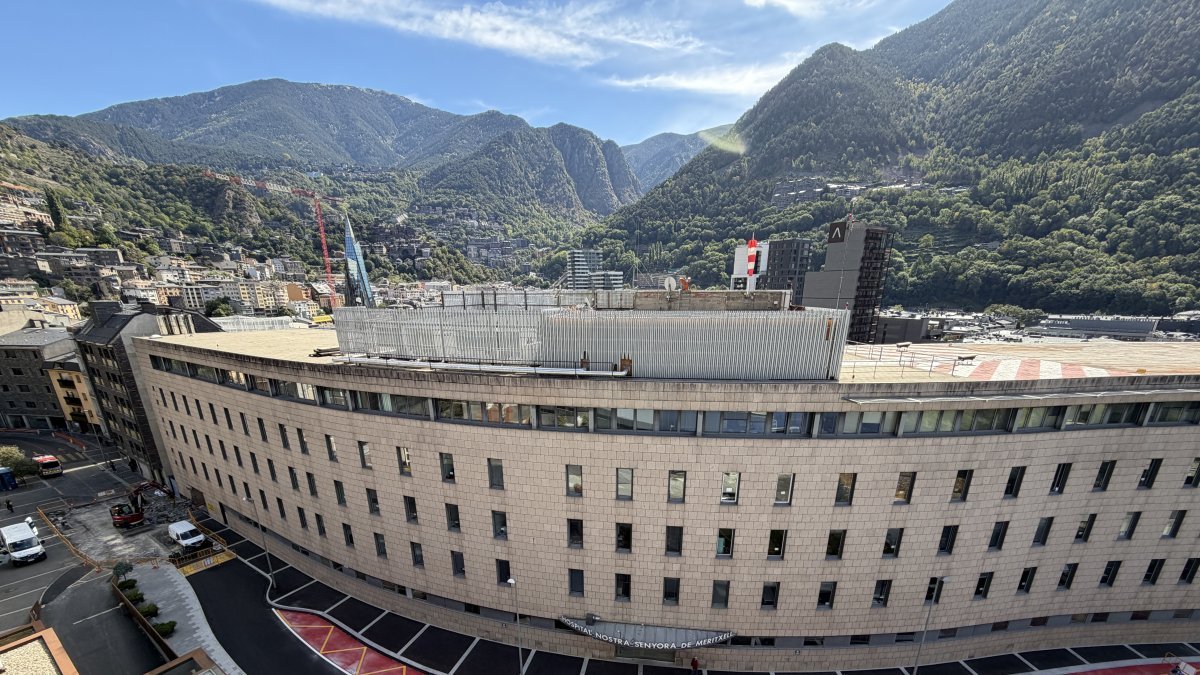
The room will be conditioned to the floor -1 of the hospitalin spaces that had been occupied by the mortuary and also part of the current ambulance parking lot. As stated in the basic document, precisely this direct connection with the arrival of medical transport vehicles is one of the highlighted elements because it makes it easier for potential patients to access the unit without having to go through ordinary areas circulation of other users and workers. In addition, it is a location “relatively separated from the main healthcare circuits”, it is described.
The current isolation room is in the ICU and has not had to be activated until now
The technical conditions provide differentiated routes for patientshealthcare professionals, materials and waste: the patient will access it from the ambulance parking through a kind of entrance hall already armored and that it will connect to the isolation room, while the healthcare staff will use a different circuit, with changing rooms and spaces to put on and take off personal protective equipment. In addition, there will be outbuildings for decontamination, also for storing material and a control room from which professionals can have contact with the patient through communication and monitoring systems. In this case, it’s about minimize unnecessary entry of health workers into the isolation room. Another essential issue is that of the ventilation system, which must ensure that infectious agents do not leave the room. There will also be specific circuits to get rid of waste, with direct exit from the facilities.
However, and since the unit must be able to have an alternative use, the work must incorporate direct connections to the interior corridors of the hospital. It is taken into account that this is a significant investment and that it is a service that will have very little activity. The guideline is that when it is necessary to use it as an isolation unit the connection with the rest of the hospital will be completely closed. Drills and maintenance tests are also planned to ensure correct operation. In addition, the need to provide for the referral of cases that require it to other specialized centers is contemplated, taking into account the complexity of care, which can exceed the hospital’s resources. The works have an execution schedule of eight months, with which they should be concentrated during the coming year.
ALSO CONFINED IN THE OLD FUNERAL HOME
the suspicion ofEbola mobilized the hospital now a dozen years ago, in October 2014. It wasa resident from Sierra Leone and companion of another man, also a neighbor from Andorrawho was isolated in Clinic of Barcelona for the same contagion alert. For the first time, health workers were seen protected with the PPE which became common during the pandemic and the patient was fairly isolated in the outbuildings of the old mortuary, which must now be enabled. Diagnostic tests ended up confirming that it was notEbola, but malaria.