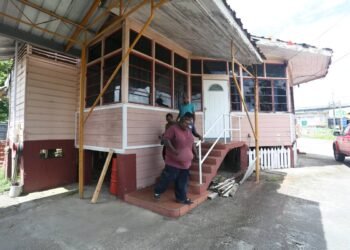
A fire station should be a place of safety. In Rio Claro, it became a hazard. After inspectors identified more than 20 health and safety violations, the station was vacated after a cleaner’s foot broke through the wooden floor. The closure was necessary to protect personnel. The fact that it followed longstanding warnings and an injury raises troubling questions about how long such conditions were allowed to persist.
The consequences extend well beyond the station itself. Rio Claro residents have effectively lost their local fire response. While the Fire Service says a tender and officers are on standby in Mayaro, that arrangement cannot fully replace a functioning station within the community. In any serious fire, minutes matter. Flames can spread rapidly, cut off escape routes and transform a manageable situation into a tragedy before help arrives.
Residents have already voiced concerns about what could happen if a major fire breaks out. Businesses, schools, families and vulnerable residents deserve to know what level of protection remains available and how quickly assistance can reach them.
Authorities should provide clear information on interim coverage, dispatch arrangements and expected response times rather than leaving communities to rely on speculation. Public confidence depends not only on emergency response but also on transparent communication during a crisis.
This situation also highlights a broader failure to maintain essential public infrastructure. The Fire Service Association and Ministry of Works engineers have reportedly concluded that the station requires rebuilding. Yet, reconstruction may not begin until 2027 or 2028. Rio Claro cannot be expected to endure years of uncertainty while officials consider temporary alternatives. If another building can serve as a temporary station, it must be inspected, equipped and made operational without delay. The community deserves assurance that emergency services will remain accessible throughout that transition.
Nor should this be viewed as an isolated building problem. The Fire Service has long faced reported shortages of vehicles, equipment and personnel. Government previously cited a shortfall of hundreds of officers, while the association has pointed to ageing appliances and operational delays caused by unreliable equipment. These deficiencies compound each other. A distant station, inadequate staffing and unreliable vehicles can all undermine emergency response when communities need it most.
Firefighters should never have to choose between serving the public and working in unsafe conditions. Reports of structural hazards, inadequate facilities and concerns about workplace conditions point to shortcomings that should have been addressed long ago. Safe buildings and proper accommodations are not optional; they are fundamental requirements for any emergency service charged with protecting the public.
Recent investments in the Fire Service are welcome, but they do not remove the need for urgent action. Government should publish a timetable for establishing a temporary Rio Claro station, begin reconstruction planning immediately and provide regular progress updates. It must also ensure that nearby communities remain adequately protected through reliable vehicles, sufficient staffing and proper equipment.
A fire will not wait for a procurement process or the next budget cycle. Rio Claro needs a dependable local response now, and the wider Fire Service requires sustained attention. Every delay increases risks that neither residents nor firefighters should be forced to bear. The cost of neglect, if left unaddressed, could ultimately be measured in lives.