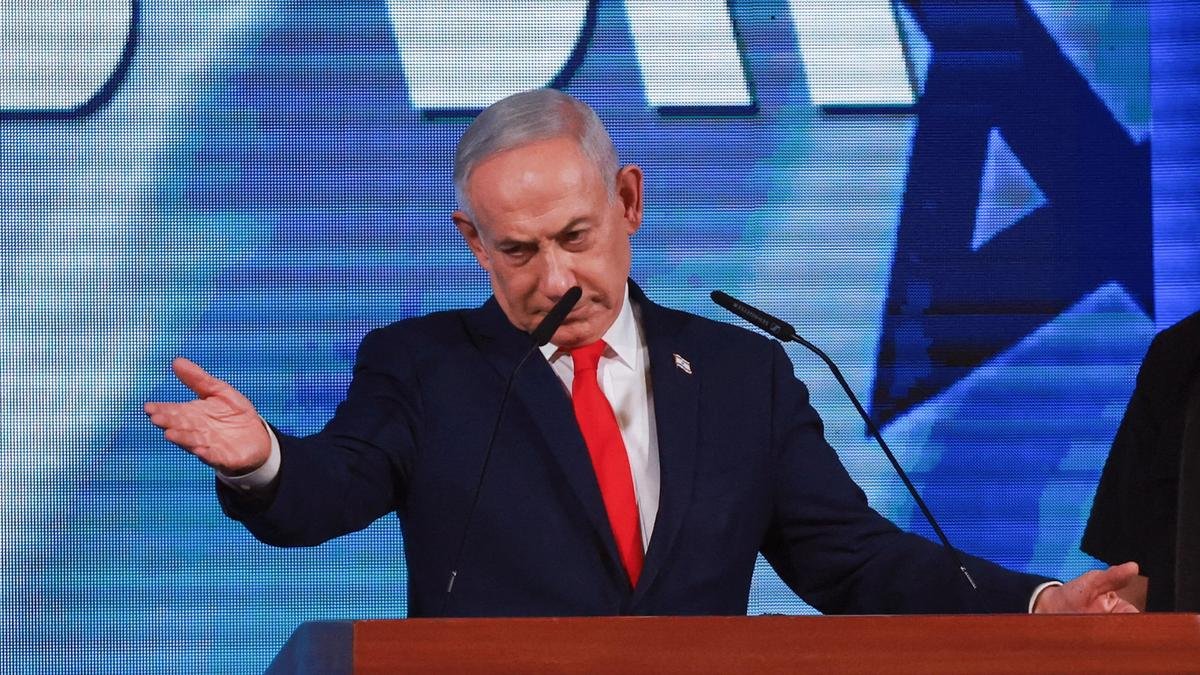

Israeli Prime Minister and Likud party leader Benjamin Netanyahu during the exit polls at his party headquarters in Jerusalem, October 28, 2026.
| Photo Credit: Reuters
Israel’s October 27 election was framed by the Opposition as a referendum on Benjamin Netanyahu. For the country’s longest-serving Prime Minister, who oversaw the war on Gaza, attacked Iran twice and vowed not to make concessions to Palestinians, the election was a battle for survival. For the Opposition led by former military chief Gadi Eisenkot, this was an opportunity to oust Mr. Netanyahu from power. With almost 90% of the vote counted, Israel is divided into three blocs, none of which can govern alone.
On the latest count, Mr. Netanyahu’s right-religious coalition has 53 seats, eight short of the 61 needed for a majority in the Knesset. His Likud is the largest party with 26 seats, down from 32 four years ago. His far-right partners, Otzma Yehudit of Ithamar Ben-Gvir (7) and Religious Zionism of Bezalel Smotrich (6), hold 13 between them, down slightly from 14 in the last election. The remaining seats in his bloc come from the religious parties—Shas and United Torah Judaism—each with seven seats.
Published – October 29, 2026 01:45 pm IST